Egypt EU Trade relations improving

The European Union remains Egypt’s largest investors

Three-quarters of foreign direct investment come from EU states, and trade represents a third of the country’s GDP. The has been constant EU assistance and partnership programs since 1998, which established stable relations between Egypt and the EU. The Association Agreement was the most effective agreement when it came into force in 2004. Since this year, the bilateral trade volume has more than doubled to reach EUR 27 312 million in 2017. There has been increasing interest from the EU into Egypt’s new energy projects and other development plans, in which the EU will support through its new revised European Neighbourhood Policy which was launched in February 2016. Between 2014 and 2020, the new European Neighbourhood Instrument (ENI) is the EU primary financial instrument for cooperation and partnerships with Egypt. Over decades, Egypt has been a constant buyer of European weapons, primarily from France but also from Germany and other European countries. 

Trade: In 2001, Egypt and the European Union Member States signed an association agreement in Brussels, the agreement aimed to establish a free trade area over a 12-year transitional period. The agreement came into force in 2004. It states removing tariffs on industrial products and facilitating trade in agricultural products is essential. Further contracts were signed later to promote trade. Between 2002 and 2016, bilateral trade in goods between the EU and Egypt grew by 170% from EUR 10 101 million to EUR 27 343 million. The Association Agreement was extended by the EU-Egypt Action Plan in 2007, which enhanced economic cooperation between Egypt and the European Union states.

In 2017, Fuel and mining products were the EU’s main imports of goods from Egypt at EUR 3 223 billion, followed by chemicals at EUR 1 334 million, textiles and clothing at EUR 8 623 million. The EU main exports to Egypt were machinery and transport equipment at EUR 6 923 million, followed by fuels and mining products and agricultural products (EUR 3 923 million). Egypt’s exports to the EU increased 24% year-on-year in 2017 reaching EUR 7 523 million, while imports dropped by 3% in the same period reaching EUR 18 223 million.

The Egyptian economy has a trade deficit and real economic challenges after the events of 2011 and then  2013. The exchange rate started to fluctuate in 2015. This led to floating the currency, making a devaluation of the national currency and enabling the liberalization of the import system. Some industries, such as the non-hydrocarbon exports gained a profit from the devaluation of the Egyptian Pound.

Egypt-EU relations between 2013-2017: In 2013 the EU and Egypt began discussing how to deepen their trade and investment relations utilizing the Deep and Comprehensive Free Trade Agreement (DCFTA). After hesitations European countries are increasingly embracing Egypt’s new vision for; development, building stability,  combating terrorism, illegal migration, and other economic and social sectors. During the EU-Egypt Association Council in 2017, the parties signed on the revised European Neighborhood Policy, which is supposed to replace the previous Action Plan and made a new partnership, with an allocation range of EUR 432 – EUR 528 million. The assistance program will focus on three priorities: Economic modernization and energy sustainability, social development, and enhancing stability and democracy.

European Business in Egypt

The United Kingdom is by far the largest investor in Egypt, with total investments of EUR 43 723 million over the past decade, followed by Netherlands, Italy, and France. The latter ranks number 12 among the largest investors in Egypt with more than 700 companies. While Spanish investments in Egypt reached EUR 830 million in 2018 alone with 183 companies, most of them in the industrial sector.

Egypt started large projects with many European corporations in the last few years. In June 2015, German firm Siemens won a contract to build three power plants and six substations in Egypt, the most significant order in the firm’s history at the cost of EUR 6 000 million, the contract was supported by the governments of Egypt and Germany. Notably, the number of German firms in Egypt had exceeded one thousand in 2017. Another example of European companies engaging in Egypt is engineering firm CDM Smith and its work in building tunnels under the Suez Canal as part of the last phase of Egypt’s national tunneling system project. Also Italian PV company Enerray which was commissioned to build three solar plants in Benban Solar Park in Aswan, which after completion will be the largest solar installation in the world. The project primarily obtained financing from German bank Bayern, British financing firm CDC Group and Europe Arab Bank as investors in the Benban project.

Energy Sector in Egypt

Egypt is the second largest gas producer in Africa and the largest non-OPEC oil producer in the continent and has been playing a crucial role in the energy market regionally and globally. In 2009 Egypt was exporting nearly third of its natural gas, and as a result of the political struggle that followed the 2011 revolution, the energy sector went into multiple crises when domestic demand outstripped production. Many serious steps were taken to ensure growth and investment in the sector with more focus on renewable energy and exporting natural gas to new markets. It’s notable that Egypt has an abundance of land and sunny weather along with high wind speed, which makes it a perfect location for renewable energy projects, though over decades it has been a challenge for the country to continue its energy developing projects. In 2014, the government started a new energy strategy in which 56 concessions and agreements were signed. The following years included huge investments and promoting new approaches to enhance the energy sector.

According to the Tracking SDG7 Report (jointly prepared by IEA, IRENA, WHO, and others), the total population in Egypt has had access to reliable energy sources in the recent years, though there are other reports depicting many villages in upper Egypt and other areas where people can’t have access to reliable energy resources. By 2022, Egypt attempts to get 20% of generated electricity from renewable resources. Egypt has two liquefied natural gas export complexes, both on the Mediterranean sea cities of Damietta and Idku, the complexes’ joint capacity is 12.2m tonnes per year as of 2015. 

For the 2017-2022 period, the Egyptian government announced the addition of 7,160MW coal-fired power plants with direct engagement of the private sector. Also, Japan’s Sumitomo has plans to build a coal-fired plant at Sidi Shabib in Marsa Matruh on the Meditteranean sea, China’s Shanghai Electric announced that it would build another plant in Hamarwein. Egyptian developer Elsewedy Electric engaged in developing a wind power project in the Gulf of Suez with Japan’s Marubeni. Other projects in 2018 include Enara’s EUR 175 million investment on solar projects in Egypt, and Spain’s TSK investment on Kom Ombo to set up a photovoltaic plant.

Egypt-EU Energy Projects

According to a study of the European Parliment Committee on Foreign Affairs published in 2018, Egypt is currently the only state in the southern Mediterranean area that has the ability to export gas to Europe independently because of the size of its reserves and most importantly because it has proper infrastructure for export. This approach became stronger after Zohr gas field was discovered in 2015 by Italian energy company Eni and followed by other nearby fields. The estimated amount of gas in the place is around 850 billion cubic meters, which makes it the largest gas reserve in the Mediterranean Sea beside the nearby Leviathan gas field. Notably, this amount at the newly discovered Zohr is close to the rest of Egypt’s gas fields combined. According to experts, that would make Egypt a regional Gas hub and an important Natural Gas resource to Europe.

EU assistance and partnership programs to develop the energy sector have been prioritized. The Egyptian Gas Connection Project was recently included in the framework of the revised ENP with a EUR 68 million grant. Moreover, The Egyptian Sustainable Energy Strategy for the period 2016-2020, includes building a new wind farm in the Gulf of Suez. Another reason for more understanding between Egypt and the EU environmental and health issues is that Egypt had taken a pledge to on issues like climate as rising tides will severely affect the Nile Delta region. As salty seawater leeches into low-lying agricultural areas, Egypt could face serious food shortages.

Challenges and Cooperation

Egypt has its challenges and faces regional threats, most experts count population growth as the most critical challenge for Egypt in the following decades. Other areas include education, social justice, democracy, and  vital aspects.  EU is set on building new paths of cooperation and more in-depth economic plans to help Egypt overcome domestic issues while using its role to stabilize  the region. EU officials consider Egypt as the first line of defense against illegal migration, but the country itself still a significant source of migrants.

Egypt-EU relations 2019-2020

Experts believe that Egypt will attract more EU investments by 2020 especially in the energy sector, and an increase in the bilateral trade in case that the two parties agree on removing more tariffs over particular products to make a wider free trade area. For Egypt, it would be a profitable path to increasingly export its products into the EU market. The European Union is confident Egypt’s reform plans, will improve future cooperation. 

More Articles

  • Interview: Dr. Daniel Risch, Deputy Prime Minister, and Minister of Infrastructure, Economic Affairs and Sport, Principality of Liechtenstein

    Interview: Dr. Daniel Risch, Deputy Prime Minister, and Minister of Infrastructure, Economic Affairs and Sport, Principality of Liechtenstein

    How do you assess relations with the USA? Relations are founded on shared values and historically strong social and economic interests. Liechtenstein has traditionally been a desirable location for companies, a crucial incubator for global innovation, and a valuable supplier to the USA.  What are some benefits of Liechtenstein’s business ecosystem? Liechtenstein’s unique value-added proposition…

  • An Innovative Industrial Ecosystem is Developing Within Liechtenstein

    An Innovative Industrial Ecosystem is Developing Within Liechtenstein

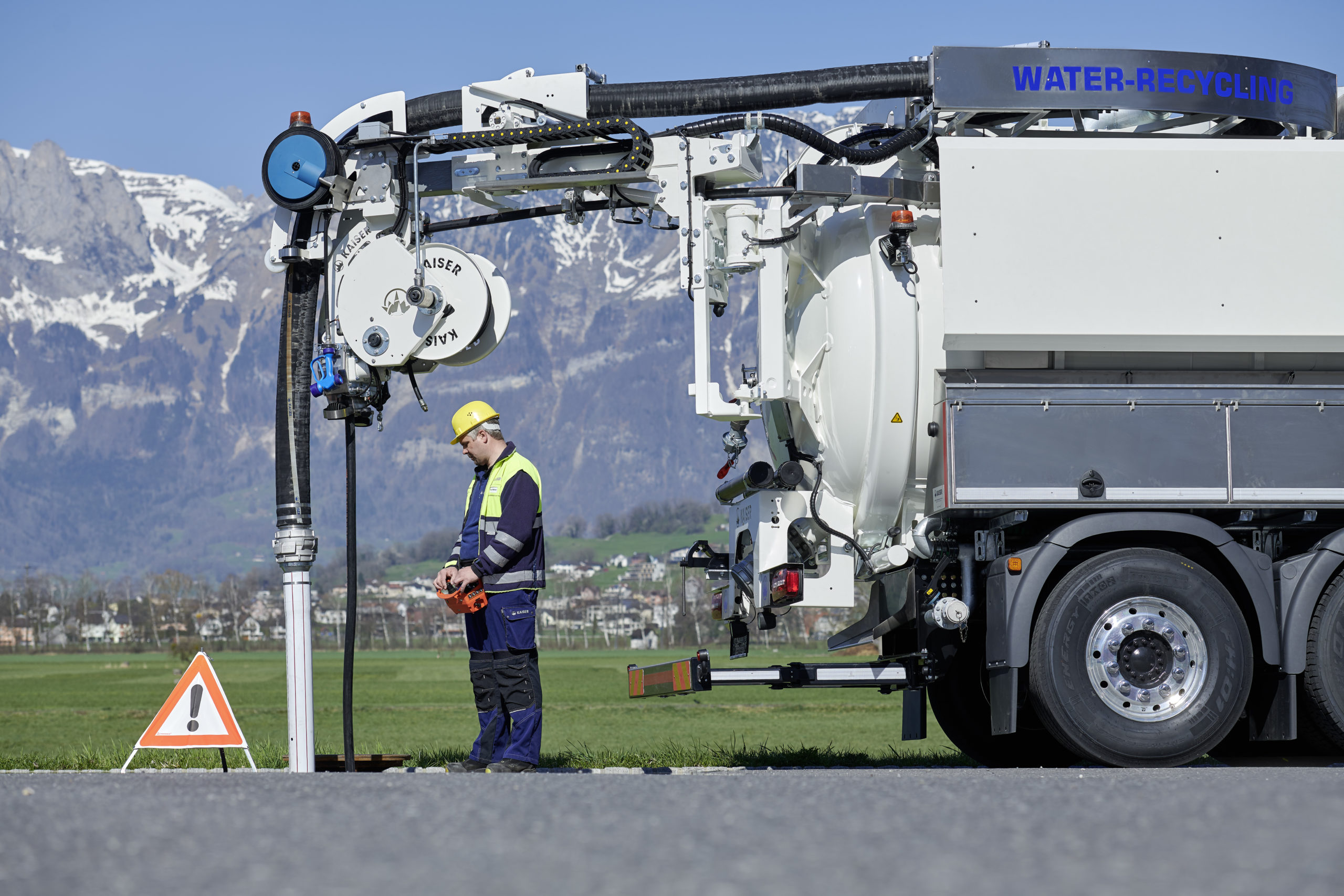
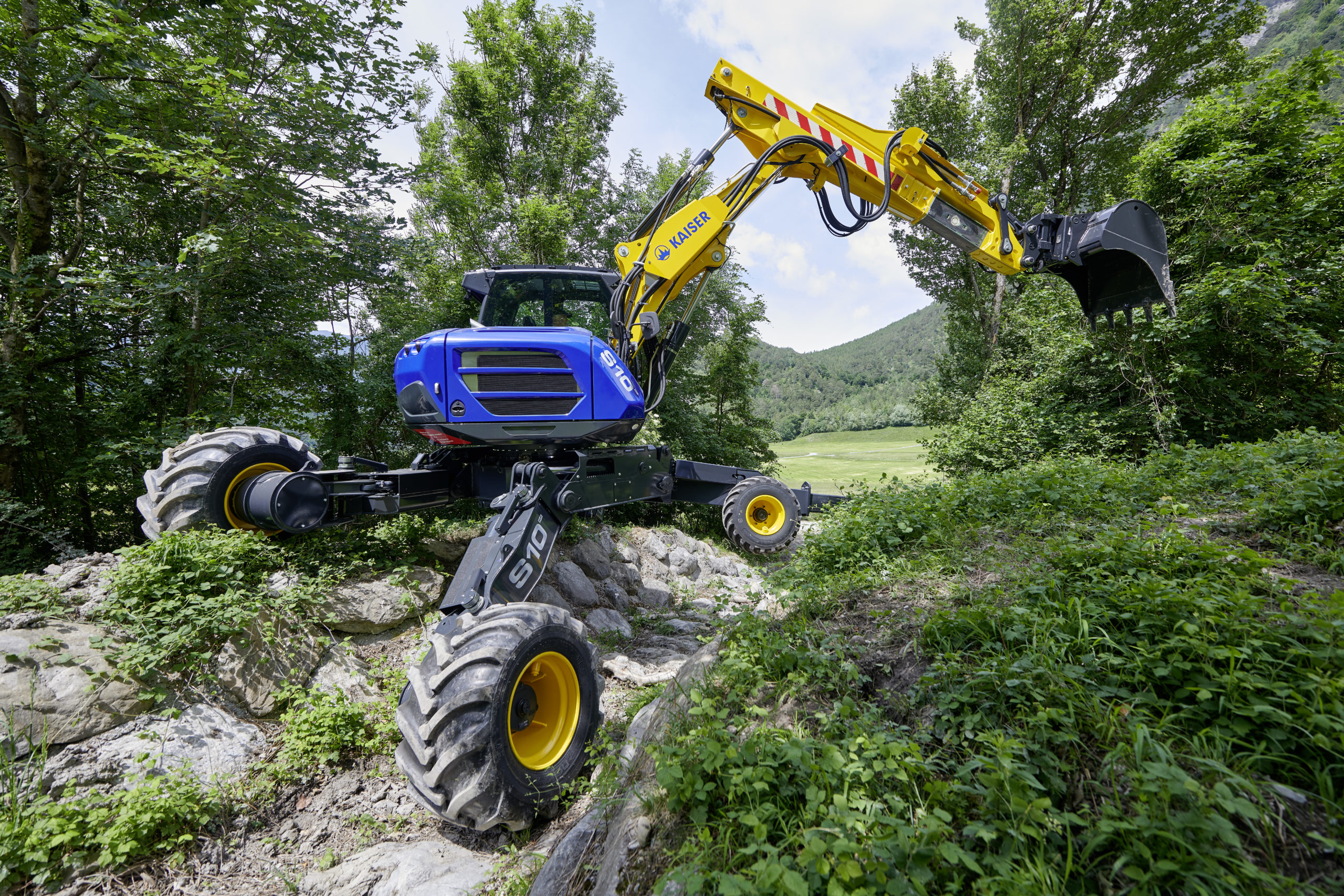
    Interview with Markus Kaiser, CEO, Kaiser Founded in 1913 in Schaanwald Liechtenstein, the family-run company Kaiser manufactures specialized vehicles for mission-critical tasks in sewer cleaning, industrial disposal, and mobile walking excavators. They also design highly specialized components, including customized high-pressure pumps which have consistently set a new standard within the industry. What drives you to…

  • Improving The World Through Disruptive Dental Innovation

    Improving The World Through Disruptive Dental Innovation

    How a revolutionary dental technology company is making millions of people smile Diego Gabathuler is a man on a mission to improve people’s lives and make them smile. The CEO of Ivoclar Vivadent, one of the world’s leading dental companies, is passionate about the life-changing effects of good oral health and a beautiful smile. It…

  • Castles Worthy Of A Fairy Tale

    Castles Worthy Of A Fairy Tale

    A cultural journey of discovery through quaint valleys and legendary castles As a year-round tourist destination, Liechtenstein offers a diverse mix of alpine scenery, outdoor pursuits, a rich blend of cultural attractions such as museums, galleries, and medieval castles worthy of a fairy tale. During winter, the snow-covered Alps attract thousands of skiers and snowboarders.…

  • A Stable Financial Center

    A Stable Financial Center

    Liechtenstein’s New Blockchain Act Opened New Opportunities Despite a worldwide reputation as center for finance and banking, the financial sector is not the country’s largest economic sector, and actually plays a smaller role in the national economy than factories. Since the founding of Liechtenstein’s first bank in 1861, the country’s financial sector has grown to…

  • A Robust Industrial Sector

    A Robust Industrial Sector

    Liechtenstein is heavily export-oriented, focuses on high-quality goods, and swiftly became one of the world’s most industrialized countries. For centuries, the tiny alpine nation with no natural resources relied on agriculture as its primary industry. However, following World War II, the country evolved into a modern, export-oriented society. During the intervening years, it has gone…

  • Thurgau: An Industrious Canton

    Thurgau: An Industrious Canton

    All the high-quality advantages of Switzerland, but with greater affordability In Northeastern Switzerland, bordering Zurich and within St.GallenBodenseeArea, lies the canton of Thurgau, one of the most cost-efficient business locations in the Swiss Confederation. The canton respects its agricultural history and capitalizes on its location in one of Europe’s strongest economic regions. Excellent transport links…

  • The Rising European Hub for Data Centers

    The Rising European Hub for Data Centers

    Zurich is quickly becoming one of Europe’s leading information technology hubs Rising demand for online services has driven new large-scale investments in data center infrastructure around the world, and generated the need for additional sophisticated cloud services. Several global hubs have continuously developed to meet evolving requirements. Switzerland is becoming increasingly interesting as a cloud…

  • The Future of Finance

    The Future of Finance

    Impact investing, blockchain, fintech, and cryptocurrencies The Swiss financial services sector continues to evolve as a new wave of financial institutions and trends are transforming the field. In addition to the adaptation of traditional Swiss financial services now ensuring transparency at the forefront, there has been a surge in socially responsible investing, blockchain technology, fintech,…

  • World Leader in Isolator Technology Stays One Step Ahead of the Innovation Curve

    World Leader in Isolator Technology Stays One Step Ahead of the Innovation Curve

    Swiss technology continues to improve safety in pharmaceutical production The manufacturing of pharmaceuticals is a complex and high-stakes undertaking. Patient safety and product quality are of paramount importance. To mitigate manufacturing risks and improve safety, pharmaceutical manufacturers are opting for isolators instead of classic cleanrooms for aseptic production activities such as filling and formulation. An…

  • Swiss Ingenuity is Reshaping the Packaging Industry to Ensure Sustainability

    Swiss Ingenuity is Reshaping the Packaging Industry to Ensure Sustainability

    Innovative solutions foster new frontiers in digitalization, automation and sustainability Consumers worldwide have been challenging major corporations to “go green” and become more sustainable. The increasing pressure from influencers has encouraged major global brands to collaborate with their trusted suppliers and create sustainable products to reduce their companies’ environmental footprint. Through large investments in R&D,…

  • A Swiss Company Plows its Way to the Top of North American Markets

    A Swiss Company Plows its Way to the Top of North American Markets

    The ambitious growth plans of Aebi Schmidt Group The global powerhouse Aebi Schmidt Group sprang from humble beginnings in 1883 as a mechanical workshop in Burgdorf, Switzerland. Nearly 140 years later, Aebi Schmidt is now a leader in smart product systems and services for the treatment of mission-critical infrastructural and agricultural areas. Throughout the years,…

  • Swiss Packaging Pioneer Can Help the USA Overcome an Environmental Challenge

    Swiss Packaging Pioneer Can Help the USA Overcome an Environmental Challenge

    Environmental concerns are likely to return to the top of the USA’s political agenda following the election of Joe Biden as president. Biden pledged the USA would re-enter the Paris Climate Agreement, the global pact forged five years ago among nearly 200 nations to avoid the worst impacts of climate change, on “Day One” of…

  • Switzerland Plays a Decisive Role in the Coffee Sector

    Switzerland Plays a Decisive Role in the Coffee Sector

    Ancient legends from the 6th-century may shed light on coffee’s origins. As folklore would have us believe, Ethiopian goat herder Kaldi first noticed the benefits of coffee beans after his herd consumed coffee berries and became exceptionally energetic. News quickly spread regarding the beans, and various concoctions began to spread across the globe. Techniques for…

  • Industry 4.0

    Industry 4.0

    The Future of Manufacturing, Digitalization and Automation Industry 4.0 technologies were on the rise prior to the unprecedented impact of COVID-19. The crisis has accelerated long-established trends towards automation and data exchange in manufacturing, and rapidly pushed companies to adapt and evolve at a record pace. Factories, in particular, have been hotbeds of COVID-19 outbreaks,…

  • Innovative Swiss Businesses Tackle Global Challenges

    Innovative Swiss Businesses Tackle Global Challenges

    Few Americans recognize the name Oerlikon, yet millions benefit from the Swiss powerhouse’s innovative global technology and engineering solutions. Oerlikon is one of the leading providers of advanced materials, surface engineering, and polymer processing for the automotive, aerospace, energy, tooling, and additive manufacturing sectors. Every time an individual gets into a car or boards an…

  • Switzerland is one of the biggest industrial exporters per capita

    Switzerland is one of the biggest industrial exporters per capita

    For a small independent country with a population of 8.6 million, Switzerland has become a surprisingly strong industrial player with an ecosystem that is robust and competitive. Swiss industry represents over 25 percent of the country’s GDP, and is an important central component of the economy. A highly vigorous global production and research network compliments…

  • Innovative Swiss Medtech Solutions Reduce Complications

    Innovative Swiss Medtech Solutions Reduce Complications

    Just two decades ago patients undergoing medical procedures would face a long recovery period fraught with potential complications, associated pain, and a lengthy hospital stay. The medtech industry emerged from the union of medicine and technology and is a driving force of change and innovation. Healthcare has drastically transformed and evolved since the turn of…

  • Switzerland – a Medical Technology Hub

    Switzerland – a Medical Technology Hub

    Enabling Innovation for Medtech Worldwide Switzerland’s medical technology sector has a global footprint, impacting patients around the world. The country tops the rankings for the sector’s contribution to gross domestic product (GDP), with 2.6 percent of Swiss GDP stemming from medtech. With a rich history and reputation for precision technology expertise, Switzerland is well-poised to…

  • Developing a Holistic Approach to Healthcare Through Oral Care

    Developing a Holistic Approach to Healthcare Through Oral Care

    In the 18th century, before modern dentistry, the population relied on a local blacksmith or barber for teeth extraction. Since then, the field drastically evolved, and in no small part thanks to Zurich University, which was the first state institution in the world to offer a doctoral degree in dental medicine. Switzerland continues to contribute…

  • Life Science Cluster Expands Biotech Hub

    Life Science Cluster Expands Biotech Hub

    The Swiss capitalize on cross-border research to innovate The pharmaceutical sector is the country’s largest industry, representing 40 percent of exports. Exceptional leadership in research and development, combined with a robust education system, have derived impressive results. Switzerland attracts high-level talent, capital and partnerships from around the world. It has first-class technology, innovation park infrastructure,…

  • A Stable and Reliable Legal System

    A Stable and Reliable Legal System

    Switzerland’s trusted neutral legal framework allowed the country to develop into an international arbitration hub While Switzerland has a secure role as a gateway for American operations and foreign direct investment in Europe, the nation is going through a dramatic change in how it is perceived. While the tax regime is competitive at an international…

  • Switzerland – a Nation of Inventors and Innovators

    Switzerland – a Nation of Inventors and Innovators

    Switzerland Innovation Parks ensure the country remains the most innovative in the world For the last ten years, the World Intellectual Property Organization ranked Switzerland in the coveted top spot as the world’s most innovative country on their Global Innovation Index. Switzerland remains the country of inventors and innovators, with a record number of patent…

  • Science-Based Innovation: Increasing the Competitiveness of Swiss SMEs and Start-ups

    Science-Based Innovation: Increasing the Competitiveness of Swiss SMEs and Start-ups

    Tackling global challenges requiring a multi-disciplinary solution Switzerland is strengthening its approach to tackle some of the world’s greatest challenges with innovation, and in its pursuits the Swiss government builds on Innosuisse. Initiatives by companies like Quantum Integrity (helping to detect fake photos and videos quickly with its software), ClearSpace (tackling failed satellites and the…