From Scottish Waters to American Tables

Scottish shellfish is top quality, needing little effort to taste its best.

Scotland’s coastline stretches for over 11,000 miles. Its cold, clear waters have supported generations of fishing families, their livelihoods built on a deep respect for and commitment to nature. That relationship is evident with every fish caught and every shellfish harvested, and is at the heart of what makes Scottish seafood among the best in the world. 

Seafood Scotland, the national organization championing the country’s seafood sector, works hard to ensure this heritage thrives in a modern world. Representing fishers, farmers, processors, and exporters, the organization supports an industry that supplies over 100 countries – including a growing number of American buyers who recognize Scotland’s seafood for its outstanding quality and appreciate the reliability of its supply. 

Recent discussions around tariffs have tested global trade relationships, but Scotland’s seafood community is no stranger to navigating uncertainty. From Brexit to changing market conditions, the industry has consistently demonstrated agility and collaboration in the face of change. 

Many seafood processors use traditional Scottish methods of curing fish and making it ready to eat.

Donna Fordyce, Chief Executive of Seafood Scotland, said, “Our sector has always risen to meet challenges. When volatility hits, we focus on what we can control: building relationships, staying flexible, and ensuring quality never wavers.”

In April this year, Seafood Scotland visited New York City to celebrate Tartan Week, the annual celebration of Scottish culture, and met with leading buyers, including a fish market servicing around 80% of the city’s Michelin-starred restaurants. The organization also regularly visits the US as part of its relationship with StarChefs, working with the next generation of Michelin-starred chefs to give them an opportunity to use their culinary genius to create fresh, new seafood dishes using the finest seafood Scotland has to offer. 

“Despite shifting tariff and trade dynamics, we work to ensure these key relationships last with chefs and industry organizations. They’re grounded in trust and mutual respect for premium Scottish seafood, renowned for its exceptional taste and provenance,” said Matthew Hurst, Head of Trade Marketing for the Americas at Seafood Scotland.

“Every time we visit the US, the feedback we get from chefs and consumers is consistently positive. We’re constantly working with the market to ensure we’re meeting the needs of US customers and providing them with top-quality seafood,” stated Hurst.

As global trade evolves, Scottish seafood remains a steady presence. Its suppliers listen, adapt, and work hand in hand with American partners. From the rugged shores of the Scottish coast to the vibrant kitchens of New York, Scotland’s seafood is a testament to quality, collaboration, and care.

Q&A: Donna Fordyce, Chief Executive of Seafood Scotland

Donna Fordyce, Chief Executive, Seafood Scotland

Each year, Scottish fleets bring in roughly 560,000 tons of seafood from some of the most bountiful waters in Europe. Where the warm Gulf Stream meets the cold northern seas, the clash of currents creates nutrient-rich conditions, yielding seafood prized for its depth of flavor and texture. In the Scottish seafood sector, sustainability is hugely important; the country holds a concentration of MSC-certified fisheries. Automation, low-carbon transport, and real-time tracking now link Scotland’s boats and farms directly to global buyers, delivering the same just-caught freshness in Scotland to chefs in Boston, Tokyo, and Paris.

Scotland supplies over 65 different types of seafood to customers in more than 100 countries. What makes it stand out in a competitive global market?
Our seafood speaks for itself in terms of quality, but it’s really about the people and the process behind it. Whether wild-caught or farmed, Scotland’s seafood is produced under some of the most rigorous sustainability standards in the world. Many of our fishermen are second or third-generation, and see themselves as custodians of the sea. This long-term stewardship safeguards not just catching fish for today, but preserving stocks for the future. They’re using onboard cameras and LED lighting to target specific species and cut bycatch, while the Fisheries Innovation and Sustainability group unites scientists, industry, and government to turn research into real-world change.

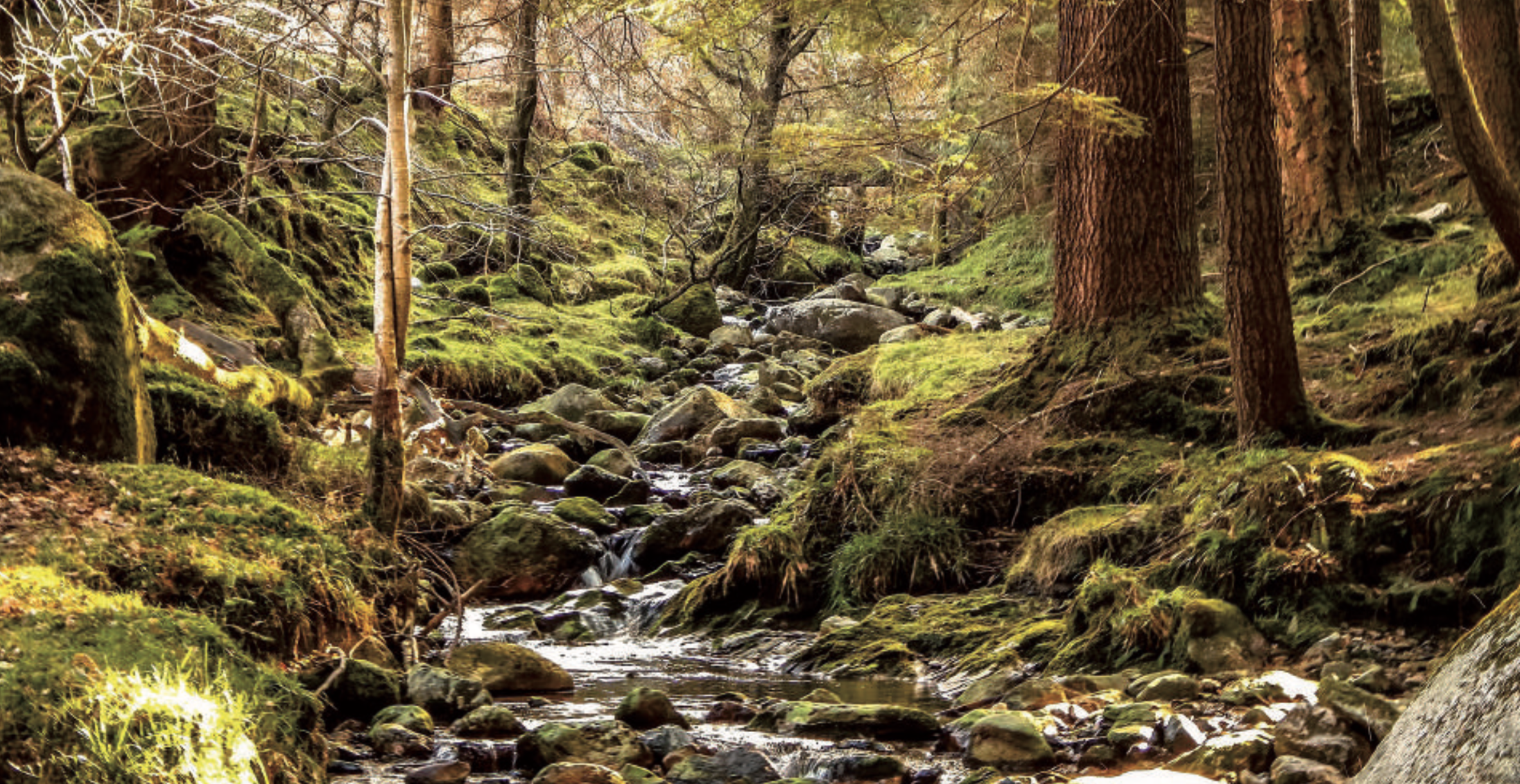
Scotland’s cold, clear waters contribute to the high quality of its seafood.

What is behind the growing appetite for Scottish seafood in the US?

American buyers and chefs value authenticity and traceability, and Scottish seafood delivers both. Scottish salmon alone saw US sales rise by 110% in the first half of last year compared to the year prior. Beyond salmon, we’re seeing strong interest in value-added products like breaded haddock and shellfish, including langoustines and scallops. Once people taste Scottish seafood, they immediately recognize the difference. My message to partners and consumers is simple: taste the product. Scottish seafood is fresh, flavorful, and responsibly sourced. It’s not just food from Scotland, it’s a reflection of who we are: proud, resilient, and deeply connected to the sea.

If you could introduce one Scottish recipe to American kitchens, what would it be? 

Cullen Skink is a traditional Scottish soup made with smoked haddock, potatoes, and cream. Think of it as Scotland’s clam chowder: rich, hearty, and comforting. 

How to Make Cullen Skink:

Melt 25g of unsalted butter, ideally from the Isle of Mull or Aberdeenshire, in a heavy pan and gently soften one finely chopped Ailsa Craig onion until translucent. Add 400g of peeled and diced floury potatoes, covering them with just enough water, and simmer for about 15 minutes until tender. Meanwhile, poach 350g of Arbroath-smoked haddock, preferably undyed, in 300ml of whole Scottish milk for 5 minutes, just until it flakes. Remove the fish, peel off the skin, and reserve the milk. Pour the warm milk over the cooked potatoes, stir in the flaked haddock, season with sea salt and cracked black pepper, and add a splash of Scottish double cream. Garnish with a handful of fresh parsley or snipped chives, and serve with Scottish oatcakes or crusty bread.


More Articles

  • Interview: Lars Van Der Haegen, CEO, Belimo

    Interview: Lars Van Der Haegen, CEO, Belimo

    Belimo is the leading global manufacturer of innovative actuators, valves and sensor solutions to control heating, ventilation and air conditioning systems. How do you assess Switzerland’s business ecosystem? Switzerland is an effective business location from an administration point of view. The business-friendly environment facilitates global networking and offers excellent access to the European market. An…

  • The Evolving Swiss Financial Services Sector

    The Evolving Swiss Financial Services Sector

    A new wave of financial institutions are transforming the field Previously notorious for offshore bank accounts, secret holdings and masked account holders, the Swiss financial services and banking sector has completely evolved, with transparency at the forefront. Switzerland now adheres to strict regulations, requiring institutions to disclose all assets held by American account holders. In…

  • IMD: leading the way in executive education

    IMD: leading the way in executive education

    A conversation with Professor Jean-François Manzoni, President of IMD and Nestlé Chaired Professor January 23, 2020 Switzerland is a small but unique country that punches above its weight in many categories including business, education and innovation.  One Swiss institution at the intersection of all three is the International Institute for Management Development (IMD), the partner…

  • Leading in Fundamental Scientific Research

    Leading in Fundamental Scientific Research

    Interview: Prof. Dr. Christian Leumann, Rector, University of Bern How do you assess Swiss education? Switzerland is known for its quality, and academia is no exception. Most Swiss universities are ranked within the top 1% globally. Switzerland’s education system has several advantages, including the dual education system, which allows the population to pursue different successful…

  • Strengthening Swiss-American Relations

    Strengthening Swiss-American Relations

    January 23, 2020 With informal conversations surrounding a free trade agreement, the bilateral relationship has much to gain What are the Swiss economy’s strengths? Switzerland has proven itself very resilient in the face of multiple global economic downturns. Our federal government has been working with a budget surplus for the past 12 years, before COVID-19,…

  • A Digital Backbone

    A Digital Backbone

    January 23, 2020 Switzerland as a nation is known as a trailblazer, having accomplished many firsts across a variety of sectors, including telecommunications. Switzerland is the world’s largest investor in telecommunications infrastructure per capita, thanks to the nation’s leading telecommunications provider, Swisscom.   Within the competitive telecommunications market, Swisscom has managed to retain its market…

  • Engineering Innovative Technologies

    Engineering Innovative Technologies

    Interview: Roland Fischer, CEO, Oerlikon Oerlikon creates new innovative solutions to tackle some of the world’s greatest challenges. With their engineering technology, they can give products improved and more desirable functions. These applications are specially designed for growth sectors, and utilized across various industries, including automotive, aerospace, energy, tooling and additive manufacturing.  Is global digitization…

  • Interview: Martin Sauter, CEO, Sauter Bachmann

    Interview: Martin Sauter, CEO, Sauter Bachmann

    Based in the Canton of Glarus lies Sauter Bachman, an indigenous family owned success story with nearly 100 years of history. The Swiss precision manufacturing company produces multifaceted high-quality gears, gearboxes and complex systems for customers in industry and aerospace. GE Aviation, Pratt Whitney and other USA clients rely on Sauter Bachman as a crucial…

  • Discover the Canton of Glarus

    Discover the Canton of Glarus

    A hidden gem in Switzerland, Glarus offers Swiss benefits at a cost advantage One hour outside Zurich lies the Canton of Glarus, a picturesque, business friendly industrial region within the Greater Zurich Area. It is home to award winning tourism destinations and wonders such as the geologic UNESCO world heritage site of the Tectonic Arena…

  • Interview: Gilbert Ghostine, CEO of Firmenich

    Interview: Gilbert Ghostine, CEO of Firmenich

    January 23, 2020 Founded in Geneva in 1895, Firmenich is the world’s largest privately-owned company in the perfume and taste business. It has designed many of the world’s best-known perfumes and tastes. The ingredients created by Firmenich are utilized by four billion consumers daily around the world. Firmenich invests 10% of its USD 3.7 billion…

  • The Future of Work

    The Future of Work

    January 23, 2020 A conversation with CEO of The Adecco Group, Alain Dehaze, who promises to continue to make the future work for everyone.  Switzerland is home to a unique labor market that has gained a world renowned reputation for excellence, innovation, and continues to surprise with its qualified youth. How has Switzerland fostered such…

  • Closing the innovation gap

    Closing the innovation gap

    Viewpoint: Marco Huwiler, Country Managing Director, Accenture Switzerland When the world economy catches a cold, Switzerland sneezes. Following weak global growth, Switzerland is feeling the sniffles, with stagnant GDP and a collapse in profitability in recent years. But there is wisdom in the old saying “starve a fever, feed a cold”. Companies with the courage…

  • Dublin’s Silicon Docks

    Dublin’s Silicon Docks

    The nickname alludes to Silicon Valley, and was embraced to illustrate the concentration of European headquarters of high-tech companies Dublin’s docklands were historically a symbol of industrial decline, but today is home to many multinationals including: Google, Accenture, Microsoft, PayPal, eBay, Facebook, Intel, Huawei, Etsy, Twitter, and LinkedIn. Ireland’s tech sector consists of nine of the top ten US technology companies, eight of…

  • Irish Produce Conquers Global Markets

    Irish Produce Conquers Global Markets

    The Irish agri-food sector is diversifying its markets and pioneered the approach to sustainable food production Agri-food is Ireland’s largest indigenous industry, employing over 8.4% of the working population, and when employment in marketing, processing and inputs are included, the agri-food sector accounts for nearly 10% of total employment. The sector largely contributes to the…

  • An Inside Look at Ireland’s Economic Growth

    An Inside Look at Ireland’s Economic Growth

    Ireland’s polished business ecosystem caters to foreign direct investment and nurtures innovation. The global footprint of Irish companies has never been greater Walking through the cobblestone streets of Dublin, the juxtaposition of modern buildings wedged between historic Georgian brick offices represents the tidal wave of change foreign direct investment has implemented across the nation. Growth…

  • The Midlands: Ireland’s Hidden Heartland

    The Midlands: Ireland’s Hidden Heartland

    Ireland’s Hidden Heartlands is the newest Irish tourism brand, exposing the magic of the midlands region. For over a century, Ireland has been on the top of Americans’ travel destinations, but only recently has the midlands been given the recognition it deserves. Often, investment will follow tourism, and Paddy Mahon, Chief Executive of Longford County…

  • Discover Meath: The Birthplace  of Ireland’s Ancient East

    Discover Meath: The Birthplace of Ireland’s Ancient East

    Meath County has a colorful history, stemming as the seat of the High King of Ireland, and as such has been colloquially dubbed “The Royal County.” It is home to the UNESCO designated World Heritage Site: Newgrange, an ancient burial site older than the Great Pyramids of Giza and Stonehenge. The County’s significance is also…

  • Cork: Ireland’s Second Largest Economic Driver

    Cork: Ireland’s Second Largest Economic Driver

    On track to be the fastest growing county over the next two decades Overlooking the colorful city with a winding river and emerald rolling hills surrounding the parameter, Chief Executive of Cork County Council, Tim Lucey, was proud to showcase his county. Cork is the largest county in Ireland, and home to the second most…

  • Manufacturing: Ireland’s Second Largest Employer

    Manufacturing: Ireland’s Second Largest Employer

    With the arrival of the Fourth Industrial Revolution, smart factories and innovative supply chain integration is transforming the manufacturing sector Manufacturing accounts for over 30% of GDP, 122 billion euro in exports, and employs 250,000 people across 4,000 businesses in Ireland.  “Manufacturing is not the first thing that comes to people’s minds when they think…

  • Project Ireland 2040

    Project Ireland 2040

    The Government’s National Planning Framework and National Development Plan Project Ireland 2040 entails a diverse range of investments being made by the State. This governmental 116 billion euro long-term overarching infrastructure strategy aims to counterbalance the continued growth of Dublin with that of other regions. It seeks to develop cities and regional towns as alternatives…

  • Solving Ireland’s Mobility Challenges

    Solving Ireland’s Mobility Challenges

    Anyone visiting Ireland will notice a deficit in transport infrastructure services, impacting mobility for residents and tourists. Dublin remains one of the last major European capitals lacking a rail connection between downtown and the main international airport. Also, the interconnectivity and reliability of city trains, trams, and bus networks are lagging. However, there is a…

  • An Irish Adventure Awaits

    An Irish Adventure Awaits

    Low hangingclouds sweep across a completely still lake. The water reflects a colorful mountain range. With only the sound of a tussle of leaves blowing in the wind, and a breath of fresh country air, you know – this is Ireland. From the warm welcome on arrival, Irish taxi drivers are well-known for being excellent…

  • Dublin: A Melting Pot

    Dublin: A Melting Pot

    Ireland’s first Japanese restaurant celebrates Dublin’s vibrant demographics Derek and Graham Ryan, Group Founder and Director of award-winning, Yamamori Group restaurants and bars, have firsthand witnessed the evolution of Dublin becoming a global melting pot. With nearly 25 years since the original restaurant’s opening, the Group now delivers unique culinary adventures across three thriving restaurants…

  • Interview: Ciarán Hayes, Chief Executive, Sligo County Council

    Interview: Ciarán Hayes, Chief Executive, Sligo County Council

    Sligo Witnessing Unprecedented Investment Ireland’s new hub for innovation? Sligo is not only a stunning location for tourism, but also a highly practical destination for business, with attractive incentives, high levels of infrastructure, and the ambition to become a ‘smart city.’  What is Sligo’s track record for attracting multinationals?  Sligo has an established track record of…