Business
-
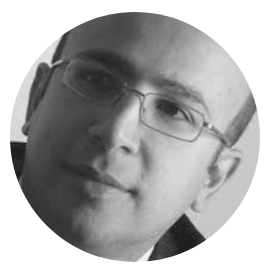
Interview: Maged Ezz Eldeen, Country Senior Partner, PwC Egypt
How have Egypt’s economic reforms affected the competitiveness of the economy? Egypt’s unprecedented macroeconomic and business legislation reform measures are bearing positively on the country’s competitive standing. For the first time in eight years, Egypt’s ranking on the global competitiveness report witnessed a significant jump of 15 places in 2017. Underpinning this was a remarkable…
-

Interview: Mr. Mohamed Hamza Talaat, Managing Partner, Baker & McKenzie Egypt – Helmy Hamza & Partners
A market leader in mergers and acquisitions, project finance and capital markets. Named IFLR Egypt’s “Law Firm of the Year” six times, with its Cairo office, ranked Tier 1 by IFLR1000, Legal500 and Chambers & Partners for Banking & Finance and M&A. With 40 years’ experience in the local market, they are the go-to firm…
-
Interview: Hala Helmy El-Saeed, Minister of Planning and Administrative Reform of Egypt
The Ministry of Planning, Monitoring and Administrative Reform’s vision is to ensure efficient planning and management of the state’s public investments. It seeks sustainable economic development by ensuring the state’s administrative body becomes increasingly more effective, efficient, and capable of managing state resources to provide quality services to citizens. How do you assess Vision 2030’s…
-
Interview: Mohammed Berro, Chief Executive Officer, Emirates NBD Egypt
Emirates NBD Egypt is one of the largest banks operating in Egypt excels in premier banking and pioneers in digital banking. It is an essential stakeholder in financing mega infrastructure projects and development initiatives in Egypt. Emirates NBD Egypt is a wholly owned subsidiary of Emirates NBD Group, a leading banking group in the region. …
-
United Nations Global Compact Profile
Launched in 2000, the United Nations Global Compact (UNGC) is a global initiative that serves as a call to companies to align strategies and operations under the framework of the 10 UNGC Principles on Human Rights, Labor, Environment and Anti-corruption. Today with more than 9,500 business and 3,000 non-business organizations based in 160 countries and…
-
Interview: Nemanja Aleksic, CEO and Managing Partner of the Aleksic and Associates Joint Law Office
How do you assess Serbia’s legal framework in 2018? The legal framework of Serbia in 2018 will be adapted to the process of accessing the European Union, with full commitment to the priority reforms necessary in this process. On April 29, 2008, Serbia signed the Stabilization and Association Agreement in Luxembourg, which, entered into force…
-
Interview: Zoran Blagojević, CEO, Wiener Insurance Serbia
How do you assess Serbia’s insurance sector? Western European markets average premiums around EUR 2 500 per capita, but in Serbia we are at EUR 100 per capita. These two figures show us a clear picture of the huge growth potential the insurance sector has within the Serbian market. There is a huge misunderstanding of…
-
Interview: Radoš Gazdić, Acting Director General, Development Agency of Serbia (RAS)
What are some of the key facts that all international investors should remember about Serbia? The key factor at this moment is the competitiveness of the labour force when comparing it to Europe. Serbia is increasingly becoming more attractive, first and foremost, because of the technical education of our labour force. It is one of…
-
Interview: Marko Čadež, President, Chamber of Commerce and Industry of Serbia (PKS)
What is the global perception of Serbia? Over the last five years investors saw straightforward and clear economic policies. This means fiscal consolidation, monetary stability and political stability. They have seen Serbia has a clear strategy. There is now a new perception on Serbia’s future. The perception is now quite good. Together with Montenegro, we…
-
Interview: Ingeborg Øfsthus, CEO, Telenor Serbia
How do you see Serbia’s telecommunication sector in 2018 and what key challenges do you foresee moving forward? The global telecommunications sector is going through a revolution, and that revolution is digitalization. The fact being the competition landscape is changing. It is hitting every single operator around the world in some way or form. We are lucky…
-
Interview: Zoran Petrović, CEO, Raiffeisen Bank Serbia
How do you assess Serbia’s economy? We expect Serbia’s economy in 2018 will be driven by a couple of factors. First of all, we believe it will be pushed by the consumptions of the citizens, the unemployment rate is going down, employment rate is going up, so we expect that also the banking sector continue…
-
Serbia: EU Accession Accelerating
Serbia is one of the most advanced countries in the process. Serbia is a small and open economy in South Eastern Europe. The nation’s development is considerably below the European average, while by growth it is one of the fastest developing countries in Europe. Growth potential in Serbia is tremendous in every segment of the economy.…
-
Serbia: The Balkan Industrial Revolution
Serbia’s rich historical legacy lies in its strength as a regional manufacturing hub. This is furthermore supported by its extensive free trade agreements which allow duty-free exports to a market of more than 1 billion people. Some of these markets go much further than the European Union which is Serbia’s largest export market. Serbia has…
-
Interview: Martin Gauss, CEO, Air Baltic
How important is the development of Latvia’s aviation sector for the economy? If you look at the connectivity of the Baltic States, Riga at the moment is the key capital. Latvia being in Northern Europe has reachability issues. Connectivity with Europe by road and rail systems do not fully meet the needs of the region…
-
Interview: Reinis Rubenis, CEO, Swedbank Latvia
What challenges is the Latvian financial sector facing? One challenge for the Latvian banking sector is the number of banks. There are far too many banks in Latvia for such a small economy. Over the next five years, we will definitely see further consolidations taking place. This consolidation is necessary. A positive aspect of the…
-
Interview: Janis Lucaus, CEO, BTA
How do you assess the insurance sector? Even though the sector caters to a small market in terms of population, it is highly competitive and evolving. A key factor to take into consideration is the number of competitors and a clear increase of international insurance players within the market. Competition has been beneficial for the…
-
Interview: Edgars Rinkevics, Latvian Minister of Foreign Affairs
What are Latvia’s most prominent accomplishments? Latvia is an integral part of Europe and in May 2019 will celebrate 15 years as a part of the European Union. We are part of the eurozone, Schengen, and the OECD. Latvia operates according to similar legislation, rules, and principles as The Netherlands, Germany or Ireland. Therefore, Latvia…
-
Interview: Nikita Sergienko, CEO, Bite Latvia
How do you assess Latvia’s ICT sector? Latvia has one of the best networks worldwide and probably the best in the European Union. Taking advantage of this, and the qualified labor, many multinationals moved their back offices, call centers, IT centers and even head offices to Lithuania and Latvia. Western Union, Swedbank, and even Barclays…
-
Baiba A. Rubesa, CEO, Rail Baltica, on creating a new economic corridor
Rail Baltica, a new railway infrastructure connecting the three Baltic States to Poland and indirectly to Finland, is often called the project of the century. This project marks a symbolic return of the Baltic States to Europe. Currently, most rail freight traffic in the Baltics originates from the CIS (Commonwealth of Independent States) countries and…
-
Interview: Uldis Augulis, Latvian Minister for Transport
What opportunities exist to foment further transit? Latvia is situated in a very privileged geographical position. Within the Baltic States, Latvia is the focal point connecting the West to the East. Our warm-water ports currently account for the biggest cargo freight transportation amongst the Baltic countries. Transit, logistics, and distribution of goods through Latvian ports…
-
Interview: Svens Dinsdorfs, CEO, Elko Group
What is your outlook for Latvia’s Economy? Latvia’s financial crisis had a big psychological impact on society in terms of spending. Since then, Latvia has experienced a slow but gradual increase in internal consumption which has aided the countries turnaround. The confidence of the population is continuously increasing which is directly boosting internal demand. This…
-
Interview: Marta Jaksona, Executive Director, Foreign Investors’ Council in Latvia (FICIL)
How do you assess current foreign direct investments in Latvia? I would like to see higher levels of investment. Foreign direct investments in Latvia increased sharply after Latvia’s accession to the EU in 2004. After the crisis, the investment slowed. However, we saw this in the entire EU. The fight for investments is obviously increasing.…