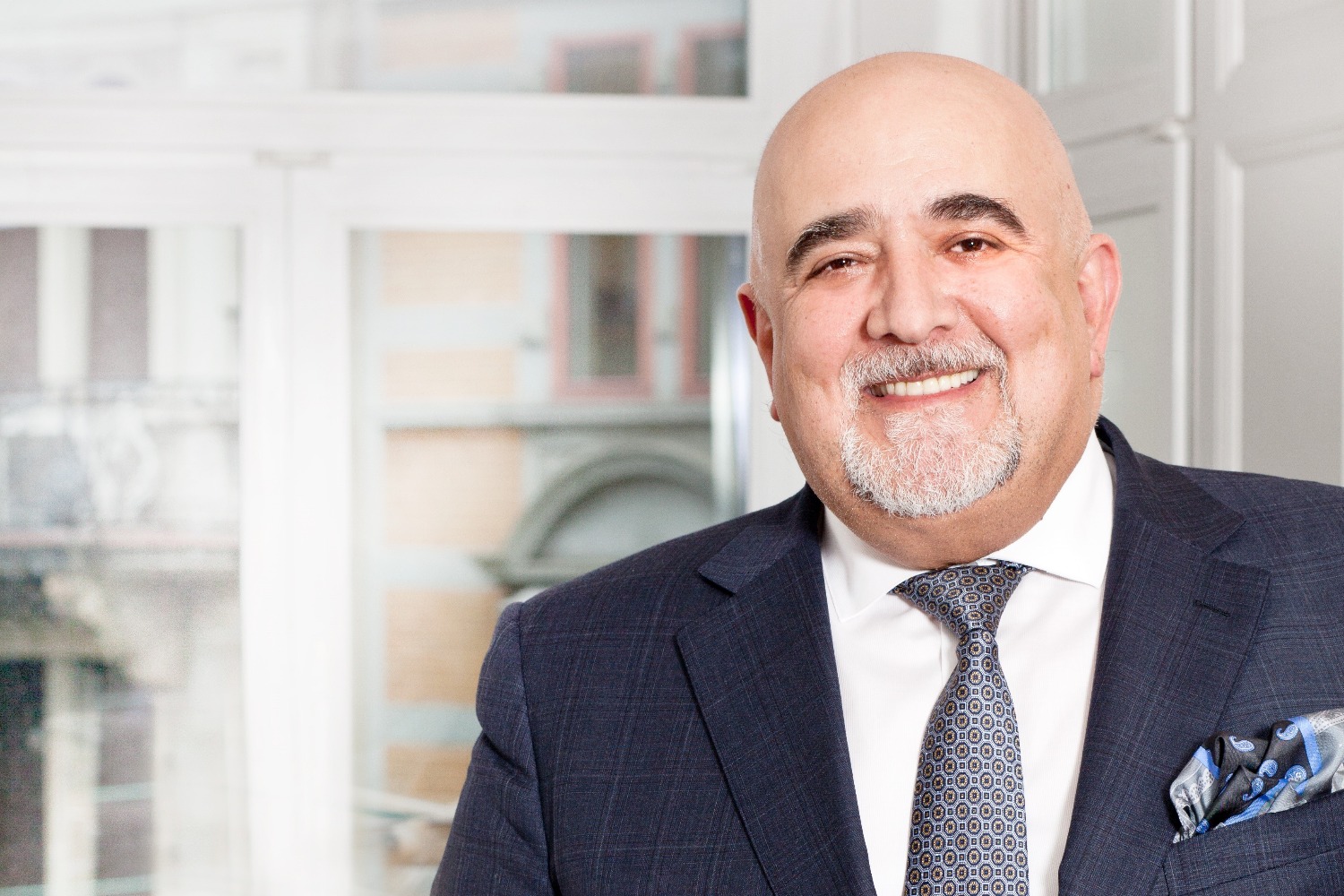
Interview: Hala Helmy El-Saeed, Minister of Planning and Administrative Reform of Egypt

The Ministry of Planning, Monitoring and Administrative Reform’s vision is to ensure efficient planning and management of the state’s public investments. It seeks sustainable economic development by ensuring the state’s administrative body becomes increasingly more effective, efficient, and capable of managing state resources to provide quality services to citizens.

How do you assess Vision 2030’s plans to meet sustainable development goals?

The Government of Egypt has embarked on an ambitious reform agenda to achieve key strategic objectives for the country’s growth and development by 2030 and demonstrated a strong commitment to achieving the Sustainable Development Goals at the highest political level. Upon the signature of 193 UN Member States of the 2030 Agenda for Sustainable Development, Egypt was one of the first countries to adopt its localized agenda through the adoption of the Sustainable Development Strategy: Egypt Vision 2030 (SDS). The strategy followed a participatory approach involving all relevant stakeholders – the private sector, civil society, and academia. 

Since its launch, the Government of Egypt has been committed to developing and monitoring its progress towards achieving the SDGs, as reflected in its initiative to present a Voluntary National Review (VNR) on its progress ahead of the United Nations’ High-Level Political Forum in both 2016 and 2018. In addition, the SDS has granted a solid governance foundation for matters related to the SDGs. In December 2015, the National Committee for Monitoring the Implementation of the Sustainable Development Goals was established by prime-ministerial decree to act as an inter-institutional body responsible for monitoring the implementation of the SDGs. The committee is composed of representatives of seventeen ministries and state entities.

SDG units have also been established in some ministries, and will soon be established in all ministries. 

The SDS is a national development strategy that guides the GoE’s reform measures and is aligned with the 17 SDGs, as well as African Agenda 2063. More specifically, it covers the social, economic, and environmental dimensions of the SDGs. The strategy aims to serve as an inclusive governing framework that ensures that all development programs and projects contribute to advancing the SDGs in Egypt. In order to accommodate to the economic and social impacts of the government’s economic reform programs that launched in 2016, the Ministry of Planning, Monitoring, and Administrative Reform is currently leading an update and review of the strategy. 

As it was made clear in the 2018 VNR presented by Egypt, the country has made significant progress in a number of areas. Within a three-year timeframe, tangible progress has been made with a number of SDG goals such as goal 5, 7, 8, 11, and 16.

Despite the progress achieved so far, Egypt faces a number of key challenges that hamper its ability to reach its untapped potential, and ultimately achieve the SDGs, namely – data availability, poor governance, high population growth, and insufficient financing. 

How can the private sector participate in the process? 

In alignment with SDG 17 “Strengthening Implementation and Partnerships,” the GoE is aware that the 2030 Agenda is a formidable task which requires well-coordinated efforts on the part of all principal stakeholders: the Government, the private sector, civil society, and international development partners. 

The participation of the private sector is of essential importance to the process of achieving the Agenda, and there are a number of ways in which it can do so. Firstly, the private sector can contribute to the process of designing and updating the SDS. As mentioned previously, the Ministry of Planning, Monitoring, and Administrative Reform is currently leading the update of the SDS, and is undergoing a series of consultations with all relevant stakeholders. The GoE calls on the engagement of the private sector community through the provision of inputs and insights in order to develop the optimal, inclusive national strategy. 

The second means by which the private sector can participate in the process is through contributing to the implementation of the SDGs by dedicating long-term, sustainable investments. Egypt has a breadth of resources, which is reflected in the fact that multiple sectors responsible for its rising economic growth. We wish to leverage investments that have recently been made in our infrastructure to boost sectors that increase the added value to our output, and take advantage of our natural and human resources. The strength of our natural and human resources, coupled with unwavering commitment to reform, promises a bright future for seven specific sectors: manufacturing; wholesale and retail trade; tourism; real estate and infrastructure; communications and information technology; extractive industries and; agribusiness. We have identified these sectors as those with the highest potential and we are finalizing a strategy for structural reform to push these sectors forward with specific short and medium term KPIs. 

The GoE has taken initiative to encourage the engagement of the private sector by taking measures to improve the business climate, stabilize the economy, and reduce risk and uncertainty for investors. This was done through the ambitious IMF-backed economic reform program, which entailed a series of fiscal, monetary, and regulatory reforms that have since then strongly improved the economy. In addition, the GoE took an initiative to establish the first Egyptian sovereign fund – Egypt Fund, which should be fully established in early 2019. The fund will grant investors the opportunity to tap into the immense pool of state-owned resources through a government-backed and privately managed investment fund.

Lastly, we urge the private sector to utilize their resources to give back to Egyptian community through Corporate Social Responsibility programs aligned with the government’s development program, and transferring expertise to the local labor force. 

What role will Egypt’s new sovereign wealth fund play in developing a sustainable national economy? 

The Egypt Fund (EF) is a perfect example of a practical modality for a public-private partnership that can be used to capitalize on the immense pool of resources and assets belonging to the state, and crowd in the private sector in the process. The main objective of the fund is to better utilize Egypt’s wealth of assets and natural resources to maximize their value for the coming generations and contribute positively to state revenues. 

The EF does not belong to the first generation of sovereign wealth funds, as it would not depend on balance of payments surplus and will mainly focus on investing domestically, whether in existing assets and companies or in new fields and opportunities in the Egyptian economy. Instead, it can be classified as a sovereign development fund – a sovereign wealth fund focused on promoting the national economic and development goals of the government. When fully established, the EF is expected to attract the sustainable and inclusive investment needed to achieve the SDS. 

The Fund will acquire utilized and unutilized public assets and stakes in companies at their market value. The Fund could acquire specific companies and assets (including land and buildings) to co-develop with private investors to inject capital and advanced management strategies to generate higher returns. Given the flexibility of the EF law, various investment models will be feasible to allow the Fund to create the maximum returns on these assets, while also developing specific activities and geographical areas in Egypt. 

The EF will be the largest investment entity in Egypt, and will seek investment opportunities in selected projects across sectors, with specific focus on underdeveloped sectors and geographic areas. This will be done bearing in mind the main objective of value and profit generation, combined with sustainable development. The main strength of the EF will be its ability to move with agility on new investment opportunities, with the full weight of the government behind it in resolving any impediments that face investors, and more importantly, in moving in a more structured manner to mobilize assets and companies in Egypt to attract investors and create jobs and growth, in an environment equal to any opportunity abroad. 

To ensure the developmental focus of the EF, compliance with responsible development practices such as Environment, Social, and Governance (ESG) principles have been made mandatory within the Fund’s articles of associations, which are expected to be finalized before the end of the year. 

More Articles

  • Liberal Labor Legislation

    Liberal Labor Legislation

    Switzerland regularly leads international rankings as a location for highly qualified employees and is consistently one of the most sought-after work destinations. Expatriates enjoy an exceptionally high quality of life, personal safety, considerable social benefits, and substantial salaries.  With some of the most liberal labor laws globally, Switzerland is also an attractive location for employers.…

  • A Look Inside the World’s Most Innovative Economy

    A Look Inside the World’s Most Innovative Economy

    The World Intellectual Property Organization analyzed 131 economies, and for the last ten years, Switzerland has ranked as the world’s most innovative country. The nation specializes in offering innovative solutions to complex global challenges, and has a unique ecosystem for business and investment opportunities. International corporations value Switzerland as an efficient, stable and productive location…

  • Switzerland Employs Half a Million Across the USA

    Switzerland Employs Half a Million Across the USA

    Swiss industry continuously brings high-quality jobs and the ‘Swiss spirit’ to even the most remote regions Although the USA is one of the most powerful countries globally, it still has its share of unemployed, impoverished citizens, and is keen on attracting foreign investment to boost local economies.  The past decade’s economic growth bypassed many rural…

  • How a Swiss AI Lab is helping to solve a global challenge

    How a Swiss AI Lab is helping to solve a global challenge

    A Viewpoint from Prof Dr Andrea Emilio Rizzoli from Istituto Dalle Molle di studi sull’intelligenza artificiale (IDSIA) USI-SUPSI How do you assess Switzerland’s higher education system?  In the past years, Switzerland has consistently been ranked as one of the most innovative countries in the world. There are various reasons why this small country, nestled in…

  • Switzerland: An Ideal Location for Global Operations

    Switzerland: An Ideal Location for Global Operations

    Innovative Swiss solutions tackling global challenges Switzerland specializes in offering innovative solutions to complex global operating structures seeking an efficient, stable and productive location to grow their dynamic high value-added businesses. The country is well known for offering one of the most competitive ecosystems globally. The nation has a liberal economy, political stability, international integration,…

  • Neuchâtel: Home to the World’s Most Innovative Nanotechnologies

    Neuchâtel: Home to the World’s Most Innovative Nanotechnologies

    The Canton of Neuchâtel develops revolutionary microtechnology, microelectronics, photovoltaic and system engineering technologies Nestled within the Greater Geneva Berne Area lies the Canton Neuchâtel, a canton which makes up 2% of the Swiss population, yet generates 20% of Switzerland’s commercial surplus. Per capita it has grown to become the second-biggest exporter and the second-largest holder…

  • Davos: More than just the World Economic Forum

    Davos: More than just the World Economic Forum

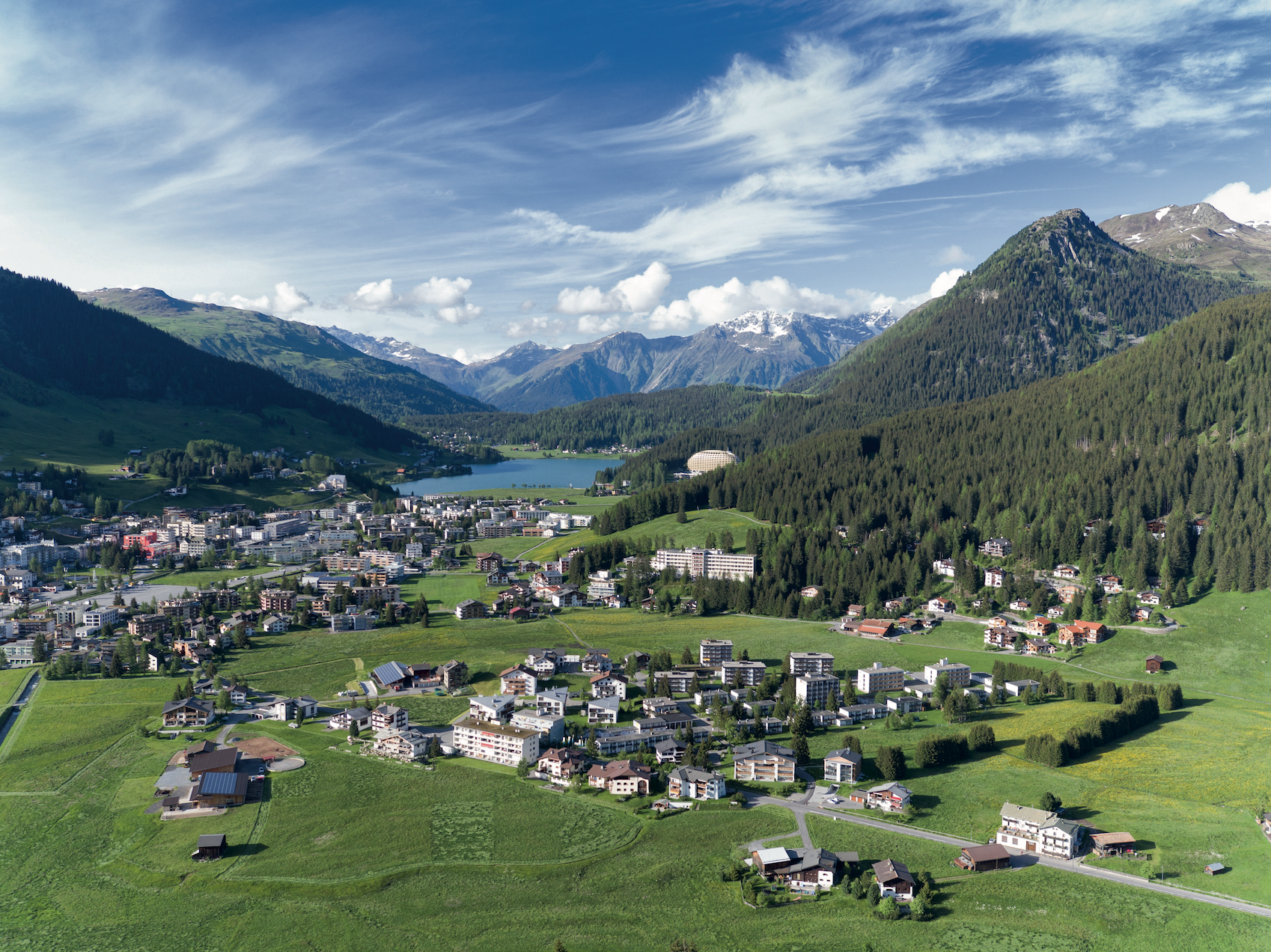
    The world’s attention descends on the small Swiss touristic ski town of Davos in the Canton of Grisons as business leaders, politicians and investors arrive. They gear up to discuss stakeholder capitalism at the Forum’s 50th anniversary. Panelists will assess global economic issues and debate solutions to some of the world’s most pressing social challenges.…

  • Geneva: The Global Capital of Peace Fostering a thriving business metropolis

    Geneva: The Global Capital of Peace Fostering a thriving business metropolis

    For a city with a population under half a million, Geneva has more influence on the global stage than people would expect. Within the Greater Geneva Bern Area (GGBA), lies one of the world’s most iconic and globally-minded cities. Endearingly referred to as the “world’s smallest metropolis,” Geneva is the capital of peace, the cradle…

  • Swiss Climate Solutions

    Swiss Climate Solutions

    The challenge of modern environments The modern workplace has changed dramatically over the years. Oliver Zimmerman, CEO of Condair, highlighted that, “We are spending nearly 90% of our time within hermetically sealed artificial interiors that often are comparable to desert climates.” Our comfort within these indoor environments and the productivity of office employees largely relies…

  • St.GallenBodenseeArea: One of Switzerland’s Most Attractive Regions

    St.GallenBodenseeArea: One of Switzerland’s Most Attractive Regions

     Interview: Karin Jung, Head of the Department of Economics and Labor, Canton St.Gallen  In eastern Switzerland, lies the St.GallenBodenseeArea (SGBA), an initiative of the cantons of St.Gallen, Appenzell Innerrhoden, Appenzell Ausserrhoden, and Thurgau. SGBA is one of the largest and the most cost-efficient of the various economic areas of Switzerland, and rests between Munich and…

  • Canton Schwyz: The founding father of Swiss HealthTech

    Canton Schwyz: The founding father of Swiss HealthTech

    The Canton of Schwyz is one of the founding cantons and gave the entire nation its name. It has proven itself an autonomous industrial location resilient to economic pressures, and an active innovation hub. GDP growth in Schwyz exceeds the Swiss average and productivity is astonishingly high. Interview: Andreas Barraud, Head of the Department for Economic…

  • Swiss Cheese Tackles Global Markets

    Swiss Cheese Tackles Global Markets

    As global food trends rapidly shift, American palates are changing. There has been an evolution from heavily processed cheeses towards traditionally produced artisan varieties, and specialty European cheeses are particularly gaining popularity in the USA. Cheesemongers know the Swiss have superior standards based on traditional methods. In general, agri-food production standards in the small alpine…

  • Switzerland’s Number One Holiday Destination

    Switzerland’s Number One Holiday Destination

    The Canton is entirely mountainous and combines pristine wilderness and breathtaking scenery of snowcapped peaks with modern tourism infrastructure. It holds 1,000 peaks, 615 lakes, 150 valleys, and Switzerland’s only national park. Its Rhine Canyon Ruinaulta is fondly referred to as the “Swiss Grand Canyon”. This beautiful scenery was the inspiration behind Johanna Spyri’s worldwide…

  • Knowledge Generates Value

    Knowledge Generates Value

    Knowledge generates value, and it is the key to solving societal problems and overcoming global challenges. It is one of the most important resources in our society, and it will become even more important in the future. In everything that it does, the University of Bern feels its obligation to bring about benefits for science,…

  • Swiss Hospitality: Fueling the Future Needs of the Industry

    Swiss Hospitality: Fueling the Future Needs of the Industry

    The rise in global consumer purchasing power, coupled with developments in digital innovation, has surged an unprecedented growth in the tourism and hospitality sectors in recent years. However with this expansion, comes new challenges, and one of today’s most pressing challenges to the industry is finding and employing qualified individuals to lead companies, and the…

  • EHL Group: The Global Hospitality Powerhouse

    EHL Group: The Global Hospitality Powerhouse

    As it celebrates its 126th anniversary, the world’s top hospitality management education group enjoys a unique heritage that enriches its programs, its partnerships and energizes the future careers of its graduates. From its professional training school in the Swiss Alps, just a stone’s throw away from Davos, to its university programs in Lausanne (Switzerland), EHL…

  • Interview: Oliver Zimmermann, CEO, Condair

    Interview: Oliver Zimmermann, CEO, Condair

    Condair Group is the world’s leading manufacturer of industrial and commercial humidification and evaporative cooling solutions. Its administrative head office and main R&D center are located in the Swiss Canton of Schwyz. What is your outlook for humidity solutions in the USA? Condair offers a complete technology portfolio for all industries, and promotes the benefits…

  • Switzerland is a Global Innovation and Technology Leader

    Switzerland is a Global Innovation and Technology Leader

    Interview: Simone Wyss Fedele, CEO, Switzerland Global Enterprise (S-GE) An increasing number of American technology companies are setting up offices in Switzerland including well-known giants such as Google, Microsoft, eBay and Biogen. Simone Wyss Fedele, CEO of Switzerland’s official trade and investment promotion organization, explains why.   What are the strengths of Switzerland as business…

  • A Coffee Giant Without Growing a Single Bean

    A Coffee Giant Without Growing a Single Bean

    Switzerland exported nearly $2.4 billion worth of coffee in 2018 Although no coffee trees are growing within Switzerland, the nation is one of the most significant trading places for green coffee and one of the world’s largest coffee processors. Switzerland is also one of the world’s largest green coffee importers and processors through high-tech manufacturing…

  • Industry: The Backbone of the Swiss Economy

    Industry: The Backbone of the Swiss Economy

    Switzerland is one of the biggest industrial exporters per capita For a small independent country with a population of 8.5 million, Switzerland has become a surprisingly strong industrial powerhouse with an ecosystem that is incredibly competitive. Swiss industry has represented 18% of GDP for many years, and is an important central component of the economy.…

  • Canton of Grisons: Work where you love to live

    Canton of Grisons: Work where you love to live

    Switzerland’s largest Canton offers much more than pristine nature, culturally enriching environments, and thrilling recreational opportunities for tourists. Suitable industrial land is increasingly scarce in Switzerland. With more than 3.2 million square feet of premium industrial zones priced nearly 25% lower than at alternative Swiss metropolitan areas, the Canton of Grisons provides one of the…

  • Boosting the Attractiveness of Grisons as a Base for Global Operations

    Boosting the Attractiveness of Grisons as a Base for Global Operations

    Interview: Marcus Caduff, Head of the Department for Economic and Social Affairs, Canton of Grisons  How do you assess the competitiveness Grisons as a base for global operations? We host the annual meeting of the WEF in Davos, and are famous for tourism in several hotspots such as St. Moritz, Laax oder Arosa-Lenzerheide. In business,…

  • Luxury Aviation

    Luxury Aviation

    Privately owned and chartered aircraft arrive to Davos symbolizing a thriving sector With Richard Gaona at the helm, Comlux has transformed as a Swiss-based service provider in the fields of business aviation, transaction and completion services, into a diversified global operation continuing to rapidly expand. Gaona is committed to continuously setting new standards in the…

  • Switzerland Innovation, Connecting Great Minds

    Switzerland Innovation, Connecting Great Minds

    From proton therapy for deep-seated tumor irradiation, to minimally invasive robot-assisted computer-guided laser osteotome, and innovative cancer immunotherapy research, Switzerland Innovation is facilitating world-class collaborations for companies, startups and universities to come together under one roof and find innovative solutions to some of the world’s greatest challenges. Switzerland Innovation is the epicenter of merging talent,…