North Lanarkshire: In the Heart of Central Scotland

Leading global premium wine, spirits, and food labeling company, Eurostampa, opened a state-of-the-art facility in North Lanarkshire this year.

Once central to Scotland’s historic steel industry and the backbone of Glasgow’s rise and industrial might, North Lanarkshire today stands as one of Europe’s most striking stories of renewal, trading smoke and steel for innovation and sustainability. 

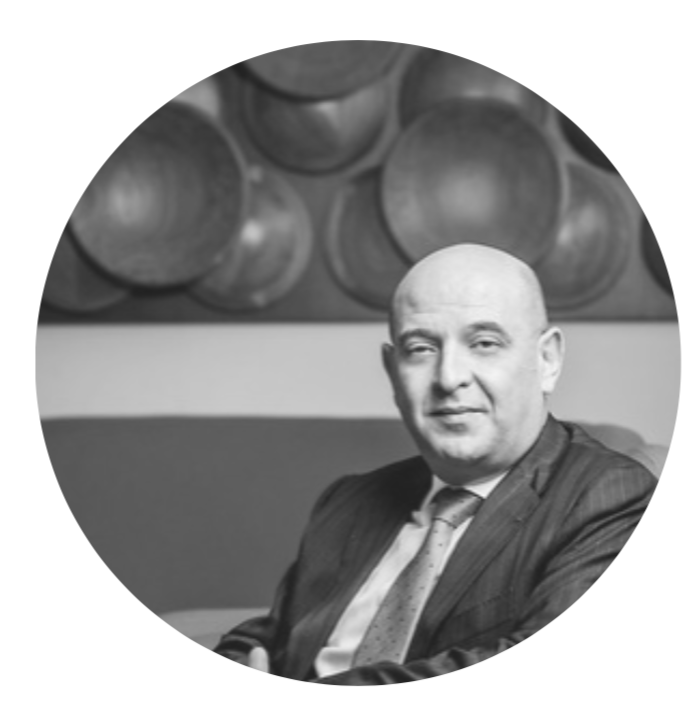
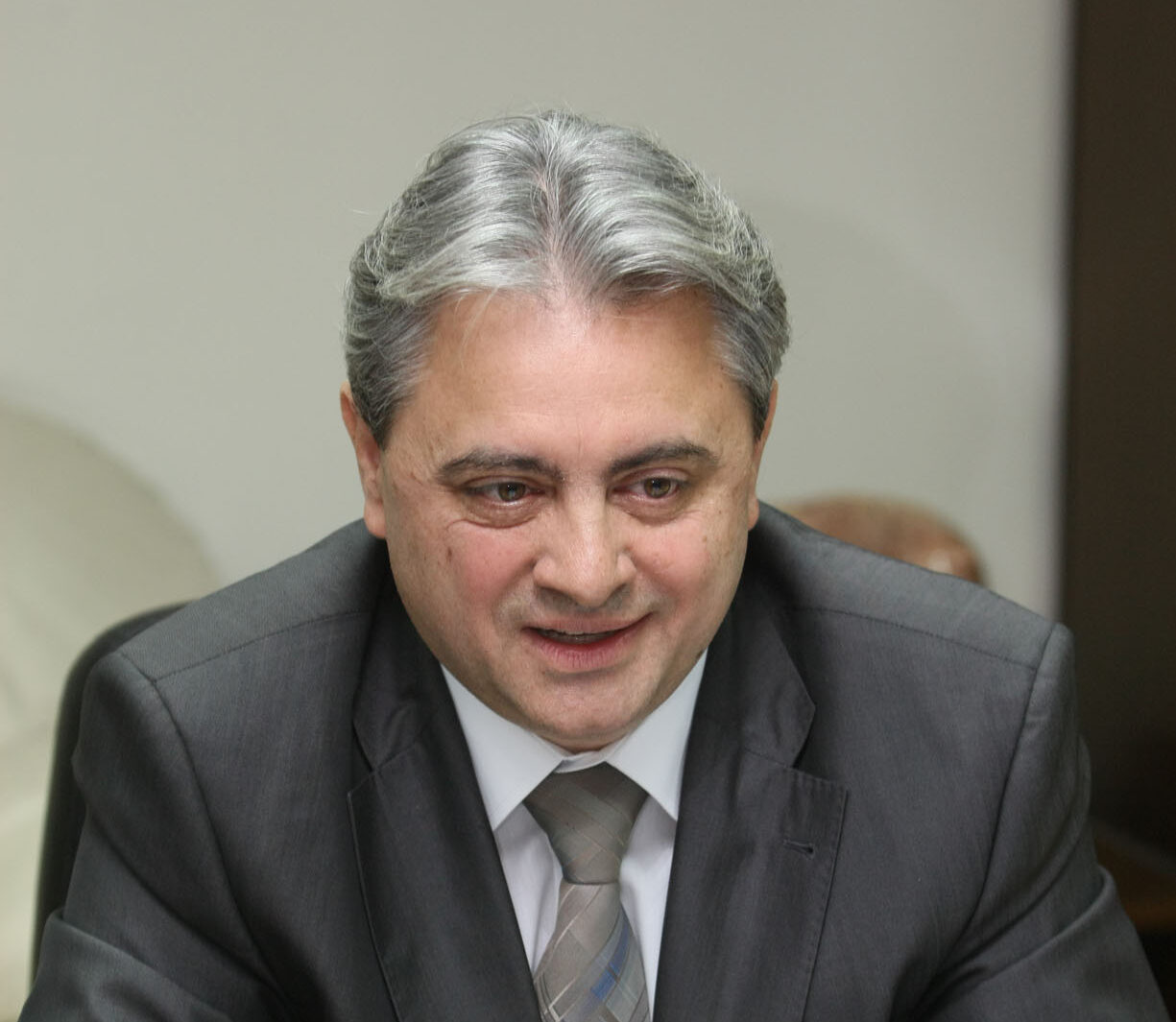
Des Murray, Chief Executive of North Lanarkshire Council, reflected, “Lanarkshire has long been the heart of Scotland’s economy. It’s believed the first meeting of the Scots Parliament met here in Lanark, centuries before Edinburgh rose to prominence. Glasgow itself was once part of historical Lanarkshire; its growth powered by the steel and heavy industry of North Lanarkshire. Today, the county is a microcosm of Scotland. Based in the central belt where nearly half of Scotland’s population lives, it is defined by its proud industrial heritage, hard-working people, and a culture of innovation. If we can get North Lanarkshire firing on all cylinders, through investment, enterprise, and our own economic strengths, then we’ve built a model that can be replicated across Scotland.”

Space to Grow 

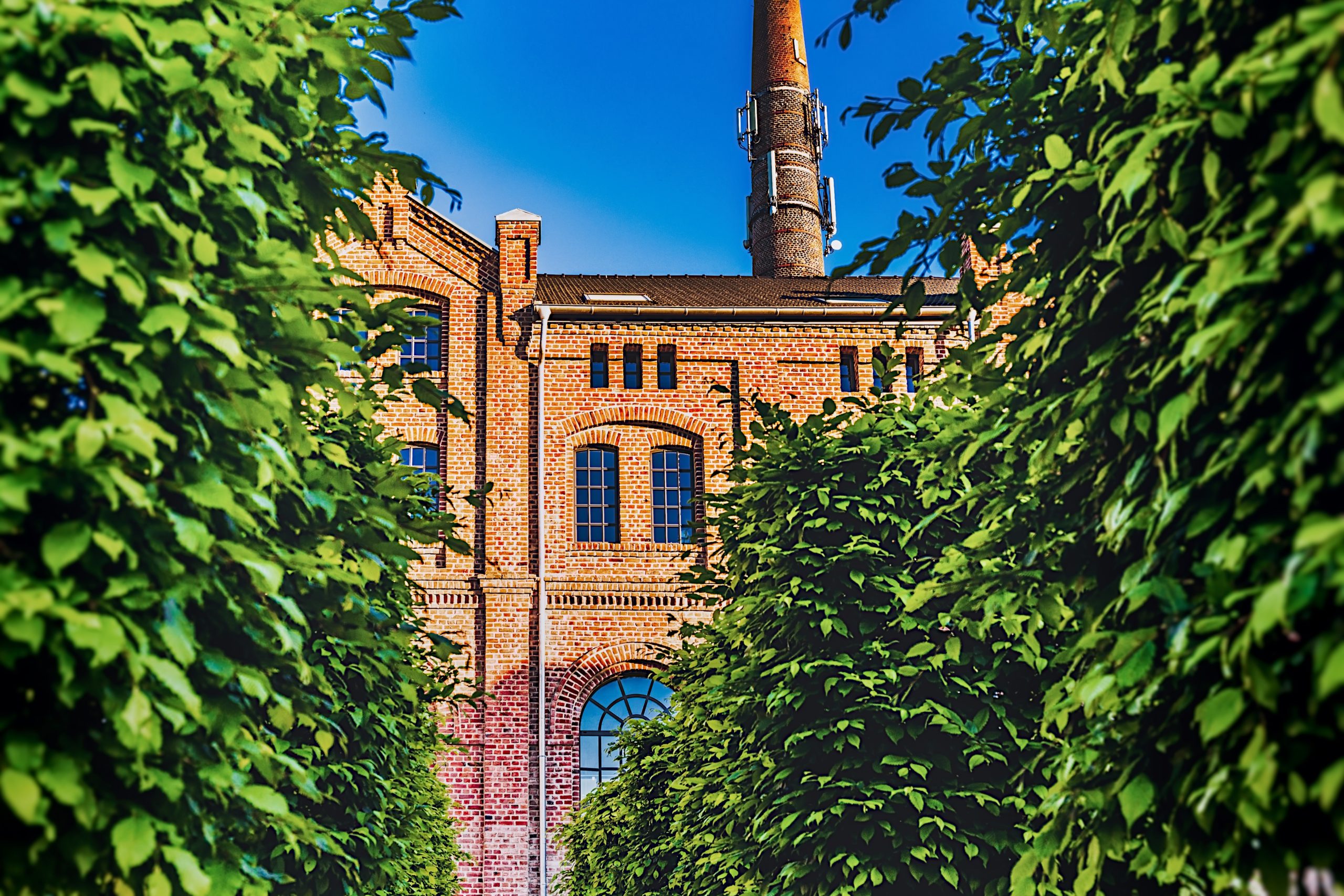
Because of its post-industrial landscape, North Lanarkshire contains more than half of all marketable land for business and industry within the eight local authority areas comprising the Glasgow City Region. Available sites are on average larger than any other local authority in Scotland, making regeneration central to the council’s growth strategy. A streamlined pre-planning process now fast-tracks development, helping to transform  brownfield sites like Ravenscraig Steelworks (one of Europe’s largest regeneration projects), Eurocentral, the M8 corridor, and Gartcosh. 

Des Murray, CEO, North Lanarkshire Council

According to Murray, over the last few years, North Lanarkshire attracted more foreign investment in land and industrial transactions than any other Scottish local authority, and over the past decade, its business base has grown more than three times faster than the Scottish average, while its economic output surged by 65.8% in the decade to 2023, well above Scotland’s 43.3% average.

“A key driver of growth is the council’s £1.7 billion capital investment program, the largest ever, which is revitalizing towns, schools, housing, and community spaces. As both the planning authority and an economic catalyst, we’re bringing together government, communities, education, and industry under one vision,” said Murray. 

Drivers of Growth

North Lanarkshire’s resurgence is the result of strategic planning, supported by bold infrastructure investment and targeted support for high-growth sectors. Transport projects like the proposed East Airdrie Link Road, the upgraded Motherwell Station travel hub, and the planned Pan-Lanarkshire Orbital Corridor, are transforming connectivity by linking north and south, improving logistics, and opening up land for growth. At the epicenter, Eurocentral, a top industrial and logistics hub, anchors global giants such as Amazon, Lidl, and Scania.

Eurocentral is a 650-acre business park with direct access to the M8 motorway and home to HSBC, Doble Engineering, Scania, and Brewdog.

Murray continued, “To strengthen the economy, we’re diversifying and boosting STEM, advanced manufacturing, and other emerging sectors. The council is enhancing digital connectivity, having already laid 340km of ultra-fast full-fiber, building a future-ready region that delivers gigabit-speed. Essentially, we’re creating the conditions that not only support investment but also generate a pipeline for it to scale at pace.”

Local hubs such as BioCity and the New College Lanarkshire Smart Hub are propelling pharmaceutical and bio-therapeutic research, robotics, and automation startups onto the global stage. “North Lanarkshire has been the birthplace of some of the most important scientific breakthroughs; other businesses can benefit from this supportive ecosystem,” Murray added.

Focusing on the future, he continued, “Proposals for a dedicated AI Growth Zone will bring billions of pounds of investment for data centers, power infrastructure, and skilled talent together, with plans to reuse data center heat to warm nearby buildings, and make North Lanarkshire a magnet for attracting investment in AI innovation and technologies. It’s a model of innovation serving the community, making growth inclusive and responsible.”

Reimagining Places

Stretching between Glasgow and Edinburgh, the M8 is Scotland’s busiest motorway, cutting across North Lanarkshire, a critical artery for commuters and commerce.

Across the county, former industrial sites are also being reimagined. The landmark redevelopment of Strathclyde Country Park, a former coal-mining village, now features community areas with renewable-powered facilities and visitor attractions, symbolizing a region where sustainability and quality of life go hand in hand. Murray sees this balance between innovation and livability as essential. “Economic success means nothing if people don’t feel its impact on their daily lives,” he said.

Education and workforce development are also critical. The region’s apprenticeship program is now one of the largest in Scotland, and local partnerships with the University of Strathclyde and New College Lanarkshire supply employers with skilled talent. Entrepreneurship is also thriving; The Hive, Scotland’s first council-subsidized, women-only business incubator, supports new ventures with tailored advice, mentorship, and access to training and funding. Female school pupils are also benefiting from Bee the Boss immersion days, inspiring future generations of female entrepreneurs. 

Niche Sectors

North Lanarkshire’s expanding industrial base is drawing investment. In Cumbernauld, Wardpark Film and Television Studios, Scotland’s largest full-service production facility and home to the acclaimed series Outlander, was acquired by American investors, reflecting a broader rise in US business activity across Scotland.

Eurostampa facility in North Lanarkshire.

Also in Cumbernauld, Skyrora is propelling Scotland into the space age, designing and testing rockets and engines at its 55,000-square-foot facility dedicated to the next generation of launch technology. ​​Derek Harris, Director of Business Development and Communications at Skyrora stated, “We moved our main manufacturing operation to North Lanarkshire, bringing high-value manufacturing jobs to the local community. They’re genuine, hardworking, salt-of-the-earth people who take pride in what they do. We’ve also had tremendous support from the council.”

For investors, North Lanarkshire delivers access and alignment as a strategically connected European base. Just as crucial, investors encounter a local government that behaves less like a gatekeeper and more like a partner, removing barriers, tailoring programs, and co-designing strategies for sustainable, long-term success. Murray concluded, “North Lanarkshire is not just open for business; it’s ready for collaboration. If investors are looking for a European base that offers scale, access, and ambition, we’re ready.” 

For more information visit: investinnorthlanarkshire.co.uk 

More Articles

  • Egypt EU Trade relations improving

    Egypt EU Trade relations improving

    The European Union remains Egypt’s largest investors Three-quarters of foreign direct investment come from EU states, and trade represents a third of the country’s GDP. The has been constant EU assistance and partnership programs since 1998, which established stable relations between Egypt and the EU. The Association Agreement was the most effective agreement when it…

  • Interview: Mervat Sultan, Chairperson, Export Development Bank of Egypt (EBE)

    Interview: Mervat Sultan, Chairperson, Export Development Bank of Egypt (EBE)

    Export Development Bank of Egypt (EBE) was established for the purpose of boosting Egyptian exports. The Bank offers banking and financial services to encourage the export activities of the agricultural, industrial, commercial and services sectors. One of the main business lines and activities of the Bank is the Corporate Banking and Loan Syndication Activities.  How…

  • Interview: Ahmed Heikal, Managing Director, Qalaa Holdings

    Interview: Ahmed Heikal, Managing Director, Qalaa Holdings

    Qalaa Holdings is a leading private equity investment company in Egypt focusing in energy and infrastructure. Qalaa manages an investment portfolio consisting of 19 Opportunity-Specific Funds (OSFs). Its investments are distributed through 12 countries in the Middle Eastern and North African markets and span 14 industrial sectors. Qalaa Holdings is an African leader in energy and infrastructure.…

  • Interview: Mohammed Berro, Chief Executive Officer, Emirates NBD Egypt

    Interview: Mohammed Berro, Chief Executive Officer, Emirates NBD Egypt

    Emirates NBD Egypt is one of the largest banks operating in Egypt excels in premier banking and pioneers in digital banking. It is an essential stakeholder in financing mega infrastructure projects and development initiatives in Egypt. Emirates NBD Egypt is a wholly owned subsidiary of Emirates NBD Group, a leading banking group in the region.  …

  • United Nations Global Compact Profile

    United Nations Global Compact Profile

    Launched in 2000, the United Nations Global Compact (UNGC) is a global initiative that serves as a call to companies to align strategies and operations under the framework of the 10 UNGC Principles on Human Rights, Labor, Environment and Anti-corruption. Today with more than 9,500 business and 3,000 non-business organizations based in 160 countries and…

  • Interview: Lazar Petrović, CEO, Delta DMD

    Interview: Lazar Petrović, CEO, Delta DMD

    As a leading logistics distribution company, what key challenges need to be overcome in the region? Serbia is definitely a growing market and it is going to continue to be. I strongly believe that we are going to be a part of the European Union eventually. Especially for IT companies, Serbia is the best place…

  • Interview: Miroljub Jevtić, Director General, Infrastructure of Serbian Railway (IZS)

    Interview: Miroljub Jevtić, Director General, Infrastructure of Serbian Railway (IZS)

    How is Serbia’s railway transport segment evolving? Serbia’s railway infrastructure system in 2018 offers safe and reliable services. It is efficient and successfully caters to a growing segment. Overall, Serbia is investing nearly EUR 5 billion to improve the transport network. This can be seen very clearly within the railway sector. Serbia continues a series…

  • Interview: Violeta Šestic, Head of Local Economic Development Department, City of Šabac

    Interview: Violeta Šestic, Head of Local Economic Development Department, City of Šabac

    What makes Šabac a smart choice for investors? An interesting fact about the city of Šabac is that it was the first city in Serbia to meet the international standards ISO 9001:2000 which is a testament to our efficiency as an organization and our dedication to customer satisfaction.Besides, the City is a carrier of a…

  • Interview: Nemanja Aleksic, CEO and Managing Partner of the Aleksic and Associates Joint Law Office

    Interview: Nemanja Aleksic, CEO and Managing Partner of the Aleksic and Associates Joint Law Office

    How do you assess Serbia’s legal framework in 2018? The legal framework of Serbia in 2018 will be adapted to the process of accessing the European Union, with full commitment to the priority reforms necessary in this process. On April 29, 2008, Serbia signed the Stabilization and Association Agreement in Luxembourg, which, entered into force…

  • Interview: Zoran Blagojević, CEO,  Wiener Insurance Serbia

    Interview: Zoran Blagojević, CEO, Wiener Insurance Serbia

    How do you assess Serbia’s insurance sector? Western European markets average premiums around EUR 2 500 per capita, but in Serbia we are at EUR 100 per capita. These two figures show us a clear picture of the huge growth potential the insurance sector has within the Serbian market. There is a huge misunderstanding of…

  • Interview: Marija Labović, Acting Director, National Tourism Organisation of Serbia

    Interview: Marija Labović, Acting Director, National Tourism Organisation of Serbia

    How do you assess Serbia’s tourism industry? Demand is growing, and this is the trend for the last three years. In the last ten years we can see market change in favour of foreign visitors which are now making around 50% of total tourists. Three years ago domestic travellers started to travel again due to…

  • Interview: Radoš Gazdić, Acting Director General, Development Agency of Serbia (RAS)

    Interview: Radoš Gazdić, Acting Director General, Development Agency of Serbia (RAS)

    What are some of the key facts that all international investors should remember about Serbia? The key factor at this moment is the competitiveness of the labour force when comparing it to Europe. Serbia is increasingly becoming more attractive, first and foremost, because of the technical education of our labour force. It is one of…

  • Interview: Marko Čadež, President, Chamber of Commerce and Industry of Serbia (PKS)

    Interview: Marko Čadež, President, Chamber of Commerce and Industry of Serbia (PKS)

    What is the global perception of Serbia? Over the last five years investors saw straightforward and clear economic policies. This means fiscal consolidation, monetary stability and political stability. They have seen Serbia has a clear strategy. There is now a new perception on Serbia’s future. The perception is now quite good. Together with Montenegro, we…

  • Interview: Ingeborg Øfsthus, CEO, Telenor Serbia

    Interview: Ingeborg Øfsthus, CEO, Telenor Serbia

    How do you see Serbia’s telecommunication sector in 2018 and what key challenges do you foresee moving forward? The global telecommunications sector is going through a revolution, and that revolution is digitalization. The fact being the competition landscape is changing. It is hitting every single operator around the world in some way or form.  We are lucky…

  • Interview:  Zoran Petrović, CEO, Raiffeisen Bank Serbia

    Interview: Zoran Petrović, CEO, Raiffeisen Bank Serbia

    How do you assess Serbia’s economy? We expect Serbia’s economy in 2018 will be driven by a couple of factors. First of all, we believe it will be pushed by the consumptions of the citizens, the unemployment rate is going down, employment rate is going up, so we expect that also the banking sector continue…

  • Serbia: An impressive turnaround

    Serbia: An impressive turnaround

    Serbia aims to boost private sector-led growth through reforms. According to the estimates of the Statistical Office of the Republic of Serbia, the nations GDP in real terms increased by 1.9% in 2017. The International Monetary Fund estimates Serbia’s projected Real GDP growth for 2018 will reach 3.5%. Overview: Serbia has successfully stabilized its economic…

  • Serbia: Solid banks support growth

    Serbia: Solid banks support growth

    The sector is well-capitalized, liquid and harmonized with EU legislation Financial sector reforms have been pursued vigorously. Banks are on a sound footing and continue to support growth. The banking sector comprises over 90% of the total assets in the financial sector. Over the last several years significant restructuring has been undertaken to improve the…

  • Serbia: Tourism – Belgrade charm

    Serbia: Tourism – Belgrade charm

    Three million tourists visited Serbia in 2017 with MICE offering the largest opportunities.   Lacking a coastal line, Serbia has focused its touristic sector in the development of spas and ski resorts. They have been neglected for the past years, but thanks to recent private sector investors keen on developing their potential the sector is…

  • Serbia: Transport – Interconnecting Southeast Europe

    Serbia: Transport – Interconnecting Southeast Europe

    Mass investments aim to support and ease transit The sector is one of the fastest developing branches of the economy in Serbia. Value of ongoing projects in infrastructure is EUR 5 000 million. Needs for future transport plans is EUR 6 000 million. Serbia’s strategic location at the crossroads of European traffic Corridors offers great…

  • Country Profile: Serbia

    Country Profile: Serbia

    Regional integration – Western Balkan neighbors are increasing collaborations History: Serbia was shaped as a nation by the numerous external invasions it suffered; starting in the 4th century BC with the Celts overthrowing the Illyrians, the arrival of the Romans and the Slavs in the sixth century AD. A crucial event in AD 395 was when…

  • Serbia: Digitization – The ICT sector is growing faster than any other industry

    Serbia: Digitization – The ICT sector is growing faster than any other industry

    Serbia provides a cost-effective alternative to established markets for companies looking to outsource software engineering, offshore systems design and integration. Over 2 600 ICT companies operate in Serbia including a Microsoft development center. Serbs offer expertise, high-end IT development services and software development solutions in a highly completive global sector. Nearly 39 000 ICT professionals…

  • Serbia: The Balkan Industrial revolution

    Serbia: The Balkan Industrial revolution

    Serbia’s rich historical legacy lies in its strength as a regional manufacturing hub. This is furthermore supported by its extensive free trade agreements which allow duty-free exports to a market of more than 1 billion people. Some of these markets go much further than the European Union which is Serbia’s largest export market.  Serbia has…

  • Serbia: EU accession accelerating

    Serbia: EU accession accelerating

    Serbia is one of the most advanced countries in the process. Serbia is a small and open economy in South Eastern Europe. The nation’s development is considerably below the European average, while by growth it is one of the fastest developing countries in Europe. Growth potential in Serbia is tremendous in every segment of the economy.…

  • Interview: Zorana Ždrale Burlić, CEO, Delta Real Estate

    Interview: Zorana Ždrale Burlić, CEO, Delta Real Estate

    How do you assess Serbia’s real estate sector? We have definitely seen an increase in construction activity, the market is reviving, and we have seen increased demand for construction. We have seen a lot of investment activity. The market remains challenging in terms of a lot of issues surrounding real estate, not just bureaucracy but…