With global demand rising, Scottish red meat producers are uniting tradition with sustainability and meticulous standards

For generations, Scottish red meat has been synonymous with quality, appearing on tables from local pubs to Michelin-starred kitchens abroad. Chefs select its consistency and character, meat that speaks of a place where natural abundance meets precision. Each cut carries not just flavor, but the story of a country that has made quality its calling card.
Scottish beef, lamb, and pork are celebrated for delivering protein that is as nourishing as it is distinct, reflecting the rhythm of Scotland’s landscapes, rolling hills, rugged glens, and the careful supervision of farmers who have refined their craft. Beyond taste, the sector embodies sustainability and responsibility, marrying traditional practices with modernity to produce meat that resonates far beyond the plate.

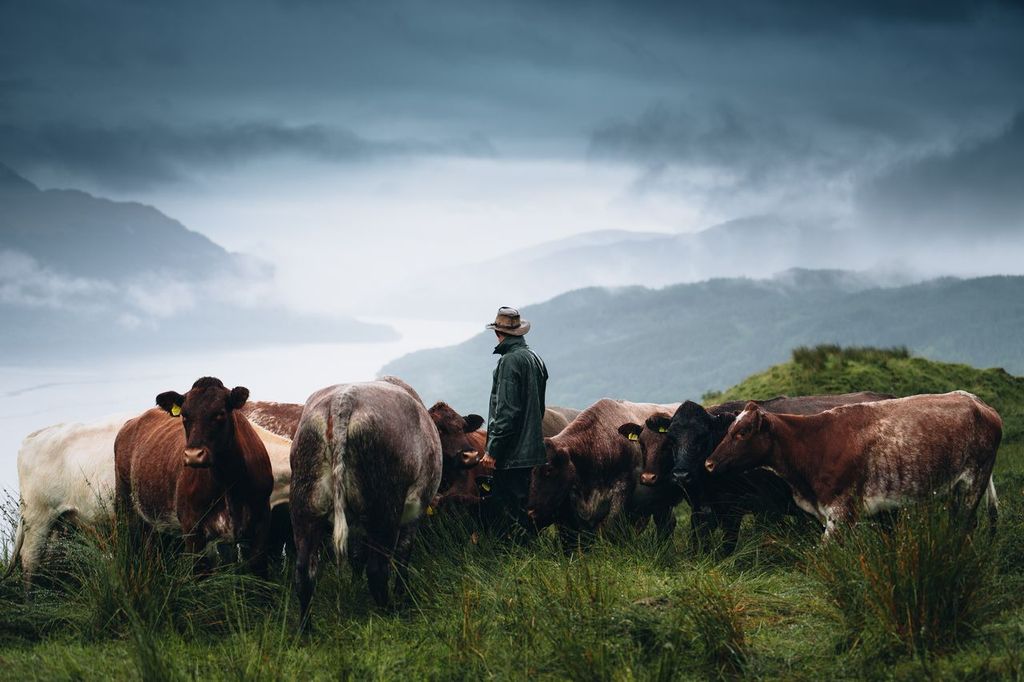
Scottish cows enjoy fresh air, fertile soil, and vast pastures, with breeds like Aberdeen Angus and Luing based in Scotland’s more rugged environments. Scottish sheep graze on open grassy hillsides and heather, working in harmony with nature to manage the biodiverse landscape. While Scottish pigs are cherished for being raised on farms using carefully balanced, locally sourced feed, ensuring animals with unwavering standards and welfare. Yet tradition alone no longer defines the sector. Across the supply chain, traceability and low-carbon logistics are reshaping what it means to produce food sustainably.

Quality Meat Scotland (QMS), the Scottish public body responsible for helping the Scottish red meat sector maximize its contribution to Scotland’s economy, plays a vital role in the industry’s continued global success. When the wider network of suppliers and services was factored in, Scotland’s red meat industry contributed an estimated £3.5 billion to the local economy and over £1 billion in added value last year, in large part thanks to QMS’s efforts. Sarah Millar, Chief Executive of QMS stated, “Our tagline of ‘Born and Reared in Scotland’ acknowledges that animal welfare and provenance increasingly drives purchasing decisions. The QMS certification is one of the most comprehensive whole-of-life assurance schemes in the UK, where every stage of the supply chain is independently inspected. This rigorous program tracks Scottish beef, pork, and lamb from farm to fork, guaranteeing standards of animal welfare, traceability, sustainability, and consistent quality.”

Over 90% of Scotland’s red meat producers participate voluntarily in the assurance scheme, driven by a belief that quality is earned, not assumed, and that each step in the process carries a shared responsibility. Millar continued, “Livestock must be born, reared, and processed entirely in Scotland to carry the branding. Every farm and processor involved is independently inspected by the Scottish SPCA, ensuring animal well-being and provenance remain at the core of production. The QMS commitment gives Scotch labels credibility and international recognition, acting as a symbol of trust linking producers and consumers across continents.”
Millar continued, “Scotch beef and lamb also hold UK Protected Geographical Indication (PGI) status, a legal protection that prevents imitation and preserves authenticity. This designation is awarded to products that meet strict standards, linking their quality to Scotland’s unique landscape, climate, and farming traditions. It’s a distinction that reflects centuries of skill and respect, and one that secures Scotland’s place among the world’s premier red meat producers.”
In an era when consumers want to know not just where their food comes from but how it was raised, QMS provides that reassurance. Its standards emphasize environmental protection, ethical husbandry, and sustainable land use. From the green pastures of the Highlands to restaurants around the globe, the QMS Scotch brand stands as proof that integrity, sustainability, and taste can share the same plate.