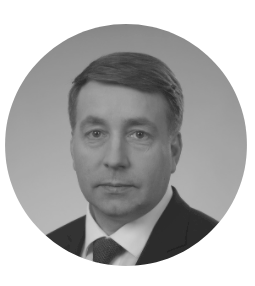
Interview: Maged Ezz Eldeen, Country Senior Partner, PwC Egypt

How have Egypt’s economic reforms affected the competitiveness of the economy?

Egypt’s unprecedented macroeconomic and business legislation reform measures are bearing positively on the country’s competitive standing. For the first time in eight years, Egypt’s ranking on the global competitiveness report witnessed a significant jump of 15 places in 2017. Underpinning this was a remarkable improvement in the public institutions and infrastructure indices, signaling the payoff of substantial public investments in recent years.

In less than two years, Egypt’s twin deficit (that of the current account and the government budget) has been successfully set on an improving trend, with an eliminated FX shortage,  international reserves have been replenished, and growth has resumed. The reform program, among other measures including the liberalization of the exchange rate, the lift on capital controls, the gradual removal of energy subsidies and the replacement of sales tax by a new VAT system while raising the tax rate have made Egypt increasingly competitive.  

Economic growth has accelerated, hinging on a more competitive external sector and an ambitious public infrastructure program. After being largely driven by consumption, GDP growth has recently been affected by other drivers including high levels of investments and exports. 

Despite a lower overall surplus in FY 2017/18 compared to the previous fiscal year, analysis of underlying Balance of Payments drivers for FY 2017/2018 revealed a significant shift, with a current account deficit contracting by more than 50%, driven by higher tourism receipts. This posted a 123.9% increase in FY 2017/18 compared to the previous year with remittance transfers which remain the highest contributor to current account increases, providing almost 35% of overall receipts. Reforms are also bearing positively on the country’s competitiveness; for the first time in eight years.

Moreover, Egypt has observed a positive outlook regarding its sovereign credit rating as depicted by Standard & Poors, Moody’s and Fitch. This change is as a result of declining government debt, increase in domestic gas production and improvement in macro fundamentals. 

Lastly, Egypt jumped eight places on the World Bank’s Doing Business 2019 report, as a result of implementing regulatory reforms that facilitate investment processes including starting a business, access to credit, protecting minority investors, bankruptcy protection and paying taxes.

How is the new investment law facilitating doing business and investment procedures?

The new Investment Law, passed in May 2017, offers foreign investors a plethora of financial, administrative and tax incentives in addition to safeguards to facilitate the investment process and to protect foreign investors. Some of these incentives include exemption from stamp tax, fees of notarization and registration of the Memorandum of Incorporation for five years from a company’s registration day. Investors are also exempted from contract fees for company registration and 2% on overall customs tax on the value of all imported machinery, equipment and devices required to set up companies. Moreover, to facilitate and encourage the development of various industries, foreign investors can import casts and molds to manufacture products with no customs duties that are to be re-exported after being introduced and implemented. In addition, investors are given discounts on investment projects made in Sectors A and B of 50% and 30% respectively. Sector A comprises of underdeveloped areas with a high level of poverty and unemployment rate in addition to zones such as the Suez Canal Economic Zone and the Golden Triangle Economic Zones. Sector B entails SMEs, renewable energy projects, tourism and infrastructure projects. These discounts aim to encourage development, reduce income inequality and create jobs. 

Furthermore, safeguards put in place involve ensuring similar treatment of foreign investors equal to that of national investors and granting them immediate residency in Egypt throughout the duration of their project. A particularly progressive safeguard is that investment projects cannot face nationalization, providing investors comfort towards the government. Foreign investors are also allowed to own an investment project, profit and transfer related profits without restrictions.

Most importantly, the unifying notion of the law is to cut bureaucracy, promote fair competition, combat antitrust practices and ensure transparency to ultimately make Egypt’s investment climate appealing to foreign investors. It is evident that Egypt is reaping the benefits of the new Investment Law through a promising rise in foreign direct investment by 15% in April 2018.

What role can PPP’s play in developing Egypt? 

PPPs are starting to provide a solution to promote job creation and develop the economy. The private sector benefits largely from this partnership by gaining legal protection while the government enjoys the benefits of maximizing value for money. This advantageous partnership has stimulated the economy by overcoming governmental challenges and providing the necessary expertise in Egypt’s infrastructural development from the private sector. PPPs in Egypt would play a significant role in the development of the economy. Egypt has an existing understanding of and has developed institutional and legal infrastructure for PPPs. In November, the government participated  The government participated in a significant international investors conference in December 2018 where it highlighted its intentions and future plans regarding PPPs and to promote their development, as the country falls short in such projects.

What should investors remember when deciding to invest in Egypt? 

Investors hugely benefit from a plethora of opportunities provided in Egypt; with a population of around 100 million, Egypt’s is by far the largest in the MENA region with an average annual growth of 2.56%. This provides a solid domestic consumption base providing an important buffer at times of global economic downturn. In addition, Egypt has a youthful and large labor force and presents a diverse economic base, with growth driven by many sectors. 

Egypt’s recent significant gas discoveries in the Mediterranean have further diversified its economy, in addition to making Egypt a key player on the global energy scene. The country’s solid infrastructure makes it attractive for investors as the smooth mobility of products and services is ensured both domestically and globally. Furthermore, Egypt is strategically located on the world map; it is on the crossroads between the Middle East and Far East from one side and Europe and the East Coast of the Americas on the other side. More importantly, the Suez Canal offers the shortest link between East and West for international trade.

The country’s recent policies are positioning it as a regional and global services, production and re-export hub creating jobs and economic growth by opening new markets for Egyptian products. They are simultaneously attracting FDI from corporations looking to harness Egypt’s unique basket of preferential trade agreements, highly competitive labor and utility costs, talent pool and proximity to key global markets. Together, these advantages make Egypt an ideal hub from which to export to Europe, the Arab world, the United States and Africa. With a thorough study of the new investment law and its executive regulations, investors can enjoy a smooth and facilitated investment process. 

Moreover, Egypt is a signatory to a vast number of multilateral trade agreements such as GAAT, GATS, PAFTA, and QIZ in addition to bilateral agreements with countries including Tunisia, Morocco, Libya, and Lebanon. These trade agreements present investors with a myriad of opportunities that position Egypt as a strategic trade hub. 

Meanwhile, investors could find many opportunities in Egypt’s outsourcing industry. In 2016, Egypt was shortlisted for the Outsourcing Destination of the Year globally by the European Outsourcing Association. The relatively high computer efficiency and multilingual skills of Egyptians sheds light on the 50 000 employed in offshore BPO and the 40 000 in regional outsourcing in 2015 alone in addition to the ICT sector contributing to 4.1% of GDP. This has positioned Egypt strategically to further attract BPO contracts making it a hub for outsourcing activities.

Lastly, Egypt has the largest education system in the MENA region at both the school and higher education levels. Egypt has observed a significant increase of 32% in enrollment rates over the last decade. Moreover, foreign investors could take advantage of the education opportunities as demand exceeds the current level of supply in Egypt’s Education sector.

 In what areas do you see opportunities to further develop Egypt’s consulting sector?

Management consulting can greatly contribute to boost the Egyptian economy and transform Egyptian companies making them more fit to compete against major multinational firms. With the global and regional know-how and industry insights that management consultants offer, Egyptian companies could become more globally competitive by incorporating international benchmarks of management. It is evident that the consulting sector could provide the economy with a source of foreign currency given the exportable nature of its lines of services. Moreover, the expansion of Egypt’s talent pool coupled with the cheap Egyptian pound is expected to attract foreign investment by making Egypt the country of choice for consulting services over other parts of MENA thereby putting Egypt on the global consulting map. Consultants are expected to introduce modernity to the economy which can be translated across sectors exemplified by Egypt and the UAE’s recent agreement to develop Egypt’s government services. This could further involve consultants from the GCC and Europe transmitting modern practices and solutions to various industries in Egypt. 


More Articles

  • Viewpoint: Zorana Mihajlović,  Deputy Prime Minister of Serbia, and the Minister of Construction, Transport, and Infrastructure

    Viewpoint: Zorana Mihajlović, Deputy Prime Minister of Serbia, and the Minister of Construction, Transport, and Infrastructure

    Serbia’s central position on the Balkans has been used as a bridge between West and East for generations.  This strategic position was the cause of many difficulties throughout history. Empires were always interested in controlling the crossroads going through Serbia. Nowadays, we consider this geographical position an advantage. We are doing our best to organize…

  • Interview: Zoran Babic, Director, Corridors of Serbia

    Interview: Zoran Babic, Director, Corridors of Serbia

    What will be the socio-economic impact of Corridor X? The Eastern part of Serbia is stricken by de-population due to lack of employment options. Corridor X will positively affect the employment rate in remote regions with high unemployment. The construction sector has provided new opportunities, and is actively creating a business environment which can attract…

  • Interview: Aigars Rostovski, President, Latvian Chamber of Commerce and Industry (LCCI)

    Interview: Aigars Rostovski, President, Latvian Chamber of Commerce and Industry (LCCI)

    Historically what have been Latvia’s most important economic drivers? Traditionally our biggest sector has been wood and timber produced from by our forests. They cover more than half of Latvia.  Forests are referred to as Latvia’s “Green Gold.” A second historically strong sector is manufacturing, in Soviet times Latvia was an industrial hub. A third…

  • Interview: Martin Gauss, CEO, Air Baltic

    Interview: Martin Gauss, CEO, Air Baltic

    How important is the development of Latvia’s aviation sector for the economy? If you look at the connectivity of the Baltic States, Riga at the moment is the key capital. Latvia being in Northern Europe has reachability issues. Connectivity with Europe by road and rail systems do not fully meet the needs of the region…

  • Interview: Ilona Lice, CEO, Riga International Airport (RIX)

    Interview: Ilona Lice, CEO, Riga International Airport (RIX)

    How do you assess the growth of the aviation sector? The Baltic economy will continue to be characterized by its steady and sustainable progress. The aviation sector accounts for roughly 2.5% of GDP, and cautious, and conservative estimates forecast a growth of 3%. During the past five years, we have invested EUR 154.2 million in the…

  • Interview: Toms Didrihsons, CEO, Orkla Confectionery & Snacks Latvia

    Interview: Toms Didrihsons, CEO, Orkla Confectionery & Snacks Latvia

    How is the post-recession recovery affecting the retail sector? Looking back seven or eight years we can see the general EU recession affected smaller countries in the Baltics quite heavily. The retail sector experienced a drop of 20-30%, which was a big hit. In the recovery process, you would expect some growth over the next…

  • Latvia: An essential global strategic transit hub

    Latvia: An essential global strategic transit hub

    The success of Latvia’s transport sector lies on a series of favorable circumstances. Latvia’s geographic location with access to both Russian and EU markets and its excellent infrastructure are the pillars of this success. Being located on the external border of the European Union, Latvia has quality infrastructure connecting the country to the Russian Federation,…

  • Interview: Ringolds Arnitis, Parliamentary Secretary,  Ministry of Agriculture

    Interview: Ringolds Arnitis, Parliamentary Secretary, Ministry of Agriculture

    How do you assess the agricultural sector? Latvia offers high-quality products which are environmentally friendly. These are two important reasons why international business’ choose Latvian products. Nearly 20% of Latvia’s export income is derived from the nation’s forests and another 20% from its agricultural products. EU financial resources have created new market possibilities. Since 2004,…

  • Interview: Aleksandrs Bartasevics, Mayor and Chairman of Rezekne City Council

    Interview: Aleksandrs Bartasevics, Mayor and Chairman of Rezekne City Council

    What are some of the benefits associated with investing in the regions? Investors should remember to evaluate other cities outside Riga. Latvia’s regions offer investors many advantages as opposed to the capital. The regions have fewer obstacles. One example is requesting permits and documentation for construction which takes several weeks longer in Riga than in…

  • Interview: Nikita Sergienko, CEO, Bite Latvia

    Interview: Nikita Sergienko, CEO, Bite Latvia

    How do you assess Latvia’s ICT sector? Latvia has one of the best networks worldwide and probably the best in the European Union. Taking advantage of this, and the qualified labor, many multinationals moved their back offices, call centers, IT centers and even head offices to Lithuania and Latvia.  Western Union, Swedbank, and even Barclays…

  • Interview: Reinis Rubenis, CEO, Swedbank Latvia

    Interview: Reinis Rubenis, CEO, Swedbank Latvia

    What challenges is the Latvian financial sector facing? One challenge for the Latvian banking sector is the number of banks. There are far too many banks in Latvia for such a small economy. Over the next five years, we will definitely see further consolidations taking place. This consolidation is necessary. A positive aspect of the…

  • Interview: Janis Lucaus, CEO, BTA

    Interview: Janis Lucaus, CEO, BTA

    How do you assess the insurance sector? Even though the sector caters to a small market in terms of population, it is highly competitive and evolving. A key factor to take into consideration is the number of competitors and a clear increase of international insurance players within the market. Competition has been beneficial for the…

  • Interview: Anda Caksa, Latvian Minister for Health

    Interview: Anda Caksa, Latvian Minister for Health

    How do you evaluate Latvia’s healthcare system? Over the pasttwo decades, life expectancy has increased by ten years. If we compare this to our neighbors, it is quite an achievement. However, in order to understand Latvia’s healthcare system, we need to discuss the issues and challenges that it has faced. The system has patient accessibility…

  • Interview: Edgars Rinkevics, Latvian Minister of Foreign Affairs

    Interview: Edgars Rinkevics, Latvian Minister of Foreign Affairs

    What are Latvia’s most prominent accomplishments? Latvia is an integral part of Europe and in May 2019 will celebrate 15 years as a part of the European Union. We are part of the eurozone, Schengen, and the OECD. Latvia operates according to similar legislation, rules, and principles as The Netherlands, Germany or Ireland. Therefore, Latvia…

  • Latvia: New electricity tariffs benefit consumers

    Latvia: New electricity tariffs benefit consumers

    Latvia is a net energy importer. Reforms continue in the electricity and gas sectors with the goal of opening competition in the domestic market. The government has made the full liberalization of the gas market a priority in 2017. Significant investments in gas and electricity infrastructure have been recorded to continue synchronization with the electricity grids…

  • Latvia: ICT sector surpassing 4% of GDP

    The turnover of the ICT sector is estimated at EUR 3 400 million, accounting for 4% of the total GDP. Approximately 6 200 companies operate within the sector. ICT related services, software, hardware, and telecom sub-sectors have grown significantly in recent years. The exportation of foreign-sourced computer hardware and software are a significant share of…

  • Martins Vanags, Managing Director, Skanste Development Agency, on creating Riga’s central business district

    Martins Vanags, Managing Director, Skanste Development Agency, on creating Riga’s central business district

    In the Riga City Development Strategy for up to 2030, the Skanste neighborhood has been defined as a priority territory: the central business district of the capital, a platform for European-scale events and a quality life and work environment for many thousands of Rigans. Next to the Historic Center and the “Quiet Center” of the…

  • Baiba A. Rubesa, CEO, Rail Baltica, on creating a new economic corridor

    Baiba A. Rubesa, CEO, Rail Baltica, on creating a new economic corridor

    Rail Baltica, a new railway infrastructure connecting the three Baltic States to Poland and indirectly to Finland, is often called the project of the century. This project marks a symbolic return of the Baltic States to Europe. Currently, most rail freight traffic in the Baltics originates from the CIS (Commonwealth of Independent States) countries and…

  • Latvia: An evolving global financial hub

    Latvia: An evolving global financial hub

    Local demand for global financial services is limited. The banking sector makes up 90% of assets within Latvia’s financial system. The insurance sector represents 2.4% of assets while the State-funded pension scheme around 5%. Banks dominate the financial sector of Latvia, and Scandinavian banks have the dominant share of the domestic market. Latvia’s financial sector…

  • Interview: Uldis Augulis, Latvian Minister for Transport

    Interview: Uldis Augulis, Latvian Minister for Transport

    What opportunities exist to foment further transit? Latvia is situated in a very privileged geographical position. Within the Baltic States, Latvia is the focal point connecting the West to the East. Our warm-water ports currently account for the biggest cargo freight transportation amongst the Baltic countries. Transit, logistics, and distribution of goods through Latvian ports…

  • Interview: Svens Dinsdorfs, CEO, Elko Group

    Interview: Svens Dinsdorfs, CEO, Elko Group

    What is your outlook for Latvia’s Economy? Latvia’s financial crisis had a big psychological impact on society in terms of spending. Since then, Latvia has experienced a slow but gradual increase in internal consumption which has aided the countries turnaround. The confidence of the population is continuously increasing which is directly boosting internal demand. This…

  • Interview: Arvils Aseradens, Latvian Deputy Prime Minister and Minister for Economics

    Interview: Arvils Aseradens, Latvian Deputy Prime Minister and Minister for Economics

    How do you assess Latvia’s economic growth?  Four key points are behind Latvia’s economic growth; European Funds, external situation, accumulation of private savings and rising income levels. Income levels have increased 5% in the past three years. This has been a very active base for private consumption. In addition, the private sector has large amounts…

  • Interview: Marta Jaksona, Executive Director, Foreign Investors’ Council in Latvia (FICIL)

    Interview: Marta Jaksona, Executive Director, Foreign Investors’ Council in Latvia (FICIL)

    How do you assess current foreign direct investments in Latvia? I would like to see higher levels of investment. Foreign direct investments in Latvia increased sharply after Latvia’s accession to the EU in 2004. After the crisis, the investment slowed. However, we saw this in the entire EU. The fight for investments is obviously increasing.…

  • Country Profile: Latvia

    Country Profile: Latvia

    The Republic of Latvia is a small country in Northern Europe and one of the three Baltic States. Latvia is a small open economy, and its exports account for the majority of its GDP. Due to the strategic geographical position of Latvia, the transport and transit sector is highly developed. Latvia became a success story…