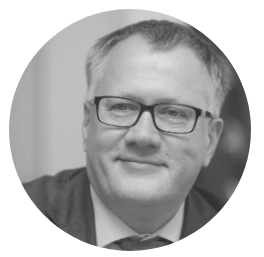
Interview: Tarek El Molla, Minister of Petroleum of Egypt

How will natural gas exports contribute to Egypt’s economic acceleration?

The current strategy of the Ministry aims at fulfilling the requirements of the local market and completion of the gas development projects. However, to achieve such a vital goal we worked towards increasing production by speeding up the development of the Mediterranean discoveries. Thus, due to implementing these programs, in a short period, to speed up those projects, Egypt’s gas production rates increased gradually to reach 6.6 billion cf/d, which contributed to achieving self-sufficiency from locally produced natural gas and halting LNG imports for the first time since April 2015.

Now, we are implementing programs, continuously, to increase natural gas production to achieve surplus to fulfill Egypt’s previous contractual obligations for exporting gas, which was not possible before, as a result of instability that, negatively, affected investments and gas production rates.

Furthermore, we aim at directing volumes of the surplus gas towards petrochemical industries, which will, significantly, contribute to increasing economic development rates through increasing resources added value. Such industries achieve distinct returns through fulfilling part of the local market requirements of raw materials & crudes along with exporting part of the production for foreign currency resources provision.

Moreover, Egypt plans to receive the gas produced from current discovered fields in the East Mediterranean region after their development and re-export it via the country’s gas liquefaction plants, which will achieve the desired goal of transforming Egypt into a Regional Hub for natural gas trading. The Hub will add economic and political benefits for Egypt such as monetizing the country’s infrastructure as well as reinforcing Egypt’s role both regionally and globally as a central country for all energy fields. Furthermore, we concluded several agreements with our strategic partners in the EU and Cyprus to support the steps taken for transforming into a Regional Hub and opening new horizons of cooperation at different energy fields.

How can the private sector advance Egypt’s Energy Hub strategy?

The private sector is, undoubtedly,  an important partner to Egypt in achieving the strategic objective of transforming the country into a Regional Hub for trading and exchanging gas and oil, playing a vital role in this domain in light of the current trend for gas market liberalization. The issuance of the Gas Regulatory Law and establishing a separate, independent Regulatory Authority, are steps that aim at providing an opportunity for the private sector to compete in all gas industry domains, together with participating as key players in trading and exchanging gas in the Egyptian market after concluding all the conditions and rules set by the law and its executive regulation. In fact, the new law allows the private sector’s qualified companies to purchase, import and selling gas, whether to the local market or re-exporting it via the LNG plants, which will achieve added-value to the Egyptian economy, benefiting from imported gas by reusing it in many industries or through re-exporting it to the global market. In addition, achieving optimal utilization from the gas infrastructure in Egypt, which is one of the most significant pillars of Egypt’s national project of transforming into a Regional Hub for exchanging and trading natural gas.

What efforts are being exerted to attract investments to the Sector?

No doubt that the major IOCs’ interest in pumping new investments in the upstream domain, represents a clear message of the foreign companies’ confidence in the investment climate improvement in Egypt, due to the reforms that have been implemented.  The State has taken numerous procedures in order to accelerate projects’ implementation. This was clearly manifested in several indicators; inking 95 new oil & gas exploration agreements, which is the largest number of agreements signed in Egypt since 2014 until now. This confirms the speed, flexibility, and transparency of the process of awarding the offered bid rounds along with the cooperation of all the State’s institutions, to obtain all approvals from its inception, until its completion, as well as issuing the necessary laws in record time. However, the best evidence of that historical achievement was realized in Zohr field project, as it was put on production in 28 months, compared to 6 years worldwide.

As for the measures taken to bolster Egypt as an increasingly attractive investment climate, the Petroleum Sector launched the modernization project, which includes a program to develop the mechanisms of attracting foreign investments. Thus, the Petroleum Agreement Model has been developed to include provisions that encourage foreign partners for investment in view of the high-cost discoveries development, in general, and of the deep Mediterranean areas & the risk factor, in particular. Some conditions have been set in the new agreements aiming at achieving an appropriate return on investment, to encourage the foreign partners for investment and rapidly putting discoveries on production.

Furthermore, the Ministry of Petroleum is, currently, working on applying new concepts that will expand the investment map of Egypt in the oil and gas upstream activities, through the implementation of new projects for seismic survey in the Red Sea, Gulf of Suez and West Mediterranean to identify areas with promising prospects to be offered in International bid rounds. In addition, the establishment of Egypt’s e-portal for marketing petroleum and exploration areas, contributing to attracting investments of IOCs as well as promoting these areas & petroleum investment opportunities in a modern concept.

How do you evaluate the potential for additional onshore oil and gas discoveries?

The Petroleum Sector is keen on offering International bid rounds and concluding petroleum agreements, which are considered the cornerstone of achieving further discoveries and developing oil and gas resources. In addition to the continuous coordination and cooperation with the foreign partners to accelerate implementing their exploration and development activities, as well as putting discoveries on stream.

Currently, we are depending on modern technologies in the field of exploration, for implementing initiatives of the Petroleum Sector Modernization Program, through executing seismic survey projects in West Mediterranean, Red Sea and Gulf of Suez, which helps in identifying geological structures in the deep core of the earth clearly; giving an accurate status of oil and gas resources, to be confirmed through exploratory wells drilling programs.

These efforts come within the framework of the Petroleum Sector Development and Modernization Project, which includes a work program for enhancing production performance and increasing petroleum resources’ production during the coming period. This could be executed through encouraging exploration activities and increasing investments of oil and gas. In addition, the program works on applying plans and operation programs in all production sites, based on studying and identifying opportunities to increase production from the existing fields together with accelerating development plans and new projects, besides reducing production cost. Moreover, the program works on increasing production facilities and expanding on shore exploration, at the promising regions of the Western Desert of Egypt, which witnessed, recently, three successive discoveries of oil and gas for the Italian company ENI at Faghur basin; as a result of using the latest technologies, new drilling methods and testing layers in deeper geological structures. In light of the intensifying exploration activities, along with the available facilities and infrastructure in the region, these discoveries will have significant economic impact, especially with low production cost and high quality of the produced crude oil. All these factors encourage International companies to direct their investments towards the Western Desert, which is full of promising prospects.

What role do you foresee downstream activities taking within Egypt’s economy?

Currently, the Petroleum Sector is working on implementing its ambitious work program to upgrade and raise the efficiency of the Egyptian refineries, which include the establishment of new refining projects as well as the development of existing refining units with investments of about $ 8 billion in Cairo, Suez, Alexandria and Assiut in order to increase efficiency & the local refining capacity.  This will achieve Egypt’s vital objectives, such as; securing the petroleum products supply and keeping pace with the increasing domestic demand along with reducing the quantities of major petroleum products imports such as gasoline, diesel and LPG, to ease the pressure on foreign currency and as well as the improvement of the Balance of Payment . However, The Refineries development is considered one of the main axes of Egypt’s plan to transform into a Regional Hub for crude oil refining and petroleum products trade. 

The existing plants have already been supported by advanced production units that were put online over the last few months such as the high-octane gasoline production unit at ANRPC, Alexandria and the production unit of LPG and naphtha in Assiut plant. Another unit for the production of high-octane gasoline is being constructed, in addition to the first phase of Midor refinery in Alexandria. 

Furthermore, several new projects will be completed simultaneously, the most important of which; the Egyptian Refinery in Mostord, the largest project to be carried out with total investments of $3.7 billion,  the Hydrogen Cracking of Diesel Complex in Assiut with investments of $1.8 billion, along with the second phase of the Midor expansion project  with total investments of EUR 1 997 million. In addition, we are implementing several other projects, at present, related to the activities of trading, transportation and marketing of petroleum products, with the ambition of upgrading the petroleum products trading and storage infrastructures, which are one of the most significant elements of the project to transform Egypt into a Regional Hub for crude oil and petroleum products trade. There is the offshore terminal at SUMED for petroleum products trade and storage at Ain Sokhna, whereas the operation of the first two phases was completed. In addition, there is a project, underway, at Sunker Port for the reception, trade, and storage of petroleum products, along with the expansion of Hamra Petroleum Port at the Mediterranean Sea to receive larger tankers with a capacity of one million barrels.

During the year, we have completed and operated several crucial projects in the field of infrastructure, the most important of which; is the storage and trading of petroleum products, in Badr city and LPG storage and trading units in Sohag.
More Articles

  • Viewpoint: Zorana Mihajlović,  Deputy Prime Minister of Serbia, and the Minister of Construction, Transport, and Infrastructure

    Viewpoint: Zorana Mihajlović, Deputy Prime Minister of Serbia, and the Minister of Construction, Transport, and Infrastructure

    Serbia’s central position on the Balkans has been used as a bridge between West and East for generations.  This strategic position was the cause of many difficulties throughout history. Empires were always interested in controlling the crossroads going through Serbia. Nowadays, we consider this geographical position an advantage. We are doing our best to organize…

  • Interview: Zoran Babic, Director, Corridors of Serbia

    Interview: Zoran Babic, Director, Corridors of Serbia

    What will be the socio-economic impact of Corridor X? The Eastern part of Serbia is stricken by de-population due to lack of employment options. Corridor X will positively affect the employment rate in remote regions with high unemployment. The construction sector has provided new opportunities, and is actively creating a business environment which can attract…

  • Interview: Aigars Rostovski, President, Latvian Chamber of Commerce and Industry (LCCI)

    Interview: Aigars Rostovski, President, Latvian Chamber of Commerce and Industry (LCCI)

    Historically what have been Latvia’s most important economic drivers? Traditionally our biggest sector has been wood and timber produced from by our forests. They cover more than half of Latvia.  Forests are referred to as Latvia’s “Green Gold.” A second historically strong sector is manufacturing, in Soviet times Latvia was an industrial hub. A third…

  • Interview: Martin Gauss, CEO, Air Baltic

    Interview: Martin Gauss, CEO, Air Baltic

    How important is the development of Latvia’s aviation sector for the economy? If you look at the connectivity of the Baltic States, Riga at the moment is the key capital. Latvia being in Northern Europe has reachability issues. Connectivity with Europe by road and rail systems do not fully meet the needs of the region…

  • Interview: Ilona Lice, CEO, Riga International Airport (RIX)

    Interview: Ilona Lice, CEO, Riga International Airport (RIX)

    How do you assess the growth of the aviation sector? The Baltic economy will continue to be characterized by its steady and sustainable progress. The aviation sector accounts for roughly 2.5% of GDP, and cautious, and conservative estimates forecast a growth of 3%. During the past five years, we have invested EUR 154.2 million in the…

  • Interview: Toms Didrihsons, CEO, Orkla Confectionery & Snacks Latvia

    Interview: Toms Didrihsons, CEO, Orkla Confectionery & Snacks Latvia

    How is the post-recession recovery affecting the retail sector? Looking back seven or eight years we can see the general EU recession affected smaller countries in the Baltics quite heavily. The retail sector experienced a drop of 20-30%, which was a big hit. In the recovery process, you would expect some growth over the next…

  • Latvia: An essential global strategic transit hub

    Latvia: An essential global strategic transit hub

    The success of Latvia’s transport sector lies on a series of favorable circumstances. Latvia’s geographic location with access to both Russian and EU markets and its excellent infrastructure are the pillars of this success. Being located on the external border of the European Union, Latvia has quality infrastructure connecting the country to the Russian Federation,…

  • Interview: Ringolds Arnitis, Parliamentary Secretary,  Ministry of Agriculture

    Interview: Ringolds Arnitis, Parliamentary Secretary, Ministry of Agriculture

    How do you assess the agricultural sector? Latvia offers high-quality products which are environmentally friendly. These are two important reasons why international business’ choose Latvian products. Nearly 20% of Latvia’s export income is derived from the nation’s forests and another 20% from its agricultural products. EU financial resources have created new market possibilities. Since 2004,…

  • Interview: Aleksandrs Bartasevics, Mayor and Chairman of Rezekne City Council

    Interview: Aleksandrs Bartasevics, Mayor and Chairman of Rezekne City Council

    What are some of the benefits associated with investing in the regions? Investors should remember to evaluate other cities outside Riga. Latvia’s regions offer investors many advantages as opposed to the capital. The regions have fewer obstacles. One example is requesting permits and documentation for construction which takes several weeks longer in Riga than in…

  • Interview: Nikita Sergienko, CEO, Bite Latvia

    Interview: Nikita Sergienko, CEO, Bite Latvia

    How do you assess Latvia’s ICT sector? Latvia has one of the best networks worldwide and probably the best in the European Union. Taking advantage of this, and the qualified labor, many multinationals moved their back offices, call centers, IT centers and even head offices to Lithuania and Latvia.  Western Union, Swedbank, and even Barclays…

  • Interview: Reinis Rubenis, CEO, Swedbank Latvia

    Interview: Reinis Rubenis, CEO, Swedbank Latvia

    What challenges is the Latvian financial sector facing? One challenge for the Latvian banking sector is the number of banks. There are far too many banks in Latvia for such a small economy. Over the next five years, we will definitely see further consolidations taking place. This consolidation is necessary. A positive aspect of the…

  • Interview: Janis Lucaus, CEO, BTA

    Interview: Janis Lucaus, CEO, BTA

    How do you assess the insurance sector? Even though the sector caters to a small market in terms of population, it is highly competitive and evolving. A key factor to take into consideration is the number of competitors and a clear increase of international insurance players within the market. Competition has been beneficial for the…

  • Interview: Anda Caksa, Latvian Minister for Health

    Interview: Anda Caksa, Latvian Minister for Health

    How do you evaluate Latvia’s healthcare system? Over the pasttwo decades, life expectancy has increased by ten years. If we compare this to our neighbors, it is quite an achievement. However, in order to understand Latvia’s healthcare system, we need to discuss the issues and challenges that it has faced. The system has patient accessibility…

  • Interview: Edgars Rinkevics, Latvian Minister of Foreign Affairs

    Interview: Edgars Rinkevics, Latvian Minister of Foreign Affairs

    What are Latvia’s most prominent accomplishments? Latvia is an integral part of Europe and in May 2019 will celebrate 15 years as a part of the European Union. We are part of the eurozone, Schengen, and the OECD. Latvia operates according to similar legislation, rules, and principles as The Netherlands, Germany or Ireland. Therefore, Latvia…

  • Latvia: New electricity tariffs benefit consumers

    Latvia: New electricity tariffs benefit consumers

    Latvia is a net energy importer. Reforms continue in the electricity and gas sectors with the goal of opening competition in the domestic market. The government has made the full liberalization of the gas market a priority in 2017. Significant investments in gas and electricity infrastructure have been recorded to continue synchronization with the electricity grids…

  • Latvia: ICT sector surpassing 4% of GDP

    The turnover of the ICT sector is estimated at EUR 3 400 million, accounting for 4% of the total GDP. Approximately 6 200 companies operate within the sector. ICT related services, software, hardware, and telecom sub-sectors have grown significantly in recent years. The exportation of foreign-sourced computer hardware and software are a significant share of…

  • Martins Vanags, Managing Director, Skanste Development Agency, on creating Riga’s central business district

    Martins Vanags, Managing Director, Skanste Development Agency, on creating Riga’s central business district

    In the Riga City Development Strategy for up to 2030, the Skanste neighborhood has been defined as a priority territory: the central business district of the capital, a platform for European-scale events and a quality life and work environment for many thousands of Rigans. Next to the Historic Center and the “Quiet Center” of the…

  • Baiba A. Rubesa, CEO, Rail Baltica, on creating a new economic corridor

    Baiba A. Rubesa, CEO, Rail Baltica, on creating a new economic corridor

    Rail Baltica, a new railway infrastructure connecting the three Baltic States to Poland and indirectly to Finland, is often called the project of the century. This project marks a symbolic return of the Baltic States to Europe. Currently, most rail freight traffic in the Baltics originates from the CIS (Commonwealth of Independent States) countries and…

  • Latvia: An evolving global financial hub

    Latvia: An evolving global financial hub

    Local demand for global financial services is limited. The banking sector makes up 90% of assets within Latvia’s financial system. The insurance sector represents 2.4% of assets while the State-funded pension scheme around 5%. Banks dominate the financial sector of Latvia, and Scandinavian banks have the dominant share of the domestic market. Latvia’s financial sector…

  • Interview: Uldis Augulis, Latvian Minister for Transport

    Interview: Uldis Augulis, Latvian Minister for Transport

    What opportunities exist to foment further transit? Latvia is situated in a very privileged geographical position. Within the Baltic States, Latvia is the focal point connecting the West to the East. Our warm-water ports currently account for the biggest cargo freight transportation amongst the Baltic countries. Transit, logistics, and distribution of goods through Latvian ports…

  • Interview: Svens Dinsdorfs, CEO, Elko Group

    Interview: Svens Dinsdorfs, CEO, Elko Group

    What is your outlook for Latvia’s Economy? Latvia’s financial crisis had a big psychological impact on society in terms of spending. Since then, Latvia has experienced a slow but gradual increase in internal consumption which has aided the countries turnaround. The confidence of the population is continuously increasing which is directly boosting internal demand. This…

  • Interview: Arvils Aseradens, Latvian Deputy Prime Minister and Minister for Economics

    Interview: Arvils Aseradens, Latvian Deputy Prime Minister and Minister for Economics

    How do you assess Latvia’s economic growth?  Four key points are behind Latvia’s economic growth; European Funds, external situation, accumulation of private savings and rising income levels. Income levels have increased 5% in the past three years. This has been a very active base for private consumption. In addition, the private sector has large amounts…

  • Interview: Marta Jaksona, Executive Director, Foreign Investors’ Council in Latvia (FICIL)

    Interview: Marta Jaksona, Executive Director, Foreign Investors’ Council in Latvia (FICIL)

    How do you assess current foreign direct investments in Latvia? I would like to see higher levels of investment. Foreign direct investments in Latvia increased sharply after Latvia’s accession to the EU in 2004. After the crisis, the investment slowed. However, we saw this in the entire EU. The fight for investments is obviously increasing.…

  • Country Profile: Latvia

    Country Profile: Latvia

    The Republic of Latvia is a small country in Northern Europe and one of the three Baltic States. Latvia is a small open economy, and its exports account for the majority of its GDP. Due to the strategic geographical position of Latvia, the transport and transit sector is highly developed. Latvia became a success story…