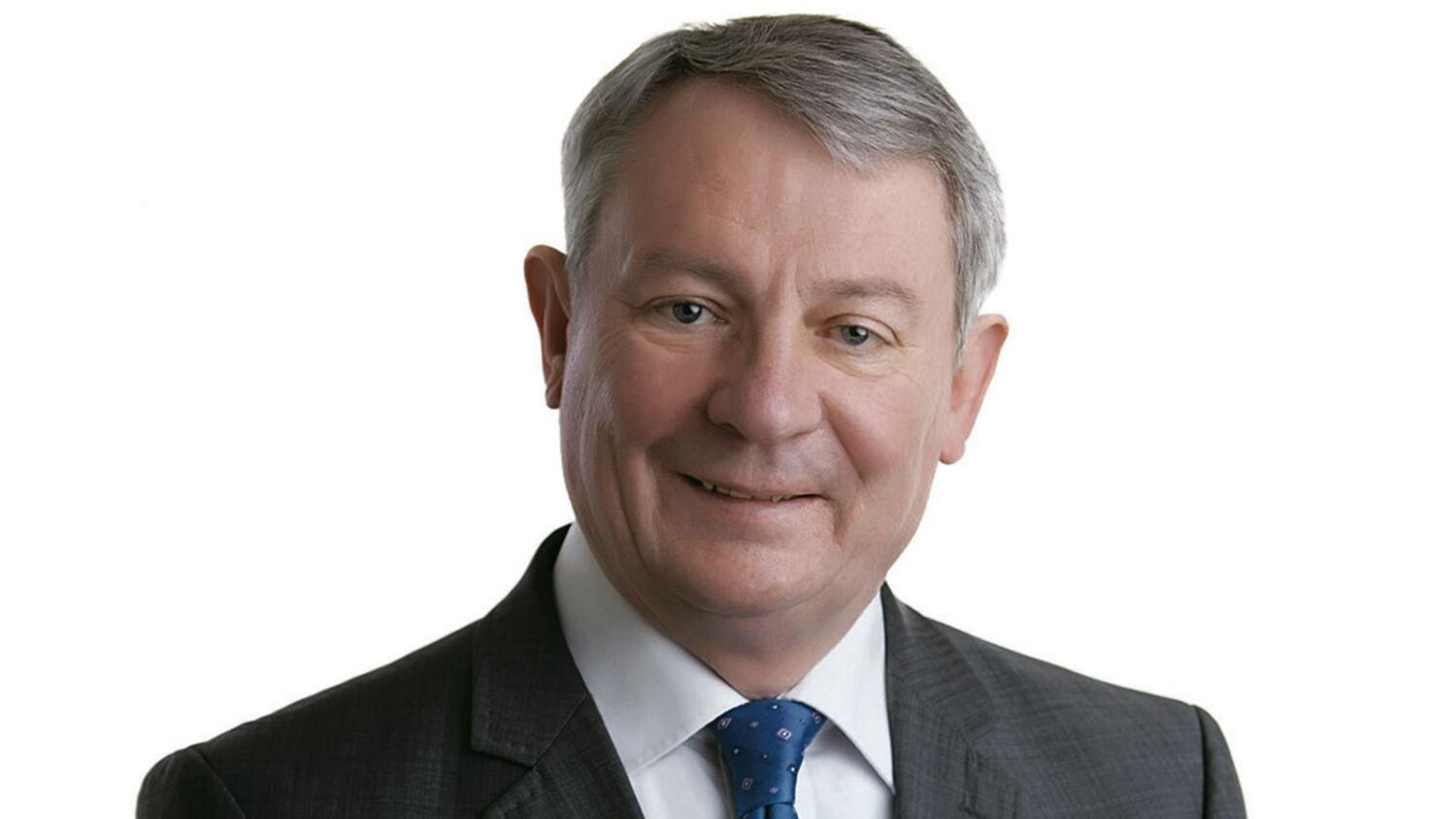
Interview: Tarek El Molla, Minister of Petroleum of Egypt

How will natural gas exports contribute to Egypt’s economic acceleration?

The current strategy of the Ministry aims at fulfilling the requirements of the local market and completion of the gas development projects. However, to achieve such a vital goal we worked towards increasing production by speeding up the development of the Mediterranean discoveries. Thus, due to implementing these programs, in a short period, to speed up those projects, Egypt’s gas production rates increased gradually to reach 6.6 billion cf/d, which contributed to achieving self-sufficiency from locally produced natural gas and halting LNG imports for the first time since April 2015.

Now, we are implementing programs, continuously, to increase natural gas production to achieve surplus to fulfill Egypt’s previous contractual obligations for exporting gas, which was not possible before, as a result of instability that, negatively, affected investments and gas production rates.

Furthermore, we aim at directing volumes of the surplus gas towards petrochemical industries, which will, significantly, contribute to increasing economic development rates through increasing resources added value. Such industries achieve distinct returns through fulfilling part of the local market requirements of raw materials & crudes along with exporting part of the production for foreign currency resources provision.

Moreover, Egypt plans to receive the gas produced from current discovered fields in the East Mediterranean region after their development and re-export it via the country’s gas liquefaction plants, which will achieve the desired goal of transforming Egypt into a Regional Hub for natural gas trading. The Hub will add economic and political benefits for Egypt such as monetizing the country’s infrastructure as well as reinforcing Egypt’s role both regionally and globally as a central country for all energy fields. Furthermore, we concluded several agreements with our strategic partners in the EU and Cyprus to support the steps taken for transforming into a Regional Hub and opening new horizons of cooperation at different energy fields.

How can the private sector advance Egypt’s Energy Hub strategy?

The private sector is, undoubtedly,  an important partner to Egypt in achieving the strategic objective of transforming the country into a Regional Hub for trading and exchanging gas and oil, playing a vital role in this domain in light of the current trend for gas market liberalization. The issuance of the Gas Regulatory Law and establishing a separate, independent Regulatory Authority, are steps that aim at providing an opportunity for the private sector to compete in all gas industry domains, together with participating as key players in trading and exchanging gas in the Egyptian market after concluding all the conditions and rules set by the law and its executive regulation. In fact, the new law allows the private sector’s qualified companies to purchase, import and selling gas, whether to the local market or re-exporting it via the LNG plants, which will achieve added-value to the Egyptian economy, benefiting from imported gas by reusing it in many industries or through re-exporting it to the global market. In addition, achieving optimal utilization from the gas infrastructure in Egypt, which is one of the most significant pillars of Egypt’s national project of transforming into a Regional Hub for exchanging and trading natural gas.

What efforts are being exerted to attract investments to the Sector?

No doubt that the major IOCs’ interest in pumping new investments in the upstream domain, represents a clear message of the foreign companies’ confidence in the investment climate improvement in Egypt, due to the reforms that have been implemented.  The State has taken numerous procedures in order to accelerate projects’ implementation. This was clearly manifested in several indicators; inking 95 new oil & gas exploration agreements, which is the largest number of agreements signed in Egypt since 2014 until now. This confirms the speed, flexibility, and transparency of the process of awarding the offered bid rounds along with the cooperation of all the State’s institutions, to obtain all approvals from its inception, until its completion, as well as issuing the necessary laws in record time. However, the best evidence of that historical achievement was realized in Zohr field project, as it was put on production in 28 months, compared to 6 years worldwide.

As for the measures taken to bolster Egypt as an increasingly attractive investment climate, the Petroleum Sector launched the modernization project, which includes a program to develop the mechanisms of attracting foreign investments. Thus, the Petroleum Agreement Model has been developed to include provisions that encourage foreign partners for investment in view of the high-cost discoveries development, in general, and of the deep Mediterranean areas & the risk factor, in particular. Some conditions have been set in the new agreements aiming at achieving an appropriate return on investment, to encourage the foreign partners for investment and rapidly putting discoveries on production.

Furthermore, the Ministry of Petroleum is, currently, working on applying new concepts that will expand the investment map of Egypt in the oil and gas upstream activities, through the implementation of new projects for seismic survey in the Red Sea, Gulf of Suez and West Mediterranean to identify areas with promising prospects to be offered in International bid rounds. In addition, the establishment of Egypt’s e-portal for marketing petroleum and exploration areas, contributing to attracting investments of IOCs as well as promoting these areas & petroleum investment opportunities in a modern concept.

How do you evaluate the potential for additional onshore oil and gas discoveries?

The Petroleum Sector is keen on offering International bid rounds and concluding petroleum agreements, which are considered the cornerstone of achieving further discoveries and developing oil and gas resources. In addition to the continuous coordination and cooperation with the foreign partners to accelerate implementing their exploration and development activities, as well as putting discoveries on stream.

Currently, we are depending on modern technologies in the field of exploration, for implementing initiatives of the Petroleum Sector Modernization Program, through executing seismic survey projects in West Mediterranean, Red Sea and Gulf of Suez, which helps in identifying geological structures in the deep core of the earth clearly; giving an accurate status of oil and gas resources, to be confirmed through exploratory wells drilling programs.

These efforts come within the framework of the Petroleum Sector Development and Modernization Project, which includes a work program for enhancing production performance and increasing petroleum resources’ production during the coming period. This could be executed through encouraging exploration activities and increasing investments of oil and gas. In addition, the program works on applying plans and operation programs in all production sites, based on studying and identifying opportunities to increase production from the existing fields together with accelerating development plans and new projects, besides reducing production cost. Moreover, the program works on increasing production facilities and expanding on shore exploration, at the promising regions of the Western Desert of Egypt, which witnessed, recently, three successive discoveries of oil and gas for the Italian company ENI at Faghur basin; as a result of using the latest technologies, new drilling methods and testing layers in deeper geological structures. In light of the intensifying exploration activities, along with the available facilities and infrastructure in the region, these discoveries will have significant economic impact, especially with low production cost and high quality of the produced crude oil. All these factors encourage International companies to direct their investments towards the Western Desert, which is full of promising prospects.

What role do you foresee downstream activities taking within Egypt’s economy?

Currently, the Petroleum Sector is working on implementing its ambitious work program to upgrade and raise the efficiency of the Egyptian refineries, which include the establishment of new refining projects as well as the development of existing refining units with investments of about $ 8 billion in Cairo, Suez, Alexandria and Assiut in order to increase efficiency & the local refining capacity.  This will achieve Egypt’s vital objectives, such as; securing the petroleum products supply and keeping pace with the increasing domestic demand along with reducing the quantities of major petroleum products imports such as gasoline, diesel and LPG, to ease the pressure on foreign currency and as well as the improvement of the Balance of Payment . However, The Refineries development is considered one of the main axes of Egypt’s plan to transform into a Regional Hub for crude oil refining and petroleum products trade. 

The existing plants have already been supported by advanced production units that were put online over the last few months such as the high-octane gasoline production unit at ANRPC, Alexandria and the production unit of LPG and naphtha in Assiut plant. Another unit for the production of high-octane gasoline is being constructed, in addition to the first phase of Midor refinery in Alexandria. 

Furthermore, several new projects will be completed simultaneously, the most important of which; the Egyptian Refinery in Mostord, the largest project to be carried out with total investments of $3.7 billion,  the Hydrogen Cracking of Diesel Complex in Assiut with investments of $1.8 billion, along with the second phase of the Midor expansion project  with total investments of EUR 1 997 million. In addition, we are implementing several other projects, at present, related to the activities of trading, transportation and marketing of petroleum products, with the ambition of upgrading the petroleum products trading and storage infrastructures, which are one of the most significant elements of the project to transform Egypt into a Regional Hub for crude oil and petroleum products trade. There is the offshore terminal at SUMED for petroleum products trade and storage at Ain Sokhna, whereas the operation of the first two phases was completed. In addition, there is a project, underway, at Sunker Port for the reception, trade, and storage of petroleum products, along with the expansion of Hamra Petroleum Port at the Mediterranean Sea to receive larger tankers with a capacity of one million barrels.

During the year, we have completed and operated several crucial projects in the field of infrastructure, the most important of which; is the storage and trading of petroleum products, in Badr city and LPG storage and trading units in Sohag.

More Articles

  • Become a Sliabh Liag Distillers Seanchaí

    Become a Sliabh Liag Distillers Seanchaí

    Seanchaí – Custodian of an oral tradition In a way, we are all seanchaí (phonetically pronounced: “shan-a-key”)  – story tellers, legend keepers and curators to our own story’s lives. Sliabh Liag Distillers’ invites you to become a Seanchaí and own one of 600 exclusive casks. Choose from Casks of smoky Donegal Single Malt or Pot…

  • Ireland’s Medtech Ecosystem

    Ireland’s Medtech Ecosystem

    Cook Medical is one of many key players within Ireland’s innovative medtech cluster. The company’s award-winning Limerick facility handles the R&D behind many successful medical technology products Since 1996, US-based medical technology company, Cook Medical, has operated a facility in Limerick. This facility was initially limited to basic manufacturing, labeling, and distribution work for its…

  • Sustainability: Meeting the Needs of the Present without Compromising the Future

    Sustainability: Meeting the Needs of the Present without Compromising the Future

    The Irish food industry is one of the most scientifically advanced and sustainable globally  The small island of Ireland has rich, fertile soil and privileged weather for farming. Agriculture has historically been Ireland’s largest indigenous industry, and today it continues the tradition. While the island has a population of 5 million people, it consistently exports…

  • Irish Academia: A Collaborative Approach to Innovation

    Irish Academia: A Collaborative Approach to Innovation

    Ireland’s world-class higher education sector, in collaboration with industry and research focused institutions, bolsters Ireland’s research and development (R&D) ecosystem and fosters innovation across the country Ireland is an innovation powerhouse. The country has become a science and technology global leader driven by a higher education sector prioritizing research and development (R&D).  The small yet…

  • The Inclusive University with Innovation & Entrepreneurship in its DNA

    The Inclusive University with Innovation & Entrepreneurship in its DNA

    Munster Technological University (MTU) was created on January 1st, 2021. MTU, which consists of six campuses across Cork and Kerry with a student body of more than 18,000, is a center of excellence in education, research and engagement for career-focused learners seeking enterprise and community-ready qualifications and experiences Ireland is one of the most diverse…

  • University College Dublin: Shaping The Future Through Research and Innovation

    University College Dublin: Shaping The Future Through Research and Innovation

    University College Dublin (UCD), Ireland’s global university and a leading European research-intensive university, was established over 160-years ago Internationally focused and forward-looking, UCD recently launched ‘Shaping the Future’, a new research and innovation strategy. This strategy sets out its ambitious plans to build on its success to date and grow the excellence and impact that…

  • Ireland’s Global Leader on the Edge of the Atlantic

    Ireland’s Global Leader on the Edge of the Atlantic

    In the south-west of Ireland, a university is driving the growth of a region that has become increasingly attractive for international study and foreign direct investment Cork is Ireland’s second-largest city, located in the southwest of Ireland in what is considered one of the most beautiful regions of the country. This is a spectacular part…

  • TU Dublin’s New Campus Transforms Downtown

    TU Dublin’s New Campus Transforms Downtown

    Ireland’s First Technological University Breaks National Records With Infrastructure Development Project Though it was officially established on January 1, 2019, Technological University Dublin (TU Dublin) is not a newcomer to Ireland’s educational landscape. Its history goes back to the Dublin School of Technology, a pioneering post-secondary institution established more than 130 years ago. Recently, TU…

  • Ireland: the Second-Largest Funds Domicile in Europe

    Ireland: the Second-Largest Funds Domicile in Europe

    With an increase in allocation to ESG products, Ireland is becoming a leader in sustainable finance The European Commission’s Green Deal is striving to make Europe the world’s first climate neutral continent by 2050. To make this ambition a reality, the European Commission’s Action Plan on Sustainable Finance is redirecting EUR one trillion of capital…

  • Irish Consulting: Helping Navigate Complex Geopolitical Shifts

    Irish Consulting: Helping Navigate Complex Geopolitical Shifts

    Managing Partner of EY Ireland answers questions about the future of the industry Similar to other sectors in Ireland, the Irish professional services industry has rapidly expanded in recent years in parallel with increasing FDI and ever growing business activity. Ireland has long been a strategic gateway for global operations, and in particular as a…

  • For Many Irish Companies, Flexible Workspaces are the Perfect Fit

    For Many Irish Companies, Flexible Workspaces are the Perfect Fit

    Workspace providers bounce back from COVID-19 pandemic With the lifting of one of the longest COVID-19 lockdowns in the world, decision-makers in Ireland look toward the future of their company function. Flexible workspaces have come center-stage, particularly in Dublin, as the popular alternative to the traditional private office. Companies big and small have found that…

  • International Financial Services Remains a Key Sector

    International Financial Services Remains a Key Sector

    Despite Challenges, the Sector Remains Strong Finance is big business in Ireland, and as of late, international financial services (IFS) in particular play a crucial role in the Irish economy. 11 of the world’s 15 largest insurance businesses have a presence in Ireland, with Irish insurance companies serving 25 million customers across 110 countries. Additionally,…

  • Ireland’s Commitment to the EU Underpins its Desirability as a European Base

    Ireland’s Commitment to the EU Underpins its Desirability as a European Base

    Grant Thornton Irish desks across the USA help facilitate the internationalization process The Republic of Ireland’s commitment to the European Union, ease of business, and reliable tax structure have been core pillars in the country’s ability to attract global financial services firms. Therefore, it is not a surprise Ireland has been the destination of choice…

  • Ireland as a Global Hub for Finance

    Ireland as a Global Hub for Finance

    The country’s financial services sector is one of the EU’s most important hubs Ireland is a financial powerhouse, and the fourth largest provider of wholesale financial services in the European Union. The country’s international financial services (IFS) sector encompasses more than 430 financial services companies serving every major economy globally. Home to 20 of the…

  • Ireland: the Jurisdiction of Choice for American Companies in Europe

    Ireland: the Jurisdiction of Choice for American Companies in Europe

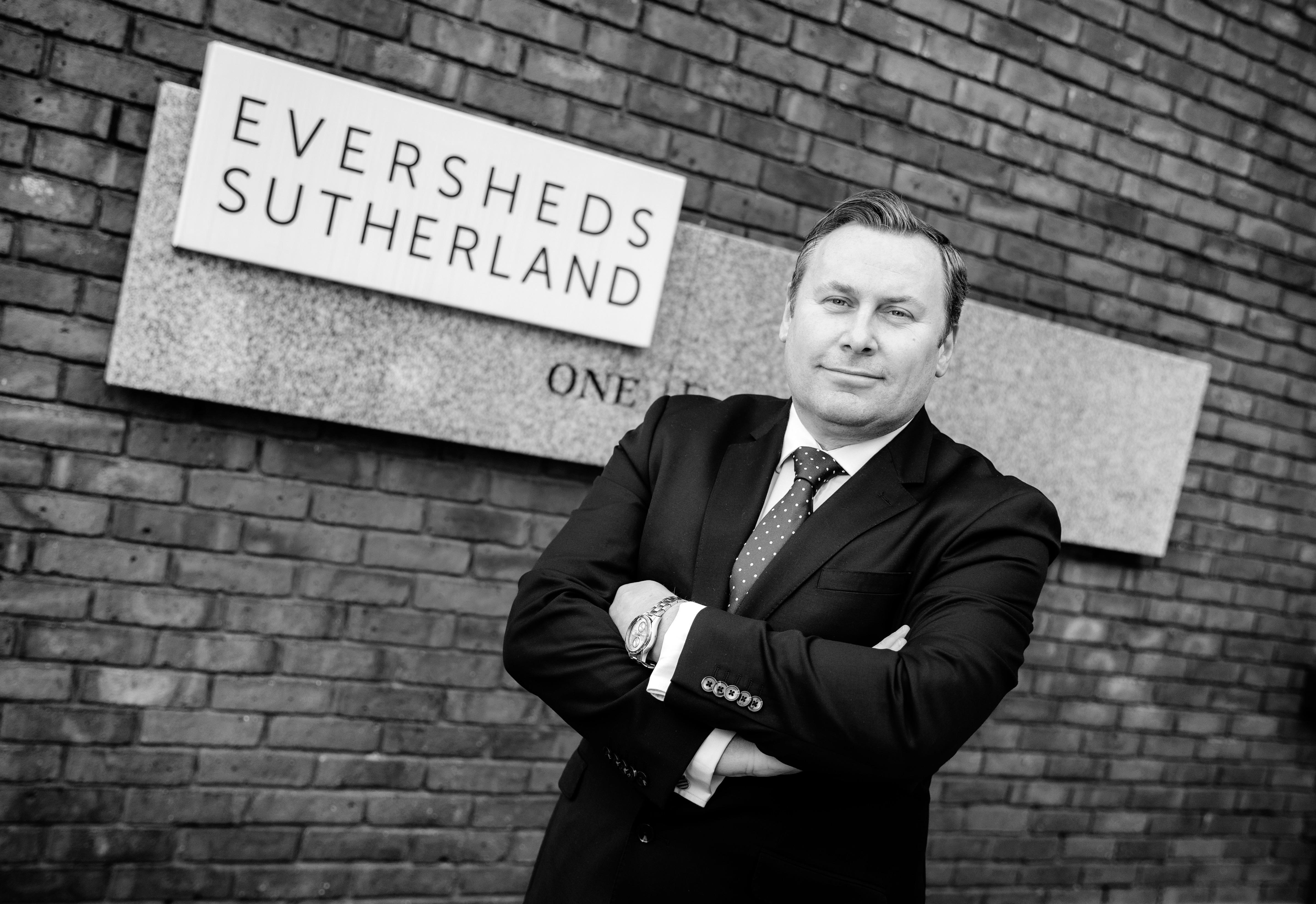
    A conversation with Alan Connell, Managing Partner of Eversheds Sutherland Ireland Before the financial crash in 2008, Ireland was one of the biggest European success stories. Nicknamed the ‘Celtic Tiger,’ the island nation had low unemployment, low inflation, modest public debt, and solid growth.  Alan Connell, Managing Partner of Eversheds Sutherland in Ireland, the country’s…

  • Cubic Telecom: Delivering Connected Software Solutions to the World

    Cubic Telecom: Delivering Connected Software Solutions to the World

    Innovative Irish companies, like Cubic Telecom, are playing a major role in the digital transformation of some of the world’s most important industries Ireland has emerged as a technology hub for innovation, with many of Silicon Valley’s most valuable companies setting up their European base there. Beyond attracting top industry players with its supportive business…

  • Realizing the Potential of Ireland’s IFS

    Realizing the Potential of Ireland’s IFS

    Technology-driven innovation and forward-thinking financial institutions are driving the success of Ireland’s international financial services sector To ensure Ireland’s international financial services industry (IFS) continues to thrive as a top-tier global location of choice for IFS, the Irish government created a strategy, Ireland for Finance. The strategy is based on four key pillars. First, by…

  • Cost-Effective Energy Efficiency

    Cost-Effective Energy Efficiency

    West Cork-Based Infrared Heating Business Upholds Nation’s History of Applied Innovation As the world grapples with climate change, there has been a renewed focus on sustainability, and corporations continue to seek solutions to achieve their new ESG targets. As one of the most energy-intensive economic sectors, industry is increasingly the focus of scrutiny. Solutions to…

  • County Monaghan

    County Monaghan

    The drumlin-dotted landscape and rolling hills that inspired the poems of Patrick Kavanagh seeks FDI Nestled within County Monaghan lies Castle Leslie Estate, one of Ireland’s finest luxury five-star castle hotels. Despite being home to such a gorgeous estate, the county is often an overlooked gem. Nevertheless, County Monaghan is famous for its drumlin landscape…

  • Dublin’s Silicon Docks

    Dublin’s Silicon Docks

    Europe’s “Silicon Valley” has embraced a high concentration of tech startups and mega multinationals Dublin continues to attract tech multinationals into the country, allowing for the corporations to penetrate European markets efficiently. Over the years, the IDA has successfully attracted a record breaking amount of Foreign Direct Investment (FDI). The Information Communications Technology (ICT) sector alone employs 37,000…

  • Irish Hospitality: Exporting Aparthotel Expertise

    Irish Hospitality: Exporting Aparthotel Expertise

    As cities grapple with the challenges of providing quality accommodation, Tom Walsh, Co-Founder and CEO of Staycity Group, explains how Staycity’s unique offering contributes much-needed quality options to cities while providing visitors with a perfect blend of home and hotel. Staycity started with one apartment in Dublin in 2004 and now operates serviced apartments in…

  • Enterprise Territory Optimization

    Enterprise Territory Optimization

    An Irish cloud-based solution offers a unique value-added proposition In recent years, Ireland has become a global leader in software development, and is now home to many international cloud service companies. While these solutions are in the cloud, they have real-world implications that improve efficiency across various economic sectors.  eSpatial is one of these Irish…

  • Smart Wastewater Solutions

    Smart Wastewater Solutions

    Smart solutions are efficient, adaptable, and target the problem directly with appropriate use of resources, without needing to be oversized or lavish.  When Center Parcs built its EUR 230 million, 500 lodge forest park resort within Ireland’s Hidden Heartlands in Longford, they turned to Butler Manufacturing Services (BMS) as an innovative local solutions provider based…

  • Liechtenstein: A Global Business Success Story

    Liechtenstein: A Global Business Success Story

    A principality nestled between Switzerland and Austria fosters a prosperous, highly industrialized economy Liechtenstein has the second-highest gross domestic product (GDP) per capita globally, the second-lowest unemployment rate, and is the world’s least indebted nation. Although small in size, the sovereign nation of Liechtenstein is well-integrated globally. It is a member of several multilateral organizations,…