Switzerland Innovation, Connecting Great Minds

From proton therapy for deep-seated tumor irradiation, to minimally invasive robot-assisted computer-guided laser osteotome, and innovative cancer immunotherapy research, Switzerland Innovation is facilitating world-class collaborations for companies, startups and universities to come together under one roof and find innovative solutions to some of the world’s greatest challenges.

Switzerland Innovation is the epicenter of merging talent, knowledge and expertise to conquer breakthroughs and create best-selling products and technology-driven solutions. The high quality collaboration amongst the Swiss public and private sectors and Swiss universities assures a winning combination, and Switzerland Innovation Parks fuse together these various competencies. Technologies that previously were only imagined in science fiction, are now becoming a reality and forging a limitless path for innovation, research and development. 

Switzerland fosters excellent conditions for innovation with legal certainty, respect for intellectual property, and a world-renowned educational system. The synergies created within Switzerland Innovation Parks form to strengthen the drive and progress of research, and accumulate in creating meaningful innovations. The open mentality, cooperation between universities and the private and public sectors, and the superb research centers are the keys to Switzerland’s success. 

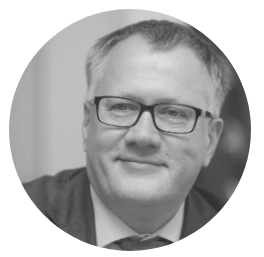
Raymond Cron, CEO, Switzerland Innovation

Chief Executive Officer of Switzerland Innovation, Raymond Cron, stated, “For the eighth consecutive year Switzerland is ranked number one in the world for global competitiveness in innovation. To maintain this honor, we have to continue to attract the world’s brightest and most talented minds. Switzerland’s dynamic framework conditions are already in place, and we must remain internationally connected with our research and development initiatives. Switzerland is the global leader for patents per capita, and when it comes to world-class patents from a technology perspective, ETH is third in the world (after MIT and Harvard).” 

The organizations working under the umbrella of Switzerland Innovation Parks continuously lead the way in cutting-edge technologies and innovation across the fields of health and life sciences, computer and computational science, energy, natural resources and environment, mobility and transportation, and manufacturing and materials. Raymond Cron mentioned, “Switzerland Innovation creates an ecosystem that encourages collaborations with world-class academic partners and leading corporations. We create a platform that allows universities and innovative companies to collaborate and use their research results for the development of marketable products and services. We continue to generate additional R&D investment into Switzerland from overseas and locally. We have created a platform for innovative entrepreneurs to work together with academia to research and develop new products and services, and are closely linked to all Swiss universities and institutions. We identify the right collaborations quickly, and have direct access to the academic excellence of Switzerland.”

There are five Switzerland Innovation Parks nationwide. With over 200,000 square meters of high-end laboratories, offices, conference rooms and co-working space, as well as over 40 hectares of development area for expansion, Switzerland Innovation is the catalyst for R&D staff to maximize their opportunities.
More Articles

  • Viewpoint: Zorana Mihajlović,  Deputy Prime Minister of Serbia, and the Minister of Construction, Transport, and Infrastructure

    Viewpoint: Zorana Mihajlović, Deputy Prime Minister of Serbia, and the Minister of Construction, Transport, and Infrastructure

    Serbia’s central position on the Balkans has been used as a bridge between West and East for generations.  This strategic position was the cause of many difficulties throughout history. Empires were always interested in controlling the crossroads going through Serbia. Nowadays, we consider this geographical position an advantage. We are doing our best to organize…

  • Interview: Zoran Babic, Director, Corridors of Serbia

    Interview: Zoran Babic, Director, Corridors of Serbia

    What will be the socio-economic impact of Corridor X? The Eastern part of Serbia is stricken by de-population due to lack of employment options. Corridor X will positively affect the employment rate in remote regions with high unemployment. The construction sector has provided new opportunities, and is actively creating a business environment which can attract…

  • Interview: Aigars Rostovski, President, Latvian Chamber of Commerce and Industry (LCCI)

    Interview: Aigars Rostovski, President, Latvian Chamber of Commerce and Industry (LCCI)

    Historically what have been Latvia’s most important economic drivers? Traditionally our biggest sector has been wood and timber produced from by our forests. They cover more than half of Latvia.  Forests are referred to as Latvia’s “Green Gold.” A second historically strong sector is manufacturing, in Soviet times Latvia was an industrial hub. A third…

  • Interview: Martin Gauss, CEO, Air Baltic

    Interview: Martin Gauss, CEO, Air Baltic

    How important is the development of Latvia’s aviation sector for the economy? If you look at the connectivity of the Baltic States, Riga at the moment is the key capital. Latvia being in Northern Europe has reachability issues. Connectivity with Europe by road and rail systems do not fully meet the needs of the region…

  • Interview: Ilona Lice, CEO, Riga International Airport (RIX)

    Interview: Ilona Lice, CEO, Riga International Airport (RIX)

    How do you assess the growth of the aviation sector? The Baltic economy will continue to be characterized by its steady and sustainable progress. The aviation sector accounts for roughly 2.5% of GDP, and cautious, and conservative estimates forecast a growth of 3%. During the past five years, we have invested EUR 154.2 million in the…

  • Interview: Toms Didrihsons, CEO, Orkla Confectionery & Snacks Latvia

    Interview: Toms Didrihsons, CEO, Orkla Confectionery & Snacks Latvia

    How is the post-recession recovery affecting the retail sector? Looking back seven or eight years we can see the general EU recession affected smaller countries in the Baltics quite heavily. The retail sector experienced a drop of 20-30%, which was a big hit. In the recovery process, you would expect some growth over the next…

  • Latvia: An essential global strategic transit hub

    Latvia: An essential global strategic transit hub

    The success of Latvia’s transport sector lies on a series of favorable circumstances. Latvia’s geographic location with access to both Russian and EU markets and its excellent infrastructure are the pillars of this success. Being located on the external border of the European Union, Latvia has quality infrastructure connecting the country to the Russian Federation,…

  • Interview: Ringolds Arnitis, Parliamentary Secretary,  Ministry of Agriculture

    Interview: Ringolds Arnitis, Parliamentary Secretary, Ministry of Agriculture

    How do you assess the agricultural sector? Latvia offers high-quality products which are environmentally friendly. These are two important reasons why international business’ choose Latvian products. Nearly 20% of Latvia’s export income is derived from the nation’s forests and another 20% from its agricultural products. EU financial resources have created new market possibilities. Since 2004,…

  • Interview: Aleksandrs Bartasevics, Mayor and Chairman of Rezekne City Council

    Interview: Aleksandrs Bartasevics, Mayor and Chairman of Rezekne City Council

    What are some of the benefits associated with investing in the regions? Investors should remember to evaluate other cities outside Riga. Latvia’s regions offer investors many advantages as opposed to the capital. The regions have fewer obstacles. One example is requesting permits and documentation for construction which takes several weeks longer in Riga than in…

  • Interview: Nikita Sergienko, CEO, Bite Latvia

    Interview: Nikita Sergienko, CEO, Bite Latvia

    How do you assess Latvia’s ICT sector? Latvia has one of the best networks worldwide and probably the best in the European Union. Taking advantage of this, and the qualified labor, many multinationals moved their back offices, call centers, IT centers and even head offices to Lithuania and Latvia.  Western Union, Swedbank, and even Barclays…

  • Interview: Reinis Rubenis, CEO, Swedbank Latvia

    Interview: Reinis Rubenis, CEO, Swedbank Latvia

    What challenges is the Latvian financial sector facing? One challenge for the Latvian banking sector is the number of banks. There are far too many banks in Latvia for such a small economy. Over the next five years, we will definitely see further consolidations taking place. This consolidation is necessary. A positive aspect of the…

  • Interview: Janis Lucaus, CEO, BTA

    Interview: Janis Lucaus, CEO, BTA

    How do you assess the insurance sector? Even though the sector caters to a small market in terms of population, it is highly competitive and evolving. A key factor to take into consideration is the number of competitors and a clear increase of international insurance players within the market. Competition has been beneficial for the…

  • Interview: Anda Caksa, Latvian Minister for Health

    Interview: Anda Caksa, Latvian Minister for Health

    How do you evaluate Latvia’s healthcare system? Over the pasttwo decades, life expectancy has increased by ten years. If we compare this to our neighbors, it is quite an achievement. However, in order to understand Latvia’s healthcare system, we need to discuss the issues and challenges that it has faced. The system has patient accessibility…

  • Interview: Edgars Rinkevics, Latvian Minister of Foreign Affairs

    Interview: Edgars Rinkevics, Latvian Minister of Foreign Affairs

    What are Latvia’s most prominent accomplishments? Latvia is an integral part of Europe and in May 2019 will celebrate 15 years as a part of the European Union. We are part of the eurozone, Schengen, and the OECD. Latvia operates according to similar legislation, rules, and principles as The Netherlands, Germany or Ireland. Therefore, Latvia…

  • Latvia: New electricity tariffs benefit consumers

    Latvia: New electricity tariffs benefit consumers

    Latvia is a net energy importer. Reforms continue in the electricity and gas sectors with the goal of opening competition in the domestic market. The government has made the full liberalization of the gas market a priority in 2017. Significant investments in gas and electricity infrastructure have been recorded to continue synchronization with the electricity grids…

  • Latvia: ICT sector surpassing 4% of GDP

    The turnover of the ICT sector is estimated at EUR 3 400 million, accounting for 4% of the total GDP. Approximately 6 200 companies operate within the sector. ICT related services, software, hardware, and telecom sub-sectors have grown significantly in recent years. The exportation of foreign-sourced computer hardware and software are a significant share of…

  • Martins Vanags, Managing Director, Skanste Development Agency, on creating Riga’s central business district

    Martins Vanags, Managing Director, Skanste Development Agency, on creating Riga’s central business district

    In the Riga City Development Strategy for up to 2030, the Skanste neighborhood has been defined as a priority territory: the central business district of the capital, a platform for European-scale events and a quality life and work environment for many thousands of Rigans. Next to the Historic Center and the “Quiet Center” of the…

  • Baiba A. Rubesa, CEO, Rail Baltica, on creating a new economic corridor

    Baiba A. Rubesa, CEO, Rail Baltica, on creating a new economic corridor

    Rail Baltica, a new railway infrastructure connecting the three Baltic States to Poland and indirectly to Finland, is often called the project of the century. This project marks a symbolic return of the Baltic States to Europe. Currently, most rail freight traffic in the Baltics originates from the CIS (Commonwealth of Independent States) countries and…

  • Latvia: An evolving global financial hub

    Latvia: An evolving global financial hub

    Local demand for global financial services is limited. The banking sector makes up 90% of assets within Latvia’s financial system. The insurance sector represents 2.4% of assets while the State-funded pension scheme around 5%. Banks dominate the financial sector of Latvia, and Scandinavian banks have the dominant share of the domestic market. Latvia’s financial sector…

  • Interview: Uldis Augulis, Latvian Minister for Transport

    Interview: Uldis Augulis, Latvian Minister for Transport

    What opportunities exist to foment further transit? Latvia is situated in a very privileged geographical position. Within the Baltic States, Latvia is the focal point connecting the West to the East. Our warm-water ports currently account for the biggest cargo freight transportation amongst the Baltic countries. Transit, logistics, and distribution of goods through Latvian ports…

  • Interview: Svens Dinsdorfs, CEO, Elko Group

    Interview: Svens Dinsdorfs, CEO, Elko Group

    What is your outlook for Latvia’s Economy? Latvia’s financial crisis had a big psychological impact on society in terms of spending. Since then, Latvia has experienced a slow but gradual increase in internal consumption which has aided the countries turnaround. The confidence of the population is continuously increasing which is directly boosting internal demand. This…

  • Interview: Arvils Aseradens, Latvian Deputy Prime Minister and Minister for Economics

    Interview: Arvils Aseradens, Latvian Deputy Prime Minister and Minister for Economics

    How do you assess Latvia’s economic growth?  Four key points are behind Latvia’s economic growth; European Funds, external situation, accumulation of private savings and rising income levels. Income levels have increased 5% in the past three years. This has been a very active base for private consumption. In addition, the private sector has large amounts…

  • Interview: Marta Jaksona, Executive Director, Foreign Investors’ Council in Latvia (FICIL)

    Interview: Marta Jaksona, Executive Director, Foreign Investors’ Council in Latvia (FICIL)

    How do you assess current foreign direct investments in Latvia? I would like to see higher levels of investment. Foreign direct investments in Latvia increased sharply after Latvia’s accession to the EU in 2004. After the crisis, the investment slowed. However, we saw this in the entire EU. The fight for investments is obviously increasing.…

  • Country Profile: Latvia

    Country Profile: Latvia

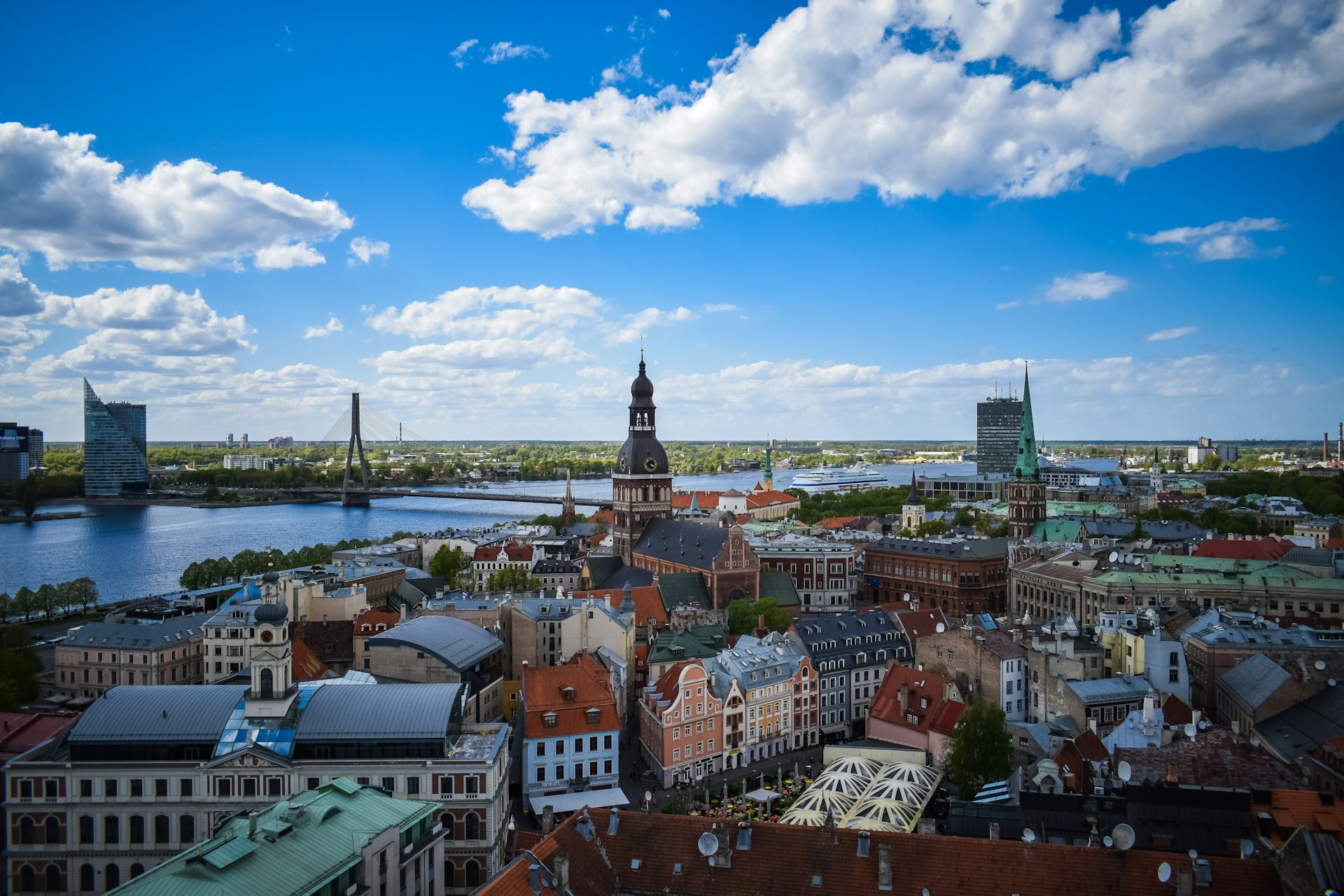
    The Republic of Latvia is a small country in Northern Europe and one of the three Baltic States. Latvia is a small open economy, and its exports account for the majority of its GDP. Due to the strategic geographical position of Latvia, the transport and transit sector is highly developed. Latvia became a success story…