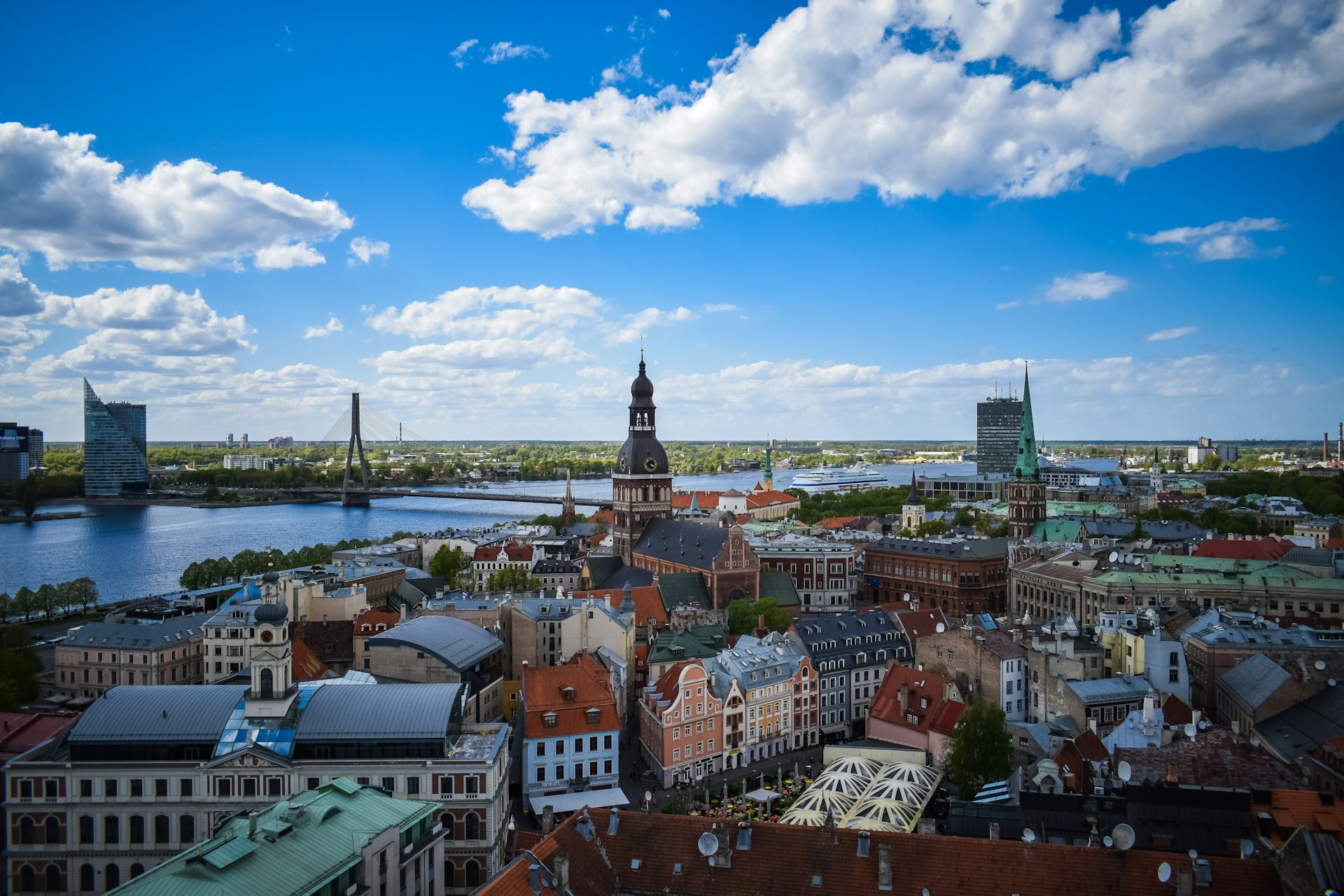
The success of Latvia’s transport sector lies on a series of favorable circumstances. Latvia’s geographic location with access to both Russian and EU markets and its excellent infrastructure are the pillars of this success. Being located on the external border of the European Union, Latvia has quality infrastructure connecting the country to the Russian Federation, the Republic of Belarus as well as connections to the entire Eurasian continent. It has one of the best railway connections to Russia and offers three of Europe’s most northern ice-free ports. Latvia is specifically well positioned to facilitate the region’s land-locked areas access to the Baltic Sea during the winter when most of the ports and roads in Northern Europe freeze. The location gives Latvia vast potential to function as a transit hub for Far East cargo via the Trans-Siberian Railway connection to Western Europe. Its location and infrastructure make it an essential global strategic transit hub. As a stable member of the EU, it has the potential to significantly increase its role coordinating trade between EU and non-EU countries.
The transport, transit and storage sectors contributed roughly 9% to GDP in 2016 and employed nearly 8% of Latvia’s working population. A key goal for the development of Latvia’s transport system is to fully integrate Latvia’s transport infrastructure with the Trans-European multi-modal transport system. The transport sector’s improvement is driven by international transport and forwarding companies that offer value-added services. These corporations are further boosting the availability of high level IT within the sector including modern data systems, and the development of Electronic Data Interchange. Government entities such as customs and tax authorities also have efficient information systems leading to an increase in the effectiveness of communication between private and public entities. The geographical location of Latvia at the center of the Baltic region allows for rapid distribution of goods in the Baltic States and even Helsinki, Stockholm or Warsaw within 24 hours. In addition, for retail distribution, any store within the trading chain in Scandinavia can be serviced within 48 hours. Overall, despite fierce competition, a challenging geopolitical situation and continued sanctions from Russia, Latvia’s transport sector continues to perform above expectations.
Aviation: Latvia’s aviation industry has grown steadily in recent years. The Latvian government has made massive investments in the airport infrastructure, and additional projects are currently underway. The airlines have turned profitable after years of negative results. Also, new airline entrants have contributed to increased destinations and passenger numbers.
The country has three major airports – Riga, Liepaja, and Ventspils. Riga accounts for most of the traffic while the others are mainly used for private flights.
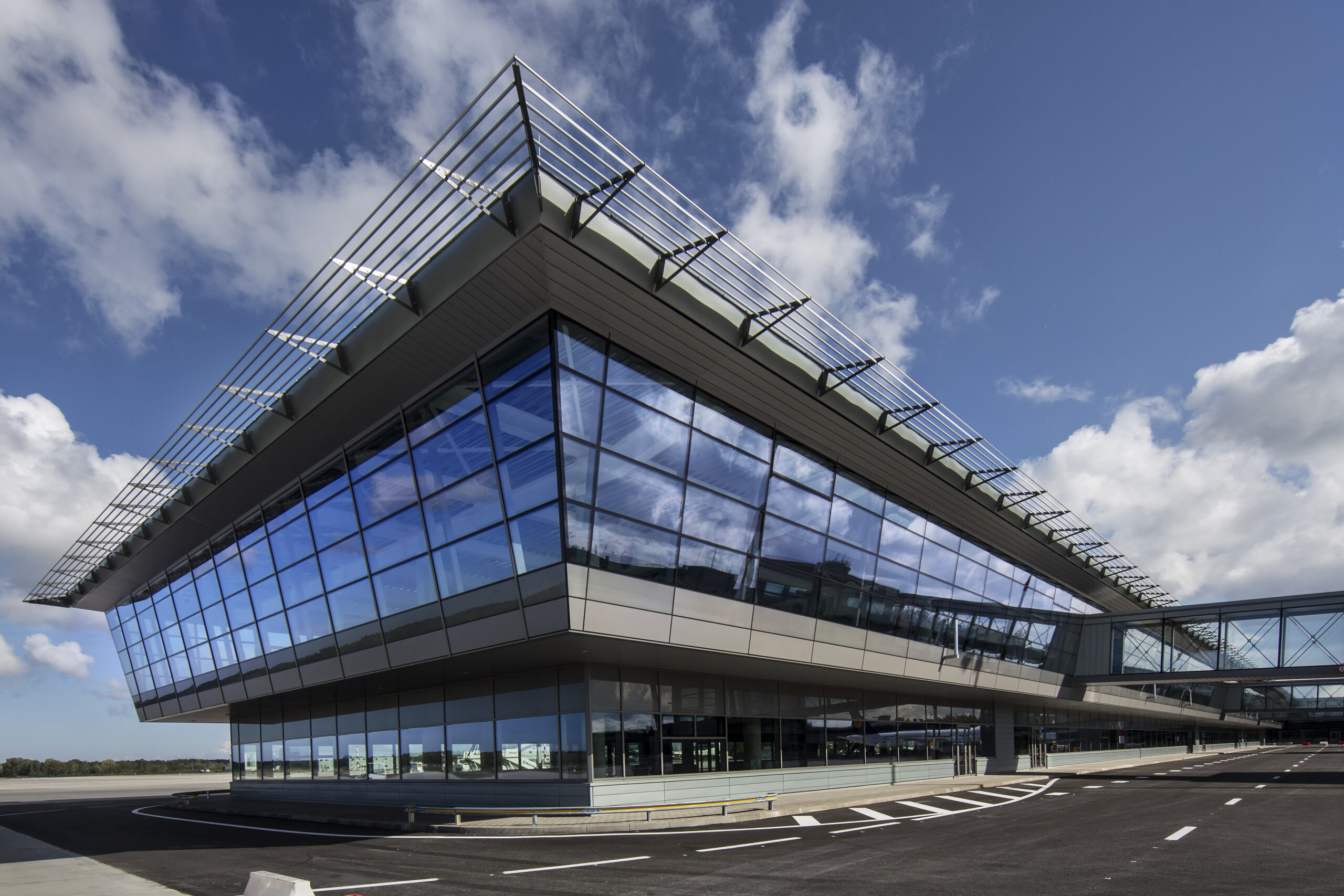
Riga International Airport (RIX) is the largest airport in the Baltic states and the main air traffic center of the region. It caters to both full-service airlines and low-cost carriers. The airport hosts operations from 20 airlines which offer flights to 60 destinations in the winter season and 89 in the summer season. Annual passenger traffic has increased steadily in recent years from 1.9 million passengers in 2005 to over 5.4 million in 2016 within 68 061 flights. RIX continues to grow the numbers of served passengers and in the first eight months of 2017 handled 3.4 million passengers, achieving 10.1% year-on-year growth compared to the same period in 2016. RIX accounts for nearly 45% of air passenger traffic within the Baltic States. The top three destinations are currently London, Moscow, and Frankfurt.
The airport has completed its phase five terminal expansion project. The expansion phases will allow the airport to accommodate 7 to 10 million passengers per annum, cater large aircraft, and develop long-haul flights.
During the first eight months of 2017, RIX also handled 14 400 tons of cargo, up 10% from 2016. In 2013, the airport reached its full-year cargo handling record of 53 539 tonnes due to an increase in cargo shipments that year to the international forces in Afghanistan. The airport’s efficiency in handling punctual peak cargo volumes is a testament to its reliability. One of the airport’s key strategies is to grow as a cargo services provider.
RIX’s mid-term strategy forecasts that between 2017 and 2023 the number of passengers will grow from 5.4 million in 2016 to 6.8 million in 2023 maintaining a high proportion of transfer passengers rates averaging 32%. In addition, the number of passenger flights is expected to increase from 68 000 in 2016 to 81 000 in 2023 and freight is expected to grow from 19 760 tonnes in 2016 to 42 798 tonnes in 2023.
Although operations are small, the cities of Ventspils and Liepaja also host international airports. Liepaja airport was recently renovated and can now be operated under ICAO Cat I regulations. The airport’s renovation is expected to facilitate the long-term economic development of the region further, and AirBaltic has confirmed its plans in 2017 to serve the destination year-round.
The Latvian national airline airBaltic is the largest air carrier at RIX accounting for 53.5% of the total number of passengers. It is the only Baltic air carrier and its turnaround has helped transform RIX into a major regional hub. The number of flights annually has increased from 19 504 in 2003 to 44 000 in 2016. “After an intensive period of turnaround airBaltic is back on a profitable growth path and able to offer lower prices and more destinations with our brand-new aircraft,” says Martin Gauss, Chief Executive Officer and the Chairman of the Board at airBaltic. Minister of Transport Uldis Augulis told media “the opportunity to become the strategic investor of the national airline Air Baltic” was still on offer and the ministry is currently analyzing proposals from potential investors.
Logistics: Historically, Latvia has been a key transit point for international trade flows due to its strategic geographical location which has helped connect major world economies. The transit sector alone plays a significant role in the national economy accounting for 3.5% of GDP and transit traffic revenue represents a quarter of the total exports of public services. It is considered one of the most promising sectors in the Latvian economy. Unlike other countries in the region, the Latvian transport sector is not overly reliant on road transport and is diversified, with sea and railway transport playing a crucial role in Latvia’s transport network. Container volumes handled in Latvian terminals reached a record amount in 2016 at 377 400 TEU, an increase of 8% from 2015. Cargo turnover in Latvian ports accounted for almost 20% of all cargo volume in the Baltic Sea reaching 63.1 million tons. Latvian Railways transported 47 million tons of cargo. The transit subsector accounts for the majority of the transport sector’s turnover holding almost 90% share in Latvian ports and 80% in Latvian railways.
Four key projects are in the pipeline in Latvia that will further contribute to the development of the transit infrastructure within Latvian ports and logistics centers. The Rail Baltica Logistics Centre will be constructed on 400 hectares near Salaspils and will help connect European rail lines to those of the CIS countries. Secondly, the Freeport of Riga Logistics center, near Spilve, which is planned on 450 hectares for a seaport terminal project is entirely dedicated to handling cargo and developing logistics for regional distribution for Chinese goods in the Baltic Sea region. The third is situated in the Ventspils Free Port where 100 hectares have been reserved for the creation of a new North Harbor. The fourth is at the Riga International Airport where a 5.5 hectare logistics center is being developed.
Rail: The Latvian railway network connects all major cities and trading hubs, such as Riga, Ventspils, Liepaja, and Daugavpils. It is dense and large in comparison to its population. Despite the extensiveness of the network Rail Passenger transport cannot compete with road transport. Freight traffic dominates the sector and mainly runs from the East to the West in the direction of the three major Latvian ports in the Baltic Sea. Out of all transportation types, railroads carry the most significant amount of cargo. The network which mostly uses the former Soviet railway gauge standard offers excellent connections to Russia and the CIS. Through Poland, Latvia provides railway connections to the rest of Europe. A significant portion of the network is single track with 1524 wide gauge. It is estimated that around 30% of the rail infrastructure needs to be reconstructed as parts of the railway network have deteriorated. “Latvijas Dzelzceļš” (Latvian Railways) is 100% owned by the state and is both the infrastructure manager and the railway operator. However, the entity only operates freight trains. Its 100% state-owned subsidiary “Pasazieru Vilciens” (“Passenger Trains”) operates passenger trains.
Rail Cargo: Latvia is a leader in container shipping among its Baltic neighbors. Latvia offers three container shipping routes: Riga Express (Riga-Moscow), UBR (Tallinn, Riga, Minsk, Ukrainian Black Sea Port Odessa, Chornomorsk) and Baltika Tranzit (Baltic States – Central Asia). The east-west railway corridor can transport 50 million tonnes of cargo annually. The state-owned operator Latvian Railways functions mostly as a transit trunk-line. Nearly 80% of total freight volumes are goods in transit connecting to the Latvian ports. The current reconstruction plans aim to increase the capacity and the cargo volumes transported by rail.
New freight Rail routes to ASIA: One of Latvia’s main priorities is the development of Eurasian transit corridors and the attraction of container loads from prospective markets in China, India, and Iran. Latvia holds untapped potential to increase cargo transit from the Far East via the Trans-Siberian Railway connection to western Europe. Amongst the Baltic States Latvia has the most extensive experience in developing routes to the East and is focusing on the development of container trains in the Eurasian corridors. The country also has vast experience in servicing container shipping to the Northern Distribution Networks in Afghanistan.
Latvia is actively trying to serve as a reliable partner to strengthen China’s One Belt, One Road initiative. On 5 November 2016, Riga hosted the Annual Meeting of Heads of Government of Central and Eastern European Countries (CEEC) and China in the 16+1 format, chaired by the Prime Minister of Latvia Maris Kucinskis. Since May 2016, Latvia has been coordinating the National Logistics sector in the 16 + 1 format and, earlier in the year successfully organized test convoys from Yiwu, China, which traveled 11 066 km in 12 days. The Ministry of Transport has been particularly active in this initiative and was chosen to host the Secretariat on Logistics Cooperation due to its profound experience and knowledge of the sector. In addition to attracting transit freight from Asian markets, Latvia is investing into developing its in-house logistics operations through further investments. “We hold a unique prospect to link through CIS countries, currently using the 15/20 rail track gauge and the continental Europe with the 14/35 rail track gauge, and emerge as a logistics hub with the possibility for foreign companies to manufacture and assemble goods with the “Made in EU” label in Latvia” stated Uldis Augulis Minister of Transport.
Passenger Rail: The role of Latvian railways in passenger traffic, despite its historical significance, has greatly diminished in importance in recent years. Rail passenger transport is much less significant than freight and comprises almost exclusively of domestic traffic. No direct passenger rail link connects Tallinn, Riga, and Vilnius and existing infrastructure is only able to provide relatively slow speeds. In addition, the railway system in the Baltic States is incompatible with the Continental European rail system due to a different track gauge. Links between the regions are complicated and relatively expensive.
Rail Baltica: Rail Baltica is a greenfield rail transport infrastructure project which aims to integrate the Baltic States into the European rail network. Co-financed by Connecting Europe Facility grants and the national budgets, the Rail Baltica project is part of a broader initiative partly funded by the European Commission. It was launched to improve rail connectivity between the three Baltic countries as well as to continental Europe.
The project includes five European Union countries – Poland, Lithuania, Latvia, Estonia and, indirectly Finland. In 2016 the estimated budget of the project was EUR 5 000 million.
The planned Rail Baltica project aims to create the first high-speed electrified conventional rail line with a maximum design speed of 240 km per hour and a 1435 mm European standard rail in the Baltic States.
The 950 km track will connect Tallinn to Warsaw, a total of 700 km within the Baltic States, and a 235 km segment in Latvia.
The railway line will connect the Baltic capitals and strategic locations including airports along its route. It will serve as an axis for further transport network improvement in the vicinity of its stations.
The Rail Baltica Global project is a crucial element in the North Sea-Baltic Basic Network Corridor, and the initiative is of great importance to the Baltic States.
The Rail Baltica project is intended for both passenger and freight transport and additional infrastructure (rolling stock depots, passenger and freight terminals), to ensure the full compatibility of rail infrastructure with the rest of the European TEN-T network.
It will provide competitive conditions for both passenger and cargo transportation and aims to improve the rail freight potential in the Baltic States. Socio-economic benefits associated with the project are; a reduction in air pollution, lower travel and freight costs, labor mobility, and increased tourism opportunities.
Ports: Latvia has three large non-freezing ports available for operations throughout the year (Riga, Ventspils, and Liepaja), and is the leader among the Baltic States in the amount of cargo handled. Ventspils and Riga Ports are Free Ports whereas the entire city and port of Liepaja comprise a Special Economic Zone. Those three larger ports are complemented by seven minor ports – Salacgriva, Lielupe, Engure, Mērsrags, Roja, Kolka and Pāvilosta. In 2016, more than 63 million tons of cargo were transshipped through Latvian ports. Latvian ports provide a full range of useful handling services including transshipment, consolidation, repackaging, customs documents processing, warehousing of customs cargo, cargo condition control, as well as other types of cargo handling and processing. Latvian ports are specifically designed to attract businesses and offer favorable incentive schemes for new companies ranging from 80 to 100 percent relief on direct taxes and significant discounts on indirect taxes.
Road: The Latvian road network is well-developed, and uniform even though rating relatively low compared to the EU average. Nonetheless, the country has worked on and strives to obtain and maintain high-quality road infrastructure and road safety that meet international standards. Several projects are currently underway to improve the road network. Latvia benefits from little to no traffic outside peak hours within the capital city.
Latvia has completed 88% of its TEN-T Core Road Network. The European route E67 crosses Latvia from its southern border with Lithuania near Grenctale to its northern border with Estonia near Ainazi. It constitutes the most important transport corridor by road. This route is essential for the connectivity of the Baltic States, and the 970 km segment between Warsaw and Tallin is named Via Baltica. The E67 connects Prague in the Czech Republic to Helsinki in Finland by through Warsaw (Poland), Kaunas (Lithuania), Riga (Latvia), and Tallinn (Estonia). The segment between Tallinn and Helsinki is operated by ferry transport.
The E67 part within Latvia connecting Riga to Estonia is referred to as A1 and was almost entirely reconstructed between 2003 and 2007. The segment connecting Latvia and Lithuania is referred to as A7.
Road PPP: The Ministry of Transport has taken a keen interest in using public-private partnerships (PPP) to upgrade Latvian roads. The E67/A7 motorway section from Riga to the Lithuanian border is one of the major national motorways and part of the Trans-European Transport Network (TEN-T), as well as part of the Via Baltica. The Kekava Bypass will be the first PPP project in the infrastructure development and aims to create a 17.5 km long two-lane expressway. This PPP project is implemented using a facility provided by the European Financial Stability Facility (EFSF) in cooperation with the European Investment Bank (EIB). The EIB has already carried out its initial evaluation of the project, and the project has completed the environmental impact assessment procedure. Latvian State Roads is working on the procurement scheduled for 2018. The commencement of construction works is expected in 2019-2020. The Partnership contract validity period is 23 years – 3 years for design and construction, and 20 years for daily and periodic maintenance.
Outlook: Since the times of Hanseatic League Latvia has been a key trade gateway between east and west. The nation, since regaining its independence has revitalized and modernized its role as an important transit link for goods. Latvia’s accession to the EU further strengthened its position by allowing it to provide access not only to the East but also to the European markets and the border-free Schengen zone. Moving forward, a key priority for the long-term success of Latvia’s transport sector is the continuous development of its logistics and distribution businesses. The logistics centers will continue to develop through the growth of warehousing and distribution companies if the sector is increasingly able to attract consumer goods with higher added values. Favorable government policies seeking to increase freight, improve infrastructure and simplify customs procedures with Russia contribute to the full development of the sector. However, acquiring new loads to container trains from new markets will be an essential challenge over the next five years. At the moment, the attraction of new cargo from Asian countries is a necessary step for the sector to reach its maximum capacity.