A Look Inside the World’s Most Innovative Economy

Zug Switzerland
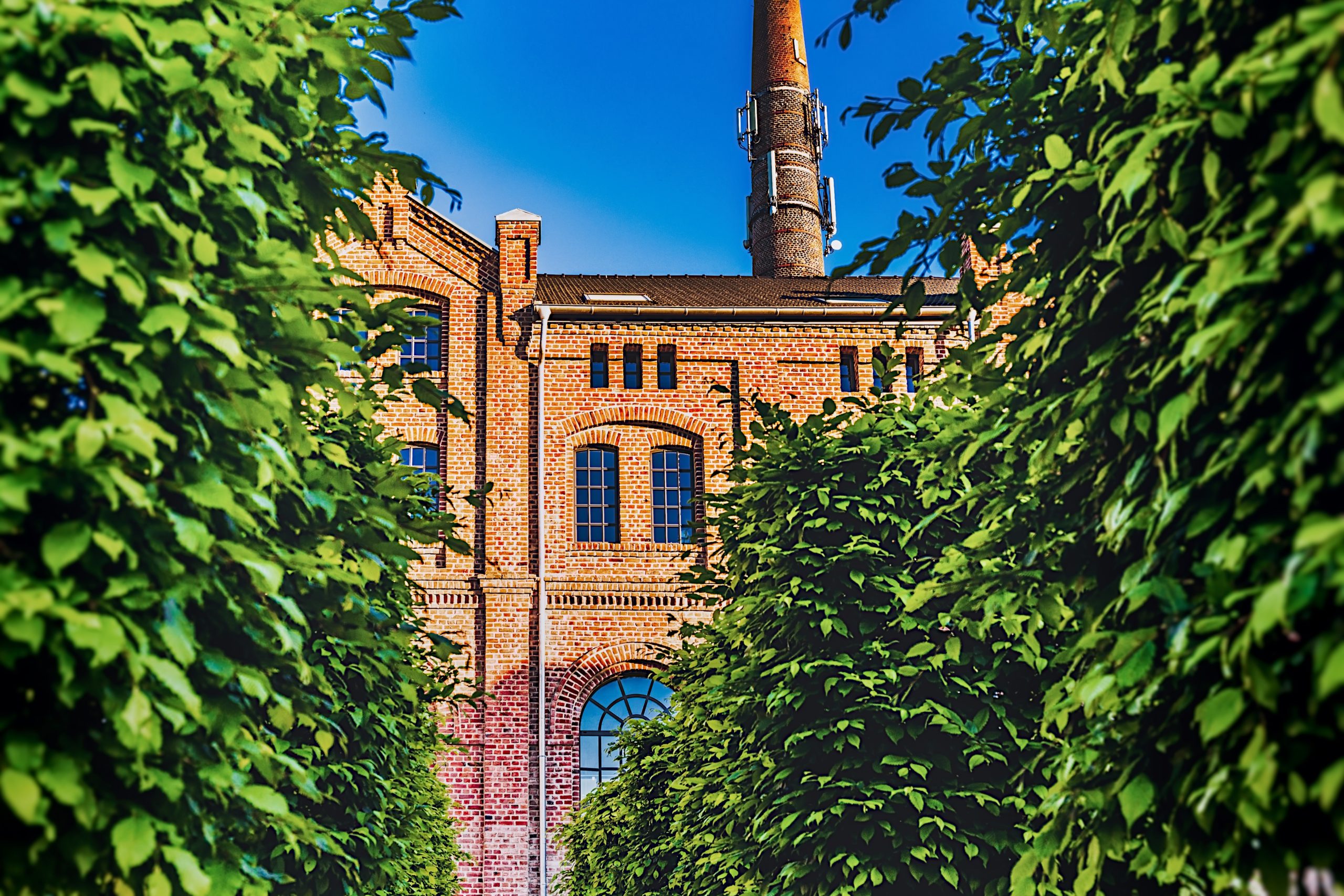
Photo of the Crypto Valley in Zug, Switzerland, one of the world’s leading blockchain ecosystems, and Park-Tower a project developed by Peikert Immobilien AG and Peikert Projeke AG.

The World Intellectual Property Organization analyzed 131 economies, and for the last ten years, Switzerland has ranked as the world’s most innovative country. The nation specializes in offering innovative solutions to complex global challenges, and has a unique ecosystem for business and investment opportunities. International corporations value Switzerland as an efficient, stable and productive location to grow dynamic businesses. The nation has a liberal economy, political stability, international integration, outstanding infrastructure, focuses on sustainability, and provides a well-structured tax code. In addition, Switzerland consistently excels in advancing technology, fostering academia, and maintaining one of the world’s highest standards of living. For a population of only 8.6 million, it is extraordinary the global impact Switzerland has had on the world.

As a base for operations

As a stable country with an open economy committed to free trade, it is an ideal base to manage international operations. The country actively fosters the development of global business operations, and therefore, the small landlocked nation has been able to attract an impressive quantity of multinational companies. Companies also benefit from Switzerland’s iconic neutrality, and ability to build diplomatic relationships and excellent trade agreements.

Ambassador Christian Dussey, Director of the Geneva Center for Security Policy stated, “Geopolitics can affect organizations in unexpected and dramatic ways with new regulations, sanctions, disruptions of supply chains, and more. The pillars of Switzerland’s competitiveness remain strong into the foreseeable future, including the country’s political stability, security, predictability, prime location, world-leading research and academic institutions, innovation, and digital capabilities. For companies that are worried about continued economic and political upheaval, Switzerland’s stability is attractive.” 

“For companies that are worried about continued economic and political upheaval, Switzerland’s stability is attractive.”

Ambassador Christian Dussey,
Director, Geneva Center for Security Policy

Another reason Switzerland excels as a location, is that it is exceptionally well integrated globally. It is not within the European Union (EU), but a free trade agreement with the EU allows for a seamless free movement of goods, services and people. In addition, Switzerland has thirty free trade agreements outside the EU, the capability to negotiate independently, and new agreements are continually being negotiated. 

However, a free trade agreement with the USA remains elusive. Switzerland is the seventh-largest foreign investor in the USA, and according to a study by the Swiss think-tank Avenir Suisse, “A free trade agreement would contribute to mutual prosperity and mutual gains.” Swiss-American relations are based on shared social values and historically strong economic interests. Switzerland has a federal government that uses a bicameral system, and the USA and Switzerland are often referred to as sister republics.

In addition to political and economic cooperation, the two republics share similar cultural values. Pro Helvetia Director, Philippe Bischof mentioned, “Swiss art, culture, and values can shift global societal perceptions and encourage diversity. Pro Helvetia seeks to have a role in fostering cross cultural exchanges between the USA and Switzerland. We have ambitions to further develop bonds between the two sister republics. Swiss culture and virtues foment multilateralism, encourage political dialogue, foster bilateral exchanges, and encourage engagement opportunities across cultures.”

“Swiss art, culture, and values can shift global societal perceptions and encourage diversity.”

Philippe Bischof, Director, Pro Helvetia

Business friendly legal framework

Switzerland is known for its business-friendly legal and regulatory framework. Unlike many European countries, Switzerland has a liberal labor legislation that is similar to the USA’s. Switzerland is one of the most federal and democratic countries. All citizens can contest decisions made by parliament. The system is slow, which at times can be problematic; however this process prevents hastily made decisions. This creates political stability, which combined with a positive business attitude, is a solid background for a business ecosystem.

Mr. Philippe Bärtsch, Managing Partner of Schellenberg Wittmer stated, “There is fierce competition between European countries to attract investment, this healthy competition pushes Switzerland to strive to be better. We have developed a unique business ecosystem that is based on trust and predictability which combined with stability makes Switzerland a safe haven for investors. This is a main reason companies build their global operations out of Switzerland.”

Academic excellence

The exceptional Swiss education sector prepares the population to be lifelong learners. This contributes to attracting the best global talent, and aids in the country’s overall attractiveness as a business and investment destination.

According to Professor Dr. Andrea Emilio Rizzoli, Director of IDSIA USI-SUPSI, an artificial intelligence research institute, “There are various reasons why this small country, nestled in the Alps, has consistently ranked as one of the most innovative. A key asset is the Swiss higher education system. Switzerland is home to ETH Zurich and EPF Lausanne, the Swiss federal institutes of technologies, which are among the world’s top-ranked universities. Often unnoticed, in parallel to the traditional universities, there is a whole system of Universities of Applied Sciences offering tertiary education aimed at shaping future professionals. The Swiss system delivers highly skilled professionals capable of tackling every aspect of an innovative company.” 

The sector has faced unparalleled challenges in the last year due to COVID-19, but entities have quickly adapted. One example of excellence in the sector is the International Institute for Management Development (IMD). Professor Jean-François Manzoni, President of IMD stated, “Education’s contribution to Switzerland’s overall attractiveness is not to be underestimated. We are not just able to attract the best global talent, we continuously develop it within a unique ecosystem that foments lifelong learning. Swiss education develops resilient leaders who transform organizations, contribute to society, challenge what is, and inspire what could be. Particularly during a crisis like today’s, academia needs to dramatically accelerate the use of technology mediated interactions. As a world leader in executive education, pioneer in corporate leadership development, strategy, and digital transformation, IMD is an ideal example of this transformation. We have adapted quickly, leveraging this opportunity to offer immersive, bespoke experiences.”

Hub for R&D

Switzerland possesses a phenomenal regulatory environment, and remains a high spender for R&D. Innovation is partially financed by the nation through R&D grants given to universities, and used in collaboration with industry to improve products, services and processes. It has become an effective way of ensuring R&D translates into marketable products. In addition, the private sector outspends global averages and consistently churns out new inventions. For instance, the World Wide Web was invented at CERN near Geneva in 1989. This is only one of thousands of innovative Swiss solutions currently tackling global challenges.

Furthermore, Switzerland has more patents per capita than any other European country, with over 900 patents per million inhabitants. Several core companies support this development, including Roche and Novartis in the pharmaceutical and life science sector, ABB within industry, and Nestle in fast-moving consumer goods, in addition to many other multinationals and growing startups.

Growing clusters

Within this ecosystem, Switzerland has fostered the development of strong clusters in manufacturing, finance, life sciences, ICT, and advanced engineering. This has encouraged niche, highly specialized companies to thrive throughout the regions of Switzerland, while catering to high value-added sectors such as biotech, medtech, fintech, cybersecurity, robotics, and industrial design.

Billions of Swiss franc are invested to ensure emerging companies and SMEs grow and flourish within their clusters. In addition to new entrants, technology companies increasingly relocate to Switzerland. Disney, Microsoft and IBM are a few of the companies actively increasing their research operations in the country. Oracle already has its biggest R&D lab globally in Switzerland. Google has its biggest lab outside the USA in Switzerland, and is quickly growing its footprint. 

Building a more sustainable world

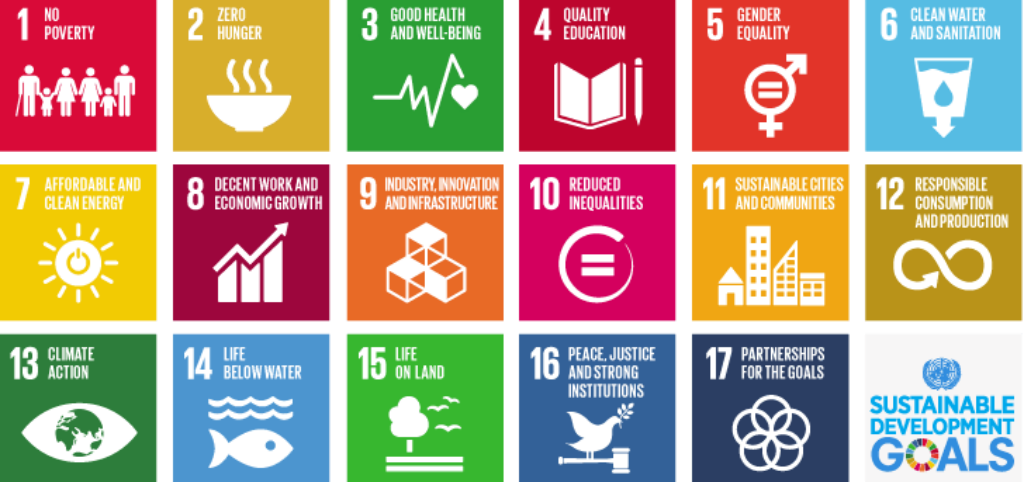
Swiss companies are cognizant of their global footprints, and therefore are increasingly implementing strict sustainability measures to play their part in building a more sustainable world.

For instance, Bracken Darrell, CEO of Logitech said, “Logitech is committed to being part of global efforts to co-create a more sustainable world. We’ve committed to a 1.5°C climate pledge, are working toward being powered exclusively by renewable electricity, and have neutralized the carbon across our gaming products. We’re also communicating the carbon impact of every product in our portfolio. We were one of the first companies in the world to commit to these carbon transparency labels, and hope many others will follow suit. We are striving to completely neutralize the entire company’s carbon footprint. We’re focused on innovation, quality and sustainability. We know how important this is for generations to come.”

Combating challenges

In the face of the global pandemic, Swiss companies have been able to push forward with new ideas to drive economic recovery, embrace digitalization and diversify. According to Barbara Dalibard CEO of SITA, an information technology services company to the air transport industry, “Switzerland plays a vital role in global mobility needs. Regaining passenger confidence, which is at an all time low due to the pandemic, is a core challenge for the aviation industry. The general public should remember Swiss solutions are being implemented to make global airports, aircraft and borders safer. We are contributing to the installation of disruptive technologies that benefit air transport, enabling mobility through low-touch operations, and offering biometrics for self-service, which automates the entire passenger journey. We aim for touch-less airports to re-instill confidence in traveling during the pandemic.”

“Switzerland plays a vital role in global mobility needs.”

Barbara Dalibard, CEO, SITA

Forward thinking

Head of Presence Switzerland, Ambassador Bideau, stated, “Switzerland’s image abroad is excellent. Switzerland is ranked number one in attracting global talent, as we are well known as an attractive destination to live, work and study. Switzerland is also ranked as the world’s most innovative economy, a major hub for R&D, and placed number seven on the global competitiveness index. Switzerland has many strengths in rather unexpected innovation fields, for instance acting as a space nation and pioneer in drone technology. Our financial services sector is also creating more sustainable financing and green financing for future generations.”

With innovation as the common denominator across all sectors in Switzerland, it is one of the world’s most advanced free-market economies. Swiss innovation is legendary; it changed the world in the past, and will continue to do so in the future. 

More Articles

  • Egypt EU Trade relations improving

    Egypt EU Trade relations improving

    The European Union remains Egypt’s largest investors Three-quarters of foreign direct investment come from EU states, and trade represents a third of the country’s GDP. The has been constant EU assistance and partnership programs since 1998, which established stable relations between Egypt and the EU. The Association Agreement was the most effective agreement when it…

  • Interview: Mervat Sultan, Chairperson, Export Development Bank of Egypt (EBE)

    Interview: Mervat Sultan, Chairperson, Export Development Bank of Egypt (EBE)

    Export Development Bank of Egypt (EBE) was established for the purpose of boosting Egyptian exports. The Bank offers banking and financial services to encourage the export activities of the agricultural, industrial, commercial and services sectors. One of the main business lines and activities of the Bank is the Corporate Banking and Loan Syndication Activities.  How…

  • Interview: Ahmed Heikal, Managing Director, Qalaa Holdings

    Interview: Ahmed Heikal, Managing Director, Qalaa Holdings

    Qalaa Holdings is a leading private equity investment company in Egypt focusing in energy and infrastructure. Qalaa manages an investment portfolio consisting of 19 Opportunity-Specific Funds (OSFs). Its investments are distributed through 12 countries in the Middle Eastern and North African markets and span 14 industrial sectors. Qalaa Holdings is an African leader in energy and infrastructure.…

  • Interview: Mohammed Berro, Chief Executive Officer, Emirates NBD Egypt

    Interview: Mohammed Berro, Chief Executive Officer, Emirates NBD Egypt

    Emirates NBD Egypt is one of the largest banks operating in Egypt excels in premier banking and pioneers in digital banking. It is an essential stakeholder in financing mega infrastructure projects and development initiatives in Egypt. Emirates NBD Egypt is a wholly owned subsidiary of Emirates NBD Group, a leading banking group in the region.  …

  • United Nations Global Compact Profile

    United Nations Global Compact Profile

    Launched in 2000, the United Nations Global Compact (UNGC) is a global initiative that serves as a call to companies to align strategies and operations under the framework of the 10 UNGC Principles on Human Rights, Labor, Environment and Anti-corruption. Today with more than 9,500 business and 3,000 non-business organizations based in 160 countries and…

  • Interview: Lazar Petrović, CEO, Delta DMD

    Interview: Lazar Petrović, CEO, Delta DMD

    As a leading logistics distribution company, what key challenges need to be overcome in the region? Serbia is definitely a growing market and it is going to continue to be. I strongly believe that we are going to be a part of the European Union eventually. Especially for IT companies, Serbia is the best place…

  • Interview: Miroljub Jevtić, Director General, Infrastructure of Serbian Railway (IZS)

    Interview: Miroljub Jevtić, Director General, Infrastructure of Serbian Railway (IZS)

    How is Serbia’s railway transport segment evolving? Serbia’s railway infrastructure system in 2018 offers safe and reliable services. It is efficient and successfully caters to a growing segment. Overall, Serbia is investing nearly EUR 5 billion to improve the transport network. This can be seen very clearly within the railway sector. Serbia continues a series…

  • Interview: Violeta Šestic, Head of Local Economic Development Department, City of Šabac

    Interview: Violeta Šestic, Head of Local Economic Development Department, City of Šabac

    What makes Šabac a smart choice for investors? An interesting fact about the city of Šabac is that it was the first city in Serbia to meet the international standards ISO 9001:2000 which is a testament to our efficiency as an organization and our dedication to customer satisfaction.Besides, the City is a carrier of a…

  • Interview: Nemanja Aleksic, CEO and Managing Partner of the Aleksic and Associates Joint Law Office

    Interview: Nemanja Aleksic, CEO and Managing Partner of the Aleksic and Associates Joint Law Office

    How do you assess Serbia’s legal framework in 2018? The legal framework of Serbia in 2018 will be adapted to the process of accessing the European Union, with full commitment to the priority reforms necessary in this process. On April 29, 2008, Serbia signed the Stabilization and Association Agreement in Luxembourg, which, entered into force…

  • Interview: Zoran Blagojević, CEO,  Wiener Insurance Serbia

    Interview: Zoran Blagojević, CEO, Wiener Insurance Serbia

    How do you assess Serbia’s insurance sector? Western European markets average premiums around EUR 2 500 per capita, but in Serbia we are at EUR 100 per capita. These two figures show us a clear picture of the huge growth potential the insurance sector has within the Serbian market. There is a huge misunderstanding of…

  • Interview: Marija Labović, Acting Director, National Tourism Organisation of Serbia

    Interview: Marija Labović, Acting Director, National Tourism Organisation of Serbia

    How do you assess Serbia’s tourism industry? Demand is growing, and this is the trend for the last three years. In the last ten years we can see market change in favour of foreign visitors which are now making around 50% of total tourists. Three years ago domestic travellers started to travel again due to…

  • Interview: Radoš Gazdić, Acting Director General, Development Agency of Serbia (RAS)

    Interview: Radoš Gazdić, Acting Director General, Development Agency of Serbia (RAS)

    What are some of the key facts that all international investors should remember about Serbia? The key factor at this moment is the competitiveness of the labour force when comparing it to Europe. Serbia is increasingly becoming more attractive, first and foremost, because of the technical education of our labour force. It is one of…

  • Interview: Marko Čadež, President, Chamber of Commerce and Industry of Serbia (PKS)

    Interview: Marko Čadež, President, Chamber of Commerce and Industry of Serbia (PKS)

    What is the global perception of Serbia? Over the last five years investors saw straightforward and clear economic policies. This means fiscal consolidation, monetary stability and political stability. They have seen Serbia has a clear strategy. There is now a new perception on Serbia’s future. The perception is now quite good. Together with Montenegro, we…

  • Interview: Ingeborg Øfsthus, CEO, Telenor Serbia

    Interview: Ingeborg Øfsthus, CEO, Telenor Serbia

    How do you see Serbia’s telecommunication sector in 2018 and what key challenges do you foresee moving forward? The global telecommunications sector is going through a revolution, and that revolution is digitalization. The fact being the competition landscape is changing. It is hitting every single operator around the world in some way or form.  We are lucky…

  • Interview:  Zoran Petrović, CEO, Raiffeisen Bank Serbia

    Interview: Zoran Petrović, CEO, Raiffeisen Bank Serbia

    How do you assess Serbia’s economy? We expect Serbia’s economy in 2018 will be driven by a couple of factors. First of all, we believe it will be pushed by the consumptions of the citizens, the unemployment rate is going down, employment rate is going up, so we expect that also the banking sector continue…

  • Serbia: An impressive turnaround

    Serbia: An impressive turnaround

    Serbia aims to boost private sector-led growth through reforms. According to the estimates of the Statistical Office of the Republic of Serbia, the nations GDP in real terms increased by 1.9% in 2017. The International Monetary Fund estimates Serbia’s projected Real GDP growth for 2018 will reach 3.5%. Overview: Serbia has successfully stabilized its economic…

  • Serbia: Solid banks support growth

    Serbia: Solid banks support growth

    The sector is well-capitalized, liquid and harmonized with EU legislation Financial sector reforms have been pursued vigorously. Banks are on a sound footing and continue to support growth. The banking sector comprises over 90% of the total assets in the financial sector. Over the last several years significant restructuring has been undertaken to improve the…

  • Serbia: Tourism – Belgrade charm

    Serbia: Tourism – Belgrade charm

    Three million tourists visited Serbia in 2017 with MICE offering the largest opportunities.   Lacking a coastal line, Serbia has focused its touristic sector in the development of spas and ski resorts. They have been neglected for the past years, but thanks to recent private sector investors keen on developing their potential the sector is…

  • Serbia: Transport – Interconnecting Southeast Europe

    Serbia: Transport – Interconnecting Southeast Europe

    Mass investments aim to support and ease transit The sector is one of the fastest developing branches of the economy in Serbia. Value of ongoing projects in infrastructure is EUR 5 000 million. Needs for future transport plans is EUR 6 000 million. Serbia’s strategic location at the crossroads of European traffic Corridors offers great…

  • Country Profile: Serbia

    Country Profile: Serbia

    Regional integration – Western Balkan neighbors are increasing collaborations History: Serbia was shaped as a nation by the numerous external invasions it suffered; starting in the 4th century BC with the Celts overthrowing the Illyrians, the arrival of the Romans and the Slavs in the sixth century AD. A crucial event in AD 395 was when…

  • Serbia: Digitization – The ICT sector is growing faster than any other industry

    Serbia: Digitization – The ICT sector is growing faster than any other industry

    Serbia provides a cost-effective alternative to established markets for companies looking to outsource software engineering, offshore systems design and integration. Over 2 600 ICT companies operate in Serbia including a Microsoft development center. Serbs offer expertise, high-end IT development services and software development solutions in a highly completive global sector. Nearly 39 000 ICT professionals…

  • Serbia: The Balkan Industrial revolution

    Serbia: The Balkan Industrial revolution

    Serbia’s rich historical legacy lies in its strength as a regional manufacturing hub. This is furthermore supported by its extensive free trade agreements which allow duty-free exports to a market of more than 1 billion people. Some of these markets go much further than the European Union which is Serbia’s largest export market.  Serbia has…

  • Serbia: EU accession accelerating

    Serbia: EU accession accelerating

    Serbia is one of the most advanced countries in the process. Serbia is a small and open economy in South Eastern Europe. The nation’s development is considerably below the European average, while by growth it is one of the fastest developing countries in Europe. Growth potential in Serbia is tremendous in every segment of the economy.…

  • Interview: Zorana Ždrale Burlić, CEO, Delta Real Estate

    Interview: Zorana Ždrale Burlić, CEO, Delta Real Estate

    How do you assess Serbia’s real estate sector? We have definitely seen an increase in construction activity, the market is reviving, and we have seen increased demand for construction. We have seen a lot of investment activity. The market remains challenging in terms of a lot of issues surrounding real estate, not just bureaucracy but…