Country Profile: Serbia

Regional integration – Western Balkan neighbors are increasing collaborations

History: Serbia was shaped as a nation by the numerous external invasions it suffered; starting in the 4th century BC with the Celts overthrowing the Illyrians, the arrival of the Romans and the Slavs in the sixth century AD. A crucial event in AD 395 was when Roman Emperor Theodosius I gave Serbia to the Byzantines,  together with the fact that Sts Cyril and Methodius converted Serbia to the orthodox religion, resulted in the country being locked into Eastern Europe.

The Serbians were crushed in 1371 by the Ottoman Turks who eventually took Kosovo and Smederevo, which effectively ended Serbia´s independence. Belgrade was captured in 1521.

During the following centuries, many rebellions took place against the Turks. Thanks to Russia, the First National Uprising of 1804 was successful but the Russians made peace with the Turks, and the Serbian rebellion failed once again. The second National Uprising of 1815, in which the Turks allowed Serbia some autonomy, was the path to Serbia´s independence. Serbia became a kingdom in 1882.

The assassination of Archduke Franz Ferdinand in 1914 by a Bosnian Serb was used as a reason to invade Serbia, which triggered WWI.

In 1918, the Kingdom of Slovenes, Croats, and Serbs was formed, which included Serbia, Montenegro and Dalmatia, Croatia-Slavonia, Slovenia, Bosnia and Herzegovina, and the Vojvodina, which were South Slav territories.

In 1929, King Alexander I declared the new state a dictatorship which was renamed Yugoslavia. From the start, there were tensions between Croats and Serbs, and in 1934 King Alexander was assassinated.

Yugoslavia joined the fascist Tripartite Alliance. This was a short-lived pact, triggering a military coup and a sudden withdrawal from the alliance. The Germans bombed Belgrade and invaded Yugoslavia in 1941. Belgrade was liberated by the Communist guerrilla led by Josip Broz Tito, together with the Russians, and a Communist regime was introduced. After Tito’s breaking with Stalin, Yugoslavia became independent. With the death of Tito in 1980, the system began to crumble, and Yugoslavia finally broke up in 1991-92.

Serbian nationalists defended a Greater Serbia encompassing Serbs in the other republics. The Communist Party leader in Serbia, Slobodan Milošević who became president of Yugoslavia in 1997, adopted this doctrine and violence followed between the Albanians of Kosovo and Serbs. The demands of the U.S., Great Britain, Russia, Italy, Germany and France to cease fire and to withdrawal, Serbian forces from Kosovo were not met by Milošević. NATO began a bombing campaign which expanded to Belgrade and lasted 11 weeks. In the presidential elections of 2000, Vojislav Koštunica declared victory and restored ties with Europe. 

Serbia became a stand-alone sovereign republic in 2006 after Montenegro voted in a referendum for independence from the Union of Serbia and Montenegro. This marked the historical end of the separation of the six republics of the Socialist Republic of Yugoslavia which comprised Serbia, Montenegro, Slovenia, Croatia, Bosnia-Herzegovina, and Macedonia. From the start, Serbia suffered the recession of 2009, but today the economy is growing. The 1st Intergovernmental Conference with Serbia in January 2014 indicates the beginning of Serbia’s negotiations to become part of the EU.

Geography: The sovereign republic of Serbia is at the crossroads of Southeast and Central Europe. It has borders with Bulgaria, Croatia, Bosnia-Herzegovina, the Republic of Macedonia, Hungary, Bulgaria, Romania, Montenegro, and Albania through Kosovo.

It has access to the Adriatic Sea through Montenegro, and shipping access to inland Europe as well as the Black Sea is possible through the Danube River.

Serbia’s terrain is extremely varied with rich and fertile plains to the North, limestone basins and ranges to the East and ancient hills and mountains to the Southeast. The Northeast is rich, and fertile thanks to the Danubian Plain drained by the Danube, Morava, Sava, and Tisa river systems, all of which, together with the Drina River, conform Serbia’s main rivers.

Four mountain systems converge in Serbia: the Carpathian Mountains, the Balkan Mountains, the Dinaric Alps, and the ancient mountains of the Rilo Rhodope mountain system. The Balkan Mountains create the natural border with Romania and Bulgaria, the valleys and hills of the Dinaric Alps cut through Serbia west of the Morava River.

Climate: Serbia has a predominantly continental climate; cold winters and warm summers. The north of Serbia typically has a continental climate, while the South and South-West have a climate of Mediterranean influence.

Language:  The official language is Serbian. Despite being spoken throughout the country, there are some exceptions; in southern Serbia, it’s the Torlakian dialect which is spoken by most Serbians. Other minority languages like Bosnian, Croatian, Slovak, Rusyn, Bulgarian, Hungarian, Albanian, and Romanian are officially recognized in Serbia.

Demographics: The total population in Serbia is 7.1 million (this does not include the population of Kosovo). Serbians are the largest majority when it comes to ethnic groups, while Hungarians are the largest minority followed by Roma people and Bosniaks. Croats, Slovaks, Albanians, Montenegrins, Romanians, Macedonians, and Bulgarians are other minority groups.

Natural Resources: Serbia has considerable natural resources but is lacking in mineral fuel, making the country dependent on Russia for crude petroleum and natural gas necessary to meet its domestic demand. It has one of Europe’s most abundant copper resources, located mostly in the Timoc District in northeastern Serbia. As well as copper, the industry produces iron and steel with significant production of gold, lead, coal, salt, and selenium. Lead and zinc production comes from Kopaonik, Raška. The southwestern regions of Serbia have timber and hydroelectric potential.

Politics: The framework under which Serbia functions is within a parliamentary democracy. The country is a parliamentary republic where the head of government is the prime minister, and the head of state is the president.

There are three branches of government in this parliamentary republic: judiciary, executive, and legislature. Serbia’s political system is based on the principle of separation of authority between these three.

The executive authority is held by the Government of the Republic of Serbia consisting of a prime minister, two vice presidents and 18 ministries.

As of 2017, Aleksandar Vučić is the President of Serbia and Ana Brnabić is the Prime Minister. Aleksandar Vučić became prime minister after a large victory in the parliamentary elections of 2014. He pledged an overhaul of Serbia’s economy and accelerated drive towards EU accession. Also to combat endemic corruption.

His reforms included diminishing the public sector, reforming the budget, privatizing state-owned enterprises and supporting the private sector. He won his candidacy for the presidency with a comfortable victory in 2017.

The prime minister leads a cabinet and exercises executive power. The president names the designate after deliberation with parliamentary leaders, and the National Assembly is in charge of choosing the prime minister. The prime minister nominates the cabinet ministers while the National Assembly confirms them. The president is elected by popular vote. It’s a five-year term, and it can be extended by-elections for two more terms at most.

The National Assembly wields legislative power and constitutional authority. It’s formed by 250 deputies who are elected by secret ballot.

Serbia has a system of civil law; the courts are not bound by precedent, but they solely interpret legislation. The Supreme Court of Cassation is the head of the judicial system. Other established courts are the Appellate, High, and Basic Courts.

The multi-party system in Serbia allows for many political parties, but because of the improbability for one party gaining power alone, there is a cooperation of multiple political parties forming coalition governments, helping to reduce the dominance of any one party. Elections are held every four years at three levels: local, provincial, and parliamentary. Presidential elections are held every five years.

Religion: The Constitution of Serbia protects the freedom of religion. Having the Serbian Orthodox Church at the head of the country’s religion, Christianity is the main religion with an 85% of the population adhering to the Orthodox faith. The Catholic Church is the second biggest religion. Islam is also present, mostly in Novi Pazar and southwest regions.

Cuisine: Serbian cuisine has been influenced by the rich mix of cultures passing through or living in the region. It is very diverse and can be described as a mixture of Greek, Bulgarian, Turkish and Hungarian cuisine. A centuries-old tradition is drinking coffee, and the national fruit is the plum, from which rakia is brewed.
More Articles

  • Keeper Solutions’ Unique Path to Success in Software Development

    Keeper Solutions’ Unique Path to Success in Software Development

    Ireland’s software development ecosystem has evolved into a thriving community that nurtures startups and attracts innovative players that are making waves globally. Among the indigenous success stories is Keeper Solutions, a Limerick-based company that provides fast-scaling fintech companies access to highly skilled software development teams, and empowers clients to accelerate their software development capabilities in…

  • Fenergo: Revolutionizing Financial Compliance

    Fenergo: Revolutionizing Financial Compliance

    Regulatory compliance stands as an essential pillar to ensure trust, security, and integrity in the financial services industry. Amid this intricate web of obligations, Irish company, Fenergo, has prominently risen as a global frontrunner, providing SaaS-based client lifecycle management and transaction monitoring for financial firms. Wielding innovative solutions, Fenergo enables financial institutions to accelerate business…

  • Exploring Ireland’s Appeal as a Cross-Border Fund Domicile

    Exploring Ireland’s Appeal as a Cross-Border Fund Domicile

    Ireland has established itself as a prominent hub for global funds, attracting a substantial portion of the world’s investment activity. As a preferred destination for fund domiciliation and distribution, numerous international asset managers and investment firms continue to choose Ireland as their strategic base for managing and distributing funds to a global audience, contributing significantly…

  • Ireland’s Financial Services Sector Flourishes Amid Global Competition

    Ireland’s Financial Services Sector Flourishes Amid Global Competition

    In a rapidly evolving financial landscape, Ireland’s financial services sector has risen as a notable global contender, boasting a thriving ecosystem of around 9,000 financial services companies that employ over 100,000 people. With assets under administration exceeding USD 5 trillion, Ireland has solidified its position as the third-largest financial services hub on a global scale.…

  • Ireland’s Human Capital: Driving Multinational Growth and Indigenous Success

    Ireland’s Human Capital: Driving Multinational Growth and Indigenous Success

    Cpl: Ireland’s Biggest Name in Talent Ireland has enjoyed a great deal of economic success in recent decades, and its robust workforce has been one of the primary factors behind this continued growth. The young, highly educated English-speaking labor force continues to attract foreign investment to Ireland, including US multinationals such as Pfizer, Apple, Meta,…

  • A Thriving Oasis for US Foreign Direct Investment

    A Thriving Oasis for US Foreign Direct Investment

    Ireland stands tall as a beacon of strategic vision and adaptability, steadfastly retaining its allure for foreign direct investment (FDI). Amidst the complexities of economics and the twists of geopolitics, Ireland’s role as the cornerstone of transatlantic business cooperation remains resolute—an embodiment of the enduring vigor of Irish-American relations and the extraordinary influence of shared…

  • Enterprise Ireland: Empowering Innovation, Growth and Global Competitiveness

    Enterprise Ireland: Empowering Innovation, Growth and Global Competitiveness

    The Irish government’s trade and innovation agency, Enterprise Ireland, plays a pivotal role in shaping the economic landscape of the country and helps Irish businesses achieve global success. With a keen focus on supporting indigenous businesses and nurturing a thriving startup and R&D ecosystem, Enterprise Ireland is a driving force behind Irish companies conquering global…

  • The Emerald Legacy – the Convergence of Rich Irish History, Vibrant Culture and Global Markets

    The Emerald Legacy – the Convergence of Rich Irish History, Vibrant Culture and Global Markets

    How Berlin-based group Private Pier Industries is helping Ireland make waves in global consumer markets Akin to the role of a traditional Gaelic storyteller, also known as a seanchaí, Private Pier Industries (PPI) builds brands that can be appreciated worldwide and serve as a means of sharing Irish culture and stories with the rest of…

  • Efficiency and Innovation in Food Manufacturing: The Power of Automation

    Efficiency and Innovation in Food Manufacturing: The Power of Automation

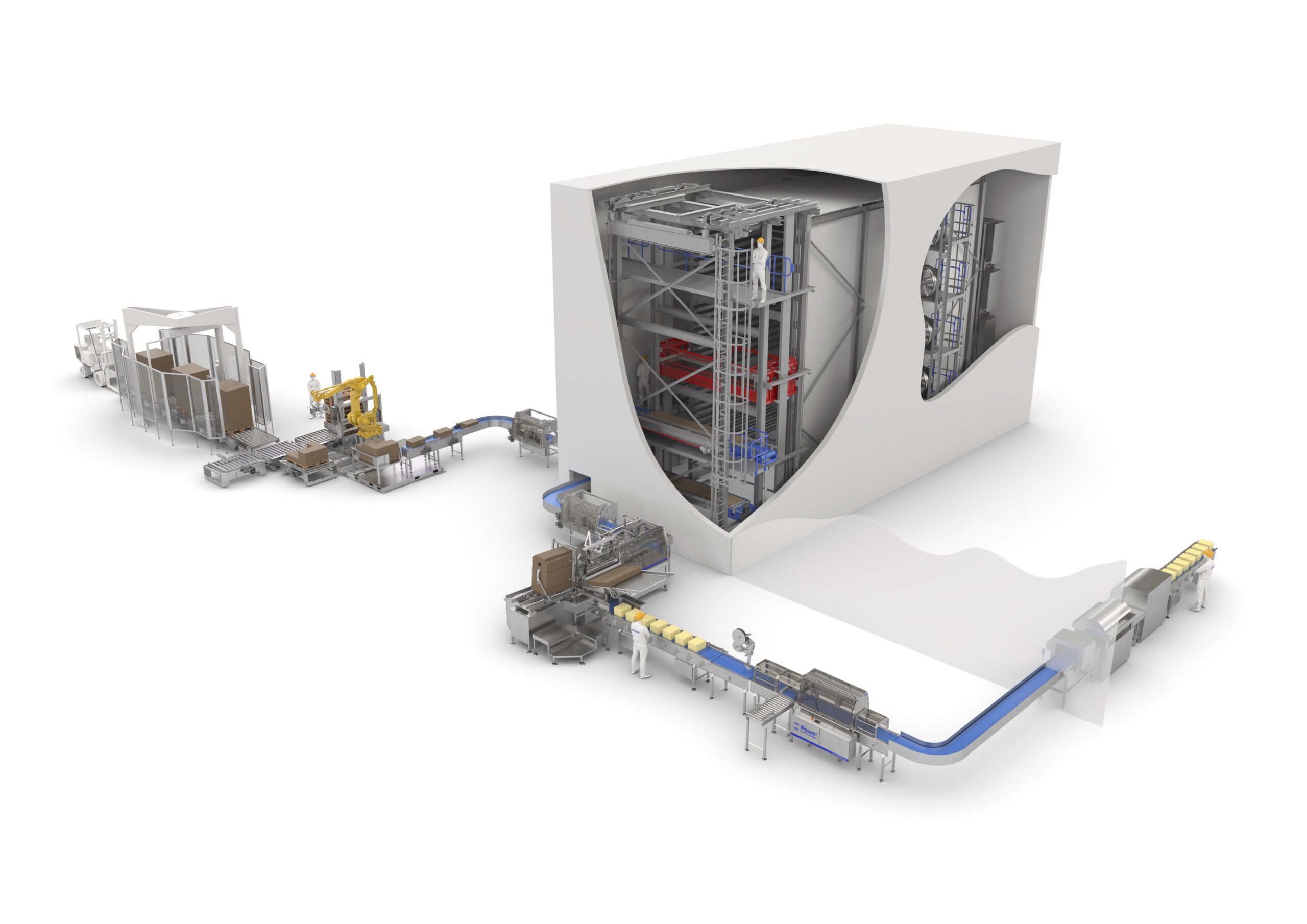
    In the realm of food manufacturing, outdated handling systems create inefficiencies, higher operational costs, and increased carbon emissions. However, embracing automation and modernized systems ushers in a new era of efficiency, productivity and sustainability, enabling businesses to streamline their operations, reduce labor costs, and meet the growing demands of a rapidly evolving market. One company…

  • Innovative Dutch E-commerce Solutions

    Innovative Dutch E-commerce Solutions

    Dutch SME Salesupply is helping e-commerce clients launch into new frontiers  The Netherlands is home to many successful and innovative startups and SMEs – as the core of Dutch competitiveness is innovation, this should come as no surprise. The country has emerged as a world-class knowledge, software and technology hub. Dutch companies are continuing to…

  • Amsterdam: A Ideal Gateway into Europe

    Amsterdam: A Ideal Gateway into Europe

    A Conversation with: Corinne Schot, Managing Partner, Baker McKenzie Amsterdam Office How do you assess the competitiveness of the Netherlands as a business hub? The Netherlands is one of the most competitive economies in the world. We have been exceptionally inventive in fostering an attractive ecosystem. The Netherlands has world renowned transport and logistics infrastructure…

  • Utrecht Region

    Utrecht Region

    The home of innovative and ambitious companies The Netherlands’ smallest province packs a big punch and is an excellent gateway into Europe for American companies. The province of Utrecht’s eponymous capital city, Utrecht, is home to the largest train station in the Netherlands and is the country’s most important rail hub. It lies less than…

  • Spotlight on The Netherlands

    Spotlight on The Netherlands

    Inside a Global Economic Force Despite its small physical footprint, the Netherlands is home to the world’s 15th-largest economy The Netherlands is closely associated with tulips and windmills, but this nation also has a great deal to offer in terms of scientific research and economic development. Perhaps the most prominent examples of Dutch innovation in…

  • The TU/e Spin-offs Funded by Bill Gates Seeking to Change the Energy World

    The TU/e Spin-offs Funded by Bill Gates Seeking to Change the Energy World

    Cutting-edge research at Eindhoven University of Technology (TU/e) has sprouted several start-up companies in recent years. Amongst them are RIFT and Cellcius, who have just been awarded funding and resources by Breakthrough Energy, a private investment coalition founded by Bill Gates.  RIFT and Cellcius are the first companies from the Netherlands to receive support from…

  • At Eindhoven’s “Brainport,” Big Ideas Are Ready for Takeoff

    At Eindhoven’s “Brainport,” Big Ideas Are Ready for Takeoff

    Since 1956, the Eindhoven University of Technology has driven innovation big time Over the past decade, Dutch universities have attracted billions in research funding, establishing the Netherlands as a key player in global research in the process. Thanks to the efforts of institutions like the Eindhoven University of Technology (TU/e), this trend shows no signs…

  • Why Multinationals Are Looking Beyond Holland

    Why Multinationals Are Looking Beyond Holland

    The Netherlands’ most famous provinces are getting crowded—but in the eastern part of the country, opportunities are abound Thanks to its solid legal system, attractive tax regime, EU membership, and multilingual labor force, the Netherlands has traditionally been an attractive business hub. But this success has come at a cost. These days, the provinces of…

  • Exploring Cyprus’s Economic Growth and Potential 

    Exploring Cyprus’s Economic Growth and Potential 

    Why Cyprus is becoming a regional hub for professional services, finance, shipping, tourism, innovation, research and development, and other industries Cyprus is making strides towards becoming one of the European Union’s top niche hubs for tech, finance, and other industries. The nation’s economic growth has been bolstered by its location in the eastern Mediterranean Sea,…

  • An Emerging Regional Telecommunications and Connectivity Hub 

    An Emerging Regional Telecommunications and Connectivity Hub 

    Cyta plays a vital role in the nation’s digital transformation Cyprus is currently working to modernize and strengthen its economy. One entity set to play a pivotal role in making these plans a reality is Cyta, the nation’s largest telecommunications provider, which has been active on the island since 1961. Today, CEO Andreas Neocleous says,…

  • An Ideal Location for Headquartering, High-Tech Operations, Investment Funds, and Filming 

    An Ideal Location for Headquartering, High-Tech Operations, Investment Funds, and Filming 

    Aspen Trust Group: Global Financial Architects Providing a Stepping Stone into Europe and the Middle East Deceptively small and seemingly insubstantial, Cyprus is slowly rising to become a global player in the film industry, high-tech sector, regional headquartering, and hub for IP holdings and investment funds. Being at the nexus of three continents, Europe, Asia…

  • International Ties: The Key to Cyprus’s Economic Future 

    International Ties: The Key to Cyprus’s Economic Future 

    Phoebus, Christos Clerides & Associates co-founder discusses current issues, future growth Since 1950, Cyprus-based legal firm Phoebus, Christos Clerides & Associates has advocated for increased economic, social, and political ties between Cyprus and the USA. The firm works closely with legal firms based in New York and has a great deal of experience helping American…

  • How Cyprus Is Adapting to Instability at Home and Abroad 

    How Cyprus Is Adapting to Instability at Home and Abroad 

    Cyprus’s justice system reforms, anti-corruption measures could encourage future investment from Western companies As Western investment in Cyprus grows, several USA-based businesses, law firms, individuals, and funds have chosen Cypriot law firms to represent their interests in this part of the world. Dr Nicolas Kyriakides, a partner with Harris Kyriakides, a leading law firm established…

  • Cyprus Gets Ready For Its Next Act 

    Cyprus Gets Ready For Its Next Act 

    According to managing partner of local legal firm, the nation has what it takes to become an economic powerhouse Between the COVID-19 pandemic, a banking crisis, and the war between Russia and Ukraine, Cyprus has dealt with some notable challenges in the past few years. However, managing partner of G. Leontiou LLC, Gregoris Leontiou said…

  • Inside Cyprus’s Real Estate Industry 

    Inside Cyprus’s Real Estate Industry 

    Real estate remains one of Cyprus’s most successful sectors despite the effects of COVID-19, policy changes Cyprus’s economy is booming right now, and a variety of different industries are on the rise in the island nation. Meanwhile, the country’s warm weather and welcoming population have made it attractive to digital nomads, entrepreneurs, businesses seeking company…

  • A Boutique Professional Services Firm in Nicosia Offering World Class Practical Solutions to the Corporate World 

    A Boutique Professional Services Firm in Nicosia Offering World Class Practical Solutions to the Corporate World 

    Q&A: Petros Theodotou, Founder and CEO, ServPRO Accountants & Consultants How do you assess Cyprus’s business ecosystem? Cyprus’s small economic size has been an asset for the nation. We remain flexible, and policymakers have enough room to take swift action when necessary to ensure the economy can adapt to an ever-changing and complex global ecosystem.…