Country Profile: Serbia

Regional integration – Western Balkan neighbors are increasing collaborations

History: Serbia was shaped as a nation by the numerous external invasions it suffered; starting in the 4th century BC with the Celts overthrowing the Illyrians, the arrival of the Romans and the Slavs in the sixth century AD. A crucial event in AD 395 was when Roman Emperor Theodosius I gave Serbia to the Byzantines,  together with the fact that Sts Cyril and Methodius converted Serbia to the orthodox religion, resulted in the country being locked into Eastern Europe.

The Serbians were crushed in 1371 by the Ottoman Turks who eventually took Kosovo and Smederevo, which effectively ended Serbia´s independence. Belgrade was captured in 1521.

During the following centuries, many rebellions took place against the Turks. Thanks to Russia, the First National Uprising of 1804 was successful but the Russians made peace with the Turks, and the Serbian rebellion failed once again. The second National Uprising of 1815, in which the Turks allowed Serbia some autonomy, was the path to Serbia´s independence. Serbia became a kingdom in 1882.

The assassination of Archduke Franz Ferdinand in 1914 by a Bosnian Serb was used as a reason to invade Serbia, which triggered WWI.

In 1918, the Kingdom of Slovenes, Croats, and Serbs was formed, which included Serbia, Montenegro and Dalmatia, Croatia-Slavonia, Slovenia, Bosnia and Herzegovina, and the Vojvodina, which were South Slav territories.

In 1929, King Alexander I declared the new state a dictatorship which was renamed Yugoslavia. From the start, there were tensions between Croats and Serbs, and in 1934 King Alexander was assassinated.

Yugoslavia joined the fascist Tripartite Alliance. This was a short-lived pact, triggering a military coup and a sudden withdrawal from the alliance. The Germans bombed Belgrade and invaded Yugoslavia in 1941. Belgrade was liberated by the Communist guerrilla led by Josip Broz Tito, together with the Russians, and a Communist regime was introduced. After Tito’s breaking with Stalin, Yugoslavia became independent. With the death of Tito in 1980, the system began to crumble, and Yugoslavia finally broke up in 1991-92.

Serbian nationalists defended a Greater Serbia encompassing Serbs in the other republics. The Communist Party leader in Serbia, Slobodan Milošević who became president of Yugoslavia in 1997, adopted this doctrine and violence followed between the Albanians of Kosovo and Serbs. The demands of the U.S., Great Britain, Russia, Italy, Germany and France to cease fire and to withdrawal, Serbian forces from Kosovo were not met by Milošević. NATO began a bombing campaign which expanded to Belgrade and lasted 11 weeks. In the presidential elections of 2000, Vojislav Koštunica declared victory and restored ties with Europe. 

Serbia became a stand-alone sovereign republic in 2006 after Montenegro voted in a referendum for independence from the Union of Serbia and Montenegro. This marked the historical end of the separation of the six republics of the Socialist Republic of Yugoslavia which comprised Serbia, Montenegro, Slovenia, Croatia, Bosnia-Herzegovina, and Macedonia. From the start, Serbia suffered the recession of 2009, but today the economy is growing. The 1st Intergovernmental Conference with Serbia in January 2014 indicates the beginning of Serbia’s negotiations to become part of the EU.

Geography: The sovereign republic of Serbia is at the crossroads of Southeast and Central Europe. It has borders with Bulgaria, Croatia, Bosnia-Herzegovina, the Republic of Macedonia, Hungary, Bulgaria, Romania, Montenegro, and Albania through Kosovo.

It has access to the Adriatic Sea through Montenegro, and shipping access to inland Europe as well as the Black Sea is possible through the Danube River.

Serbia’s terrain is extremely varied with rich and fertile plains to the North, limestone basins and ranges to the East and ancient hills and mountains to the Southeast. The Northeast is rich, and fertile thanks to the Danubian Plain drained by the Danube, Morava, Sava, and Tisa river systems, all of which, together with the Drina River, conform Serbia’s main rivers.

Four mountain systems converge in Serbia: the Carpathian Mountains, the Balkan Mountains, the Dinaric Alps, and the ancient mountains of the Rilo Rhodope mountain system. The Balkan Mountains create the natural border with Romania and Bulgaria, the valleys and hills of the Dinaric Alps cut through Serbia west of the Morava River.

Climate: Serbia has a predominantly continental climate; cold winters and warm summers. The north of Serbia typically has a continental climate, while the South and South-West have a climate of Mediterranean influence.

Language:  The official language is Serbian. Despite being spoken throughout the country, there are some exceptions; in southern Serbia, it’s the Torlakian dialect which is spoken by most Serbians. Other minority languages like Bosnian, Croatian, Slovak, Rusyn, Bulgarian, Hungarian, Albanian, and Romanian are officially recognized in Serbia.

Demographics: The total population in Serbia is 7.1 million (this does not include the population of Kosovo). Serbians are the largest majority when it comes to ethnic groups, while Hungarians are the largest minority followed by Roma people and Bosniaks. Croats, Slovaks, Albanians, Montenegrins, Romanians, Macedonians, and Bulgarians are other minority groups.

Natural Resources: Serbia has considerable natural resources but is lacking in mineral fuel, making the country dependent on Russia for crude petroleum and natural gas necessary to meet its domestic demand. It has one of Europe’s most abundant copper resources, located mostly in the Timoc District in northeastern Serbia. As well as copper, the industry produces iron and steel with significant production of gold, lead, coal, salt, and selenium. Lead and zinc production comes from Kopaonik, Raška. The southwestern regions of Serbia have timber and hydroelectric potential.

Politics: The framework under which Serbia functions is within a parliamentary democracy. The country is a parliamentary republic where the head of government is the prime minister, and the head of state is the president.

There are three branches of government in this parliamentary republic: judiciary, executive, and legislature. Serbia’s political system is based on the principle of separation of authority between these three.

The executive authority is held by the Government of the Republic of Serbia consisting of a prime minister, two vice presidents and 18 ministries.

As of 2017, Aleksandar Vučić is the President of Serbia and Ana Brnabić is the Prime Minister. Aleksandar Vučić became prime minister after a large victory in the parliamentary elections of 2014. He pledged an overhaul of Serbia’s economy and accelerated drive towards EU accession. Also to combat endemic corruption.

His reforms included diminishing the public sector, reforming the budget, privatizing state-owned enterprises and supporting the private sector. He won his candidacy for the presidency with a comfortable victory in 2017.

The prime minister leads a cabinet and exercises executive power. The president names the designate after deliberation with parliamentary leaders, and the National Assembly is in charge of choosing the prime minister. The prime minister nominates the cabinet ministers while the National Assembly confirms them. The president is elected by popular vote. It’s a five-year term, and it can be extended by-elections for two more terms at most.

The National Assembly wields legislative power and constitutional authority. It’s formed by 250 deputies who are elected by secret ballot.

Serbia has a system of civil law; the courts are not bound by precedent, but they solely interpret legislation. The Supreme Court of Cassation is the head of the judicial system. Other established courts are the Appellate, High, and Basic Courts.

The multi-party system in Serbia allows for many political parties, but because of the improbability for one party gaining power alone, there is a cooperation of multiple political parties forming coalition governments, helping to reduce the dominance of any one party. Elections are held every four years at three levels: local, provincial, and parliamentary. Presidential elections are held every five years.

Religion: The Constitution of Serbia protects the freedom of religion. Having the Serbian Orthodox Church at the head of the country’s religion, Christianity is the main religion with an 85% of the population adhering to the Orthodox faith. The Catholic Church is the second biggest religion. Islam is also present, mostly in Novi Pazar and southwest regions.

Cuisine: Serbian cuisine has been influenced by the rich mix of cultures passing through or living in the region. It is very diverse and can be described as a mixture of Greek, Bulgarian, Turkish and Hungarian cuisine. A centuries-old tradition is drinking coffee, and the national fruit is the plum, from which rakia is brewed.
More Articles

  • Interview: Seamus Neely, Chief Executive, Donegal County Council

    Interview: Seamus Neely, Chief Executive, Donegal County Council

    Donegal’s FinTech Hub Develops Letterkenny designated Regional Growth Center in the National Planning Framework How do you assess Donegal’s economy?  Donegal’s economy is performing strongly, and employment is on the rise. The county has a thriving fin-tech hub, and a significant FDI track record. 75% of investors are continuously growing their operations and Donegal’s indigenous…

  • Ireland’s Regions Seek Investment

    Ireland’s Regions Seek Investment

    Interview: John Mulholland Chief Executive Laois County Council What is your economic forecast for County Laois?  County Laois has benefited from nearly 700 million euro in public national infrastructure projects over the past two decades. These projects connected Laois’ central location to Ireland’s west and east coasts. The county benefitted from its strategic location in…

  • Interview: Dr. Pat Gallagher, Chief Executive, Westmeath County Council

    Interview: Dr. Pat Gallagher, Chief Executive, Westmeath County Council

    Westmeath: In the Heart of Ireland How do you assess Westmeath’s economy? Westmeath’s two biggest towns, Athlone and Mullingar, have their own distinct economies that have developed backed by the regions central location, developed motorway network, excellent utilities, and highly educated workforce. Mullingar is one hour from Dublin by car, train or bus and has…

  • Interview: Joan Martin, Chief Executive, Louth County Council

    Interview: Joan Martin, Chief Executive, Louth County Council

    Louth County: The Land of Legends Although Louth may be Ireland’s smallest county, it has plenty to offer. It is the second most densely populated county in the nation, outside of Dublin. The majority of Louth’s population resides in its two largest towns of Drogheda and Dundalk. Joan Martin, Chief Executive of Louth County Council…

  • Interview: Moira Murrell, Chief Executive, Kerry County Council

    Interview: Moira Murrell, Chief Executive, Kerry County Council

    Kerry: A Stunning Place to Work Quality of life, the availability of a skilled workforce, ease of access, fiber-based broadband and government incentives combine to provide a positive business environment  How are Ireland’s rural regions developing?  There currently is a strong national focus on the development of Ireland’s regions and their improved interconnectivity. Kerry increasingly…

  • Interview: Daniel McLoughlin, Chief Executive,  South Dublin County Council

    Interview: Daniel McLoughlin, Chief Executive, South Dublin County Council

    How is SDCC preparing to accommodate future FDI?  SDCC is home to Grange Castle Business Park, the largest wholly owned local authority FDI site in Ireland. It has become the location of choice for world-class multinationals such as Pfizer, Microsoft, Amazon and Google. It is a world class facility with investments of over 5 billion…

  • Ireland’s Booming Data Center Scene

    Ireland’s Booming Data Center Scene

    New design and build model leads to fastest delivery of a 10 MW data center in Europe By the end of 2019, Dublin is set to outstrip London as the biggest European data center market by take-up of data center space – both colocation hubs and hyper scale self-builds. Within this thriving sector, business success…

  • Interview: Mark Foley, Group CEO, EirGrid Group

    Interview: Mark Foley, Group CEO, EirGrid Group

    Powering Ireland’s Economic Development  What advantages does Ireland offer energy intensive industries?  We have a proud history of supporting FDI in Ireland, and the nation remains the premier European country in terms of attractiveness. It started with the pharmaceutical industry, then the tech firms, and more recently the data center industry has arrived.  Ireland’s transmission…

  • Interview: Michael McAteer, Managing Partner, Grant Thornton Ireland

    Interview: Michael McAteer, Managing Partner, Grant Thornton Ireland

    Grant Thornton Ireland: Driving Business with Purpose How do you assess Ireland’s economy?  Ireland is a small and open economy that it is heavily affected by global economic events. It is the reason why our economy was severely impacted a few years ago, and is now experiencing such a strong rebound. Brexit is Ireland’s biggest…

  • At the Forefront of a Low-Carbon Revolution

    At the Forefront of a Low-Carbon Revolution

    Ireland is allocating 22 billion euro to transform into a low-carbon economy by 2050. The private sector in turn is doing its part to export its own expertise globally Martin Naughton is one of Ireland’s most prominent industrialists and philanthropists. His efforts in promoting the private sector’s contribution to peace and environmental sustainability led him…

  • Interview: Nicholas Butcher, Managing Partner, Maples and Calder Dublin, Maples Group

    Interview: Nicholas Butcher, Managing Partner, Maples and Calder Dublin, Maples Group

    Ireland Set to Become the Largest Common Law Jurisdiction in the EU Post-Brexit There is a strong initiative across the Irish legal sector to promote Ireland as a convenient and appropriate hub for international transactions  Maples Group is a leading service provider offering clients a comprehensive range of legal services for the British Virgin Islands,…

  • Interview: Martin McVicar, Co-Founder and CEO, Combilift

    Interview: Martin McVicar, Co-Founder and CEO, Combilift

    Innovative Solutions for Warehouse Management  Combilift’s space saving solutions captivate European clients, while improved safety allures US clients How is Combilift developing its business services to bring additional value to clients?  We have an established warehouse design department with nine engineers exclusively working on aiding our clients to design and create more efficient warehouses, saving…

  • Chanelle Pharma Eyes Expansion into the US Market

    Chanelle Pharma Eyes Expansion into the US Market

    Ireland is home to the world’s top pharma companies Chanelle Pharma is Ireland’s largest indigenous manufacturer of generic human and veterinary pharmaceuticals. Innovative Irish man, Michael Burke founded the company in 1983, and still leads the company today out of their headquarters in Loughrea, Co. Galway on the west coast of Ireland.  Chanelle Pharma manufactures…

  • Interview: Michael Burke, Founder and Managing Director, Chanelle Pharma

    Interview: Michael Burke, Founder and Managing Director, Chanelle Pharma

    How has Ireland’s pharma sector developed?  Nine of the ten largest pharmaceutical companies in the world are present in Ireland. The sector has matured rapidly and is a significant contributor to Ireland’s economic success. Chanelle Pharma is unique as it remains an Irish owned company, and is heavily committed to R&D and exporting to over…

  • Interview: Joe McGinley, CEO, Iconic Offices

    Interview: Joe McGinley, CEO, Iconic Offices

    Dublin’s Most Iconic Flexible Workspace Increases its Unique Property Portfolio In a complicated business world, flexible workspace solutions are a tactical advantage How do you evaluate Dublin’s property market?  Dublin is in the latter stages of a cycle, and sourcing new locations is increasingly complicated. Wealthy, primarily technology, companies are driving up prices and tenants…

  • Interview:  David McRedmond, CEO, An Post

    Interview: David McRedmond, CEO, An Post

    Building a European E-commerce Logistics Hub The development of ‘An Post Money’ and ‘An Post Commerce’ is future proofing the business for the long term How has the digital age impacted An Post’s development?  Digital communication has substituted physical letters, which translated into a fall in revenue for An Post in the letter delivery business.…

  • Interview: Anthony Smurfit, Group CEO, Smurfit Kappa

    Interview: Anthony Smurfit, Group CEO, Smurfit Kappa

    Irish Roots with Global Reach From humble beginnings as a small box-making factory in Rathmines, to becoming the first Irish multinational, Smurfit Kappa is an innovative world leader in corrugated packaging How has Smurfit Kappa evolved across the years?  We have been in business since 1934, starting out making cardboard boxes and packaging for the…

  • Interview: Mark O’Sullivan, Partner, Matheson

    Interview: Mark O’Sullivan, Partner, Matheson

     A decade after the financial crisis, Ireland retains a strong globalized business model. Corporate business investment is at record levels and collectively, US multinational investments amount to $387bn, representing 67% of all foreign direct investment in Ireland and 12% of US investment in the EU. What core facts best highlight Ireland’s role as a gateway…

  • Egypt’s banking sector remains resilient

    Egypt’s banking sector remains resilient

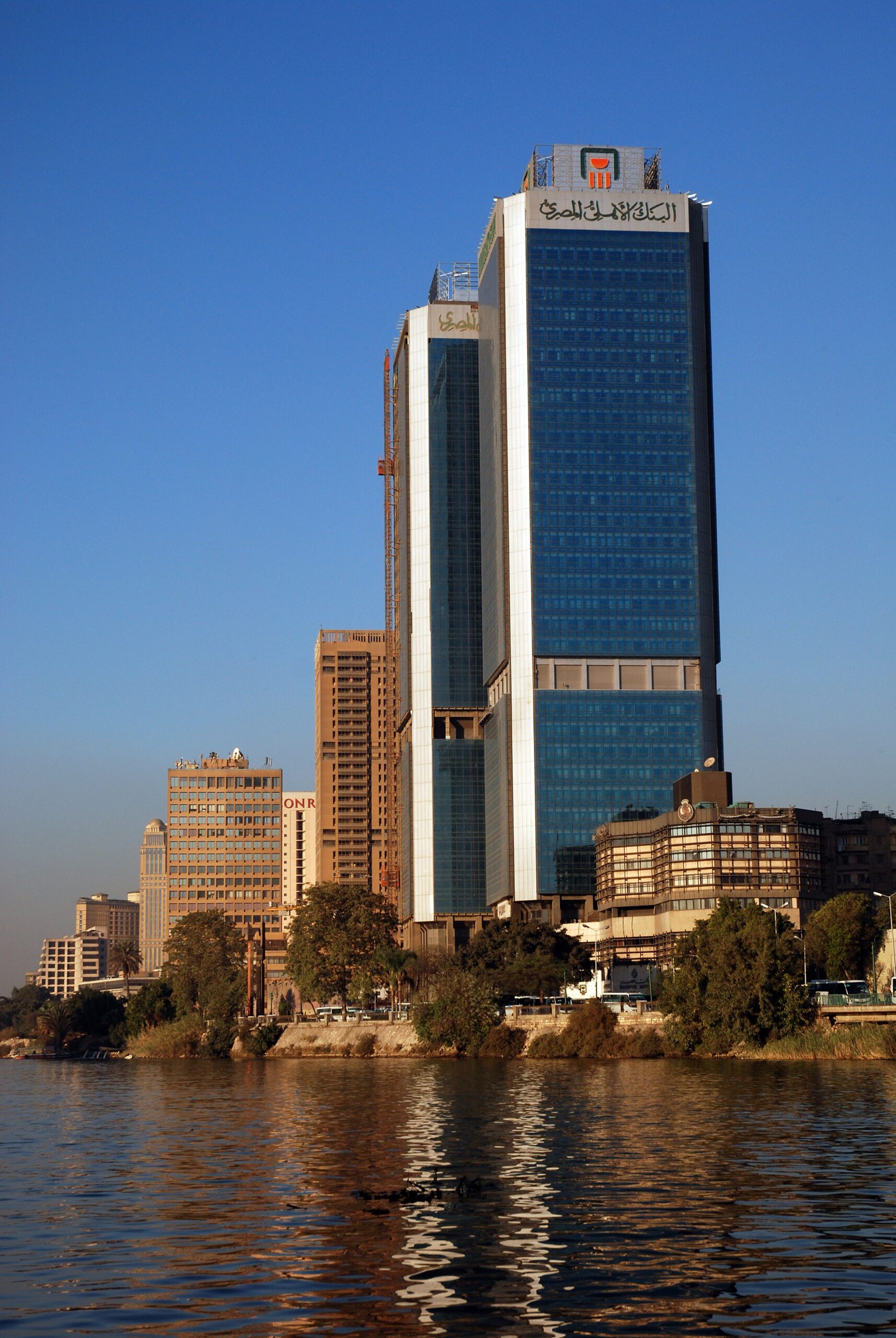
    Banks retain strong credit growth, profitability, funding, liquidity, and loan profiles. The sector is extremely optimistic about its growth prospects in 2019. According to a Mckinsey Egypt and Morocco are among the top emerging markets in the Middle East and North Africa region. 2016 was a particularly active year for the financial sector with the…

  • Blended Finance: The EUR 45 000 million global market

    Blended Finance: The EUR 45 000 million global market

    The OECD defines Blended finance as the strategic use of development finance for the mobilization of additional funding towards sustainable development in developing countries. Private capital is pooled with public funds to invest in projects aimed at furthering national development. This can be done in everything from infrastructure, clean energy, climate change, or poverty alleviation,…

  • Interview: Osama Bishai, Chief Executive Officer, Orascom Construction

    Interview: Osama Bishai, Chief Executive Officer, Orascom Construction

    Orascom Construction is a leading global engineering and construction contractor primarily focused on infrastructure, industrial and high-end commercial projects in the Middle East, North Africa, the United States, and the Pacific Rim for public and private clients. The Group also develops and invests in infrastructure opportunities. What is your outlook for Egypt’s economy? We see incredibly…

  • Interview: Prof Ismail Abdel Ghaffar Ismail, President, Arab Academy for Science, Technology and Maritime Transport  (AASMT)

    Interview: Prof Ismail Abdel Ghaffar Ismail, President, Arab Academy for Science, Technology and Maritime Transport (AASMT)

    The Arab Academy for Science, Technology & Maritime Transport is a regional university operated by the Arab League which runs programs in marine transportation, business, engineering and is quickly growing its curriculum to ensure recent graduates meet labor market requirements. Established in 1972, the multi-purpose & multi-task institution specialized on offering its services to Arab…

  • Interview: Ahmed Hafez, CEO, Ideal Standard MENA

    Interview: Ahmed Hafez, CEO, Ideal Standard MENA

    Ideal Standard designs, manufactures and supplies bathroom innovations for residential, commercial and institutional buildings. They operate through 47 factories around the globe, 6 of which are in Egypt’s 10th of Ramadan City. Ideal standard has had a MENA region presence since the 1960s and is celebrating its 35th anniversary in the Egyptian market. How do…

  • Interview: Basil El Baz, CEO, Carbon Holdings

    Interview: Basil El Baz, CEO, Carbon Holdings

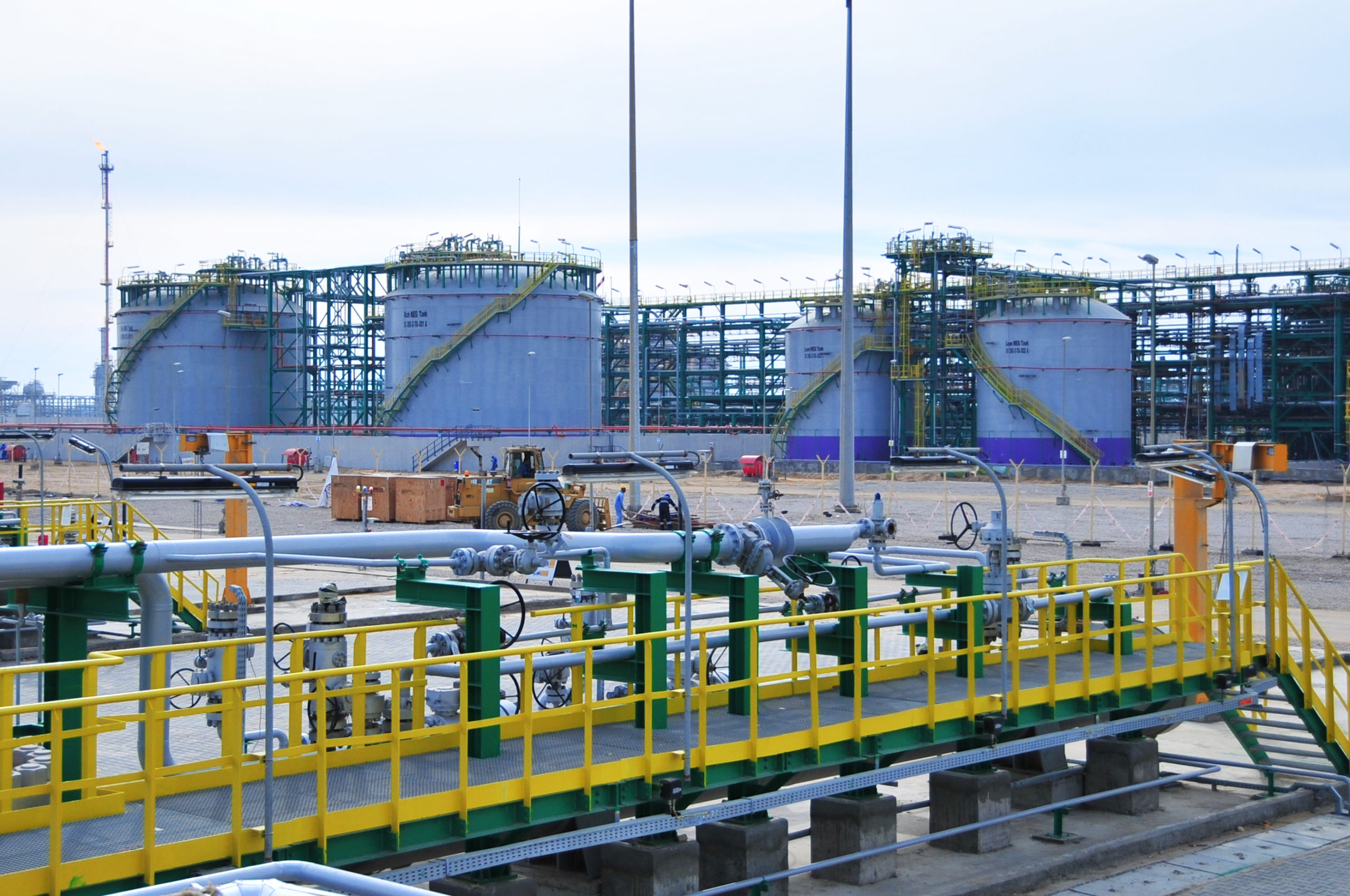
    Carbon Holdings is a privately owned petrochemical company. They develop midstream and downstream petrochemical projects to supply the manufacturing, mining and construction sectors. They currently operate the Egypt Hydrocarbon Corporation (EHC), Oriental Petrochemicals Corporation (OPC) and are in the early stage of financing a third project Tahrir Petrochemicals Corporation (TPC).  What role do you see…