Egypt streamlined its industrial licensing processes to boost investment. They slash bureaucracy and decrease the waiting time for new projects.
The industry sector is the second biggest economic sectors in the country representing more than a third of the GDP and more than 13% of the total labor force. In 2014, Egypt started a series of controversial reform program aims at enhancing the economy by improving the business environment. The reform program came alongside the floatation of the currency which made imports more expensive, new taxes and was followed by the introduction of VAT. In 2016, the country started investments into mega-projects to improve the industrial sectors. Egypt depends on improving its industry infrastructure for exports and seeks significant foreign investments and engaging the local private sector.
Egypt’s industrial sector suffered from rigid regulatory laws that for years especially affected medium scale projects. The new laws sought to attract more investors into medium-scale and low-scale projects. In 2017, the government approved the main industry law, which cuts waiting time for investors and ensures they will get their licenses down from 600 days to one month for most industries and in many cases in seven days in 80% of industries.
The remainder will still need to go through the risk assessments to the areas health, environment, and safety.
It’s noted that a significant number of factories were built in 2017 and 2018 with 2 085 factories, compared to only 827 factories over the period 2007-2015. Despite the new attractive business environment supported by the industry law, Egypt is facing challenges caused by high inflation and old infrastructure. It is especially focusing on diversifying its industrial sectors and to ensure supporting the local industry to export.
Exports: The government is aiming to enter new markets and make full use of trade agreements signed to boost Egyptian exports to foreign markets.
Egypt’s exports grew an estimated 10% to EUR 19 606 million in the first eleven months of 2018 from EUR 17 698 million in 2017. Five export sectors achieved significant growth including, books, chemicals and fertilizers, medical industries, textiles, and the ready-made garments sector. The largest single country markets for Egyptian exports have been the United Arab Emirates, Turkey, America, Italy, the United Kingdom, Spain, Algeria, and France.
Egypt is particularly interested in boosting exports to 18 African countries including Kenya, Sudan, Zambia, Uganda, Nigeria, Tanzania, Angola, Gabon, Senegal, Cameron, Djibouti, Equatorial Guinea, the Democratic Republic of the Congo, South Africa, Ethiopia, Ghana, Somalia, and Côte d’Ivoire.
The focus is on growing building materials, food, pharmaceutical, engineering, and chemical industries to these markets.
The biggest challenges seen include that Egyptian exports lack international quality standards. Reconsidering Egypt’s regulations related to product quality would greatly benefit valued added exports.
Pharmaceuticals: Egypt is the largest consumer and producer of pharmaceuticals in Africa and the Middle East. It is the second largest pharmaceutical market in value after Saudi Arabia at EUR 1 735 million. The sector is considered one of Egypt’s most mature industries. By 2020, the market is forecasted to expand to a value of EUR 2 369 million. There are nearly 120 pharmaceutical companies, of which fewer than ten are multinationals with local production bases.
Between 1997-2001, the country’s demand for pharmaceutical drugs had grown with a compound annual growth rate of 11.6%. According to Business Monitor International, the market reached EUR 888 million in 2011. Nearly 55.4% of manufactured products are patented drugs, 27.4% generic drugs and 17.2% OTC drugs.
Egypt’s pharmaceutical industry is split into a private sector and an institutional sector. Sales of the private segment are made to private pharmacies while the institutional segment sales supply public hospitals under the supervision of the Ministry of Health.
The high demographic growth, expanding generic drug sector, and increased health awareness are driving growth. Sales are primarily dependent on prescription sales (82.5%) as compared to over-the-counter products (17.5%). The lack of a comprehensive health-insurance system has historically meant pharmaceutical sales were based on out-of-pocket expenditures.
The pharmaceutical industry imports s roughly 90% of its raw materials and pressure is mounting for this to change. Pharmaceutical exports are expected to reach EUR 267 million there is pressure to explore untapped potential in the region beyond the current top export markets of Yemen, Saudi Arabia, and Sudan.
Pharmaceutical companies have lobbied heavily for price hikes since the devaluation, and in 2017 the government raised the price of 3,010 medicines 30-50% under a new pricing formula.
Multinational pharmaceutical companies report counterfeit activity in the sector with Egypt regarded as a transit hub for Asian medicines targeting African markets.
Petrochemicals: The petrochemical industry is one of Egypt’s most promising sectors. Egypt supplies petrochemicals to more than 50 countries worldwide but more importantly has been unable to meet its own national demand. This has created vast opportunities for massive manufacturing units.
In 2006, Egypt consumed 1.64 million tons of plastic, 2.07 million tons in 2012, and 2.22 million tons in 2015. In 2018, Egyptians consumed 12 000 million plastic bags. Egypt’s total consumption of plastic is estimated at EUR 3 058 million, including EUR 2 184 million of imports, while the exports were estimated at EUR 1 310 million.
Recycling accounts for 55% of production. Remarkably, the private sector owns nearly 100% of the plastic industry, after the government sold its last companies in the last decade. There are around 3 000 factories with more than half a million workers.
Egypt heavily replies on the import of raw materials and equipment. It lacks the ability to produce petrochemicals such as Polystyrene which is largely used.
Egypt imports 70% of the domestic production needs of Polyvinyl Chloride and 65% of Polyethylene as of 2015.
The local production of Polypropylene, which is a vital component, only meets 15% of the domestic production needs.
Therefore the government introduced plans to increase the production of projects that can increase the local manufactured raw materials needed. Sidi Kerir Project will produce Polypropylene. A new factory to produce Methanol derivatives will be built in Damietta port at the cost of EUR 52 million. Once in operation, it will produce an estimated 52 000 tonnes of urea-formaldehyde and 26 000 tonnes of formaldehyde condensate. The government has plans to build a new factory to produce medium-density fibreboard at Kafr el-Sheikh Governatore with a EUR 74 million in investment.
Carbon Holdings will also facilitate the growth of the petrochemicals industry with its private sector-led mega infrastructure projects which is set to decrease the national reliance on imported petrochemicals through the value-added capabilities of its new complex.
Merghem plastic industries complex: It is a government led industrial zone that seeks to improve the local plastic industry by providing the infrastructural facilities needed for the sector to grow. It is, therefore, creating an industrial complex specific for the sector. The complex was re-opened in 2017 after ten-years shutdown and is located in Nahda in Alexandria. It consists of 190 factories with governmental funding of EUR 2.9 million. In 2019, only 10% are operating at full capacity, the rest facing regulatory issues on getting the raw material and equipment, a follow-up phase is expected in the following years with cooperation with the ministry of commerce and industry.
The small industries complex in Badr City has an area of 70 640 thousand square meters. On-site, facilities will ease licensing procedures, offer ready-made factory buildings, and provide financing.
Small Industries Complex in Sadat City is on an area of 300 thousand square meters with 296 factories.
Mining Sector: In 2013, Egypt was Africa’s second-biggest producer of crude steel and the eighth biggest producer of direct reduced iron globally. Also, the country is a major producer of phosphate rock, nitrogen fertilizers, and cement. The mineral industry in Egypt is mainly controlled by the state as represented by the Ministry of Petroleum but also has private sector presence.
The Golden Triangle project: is one of Egypt’s main mega-projects to push the urbanization cycle in Upper Egypt. This massive project has been delayed for years yet constitutes a national priority for the improvement of the economy. Due to these government delays, the ministries are currently searching for a private sector partner that can manage its development on behalf of the government.
Extending over an area of 6 000 square kilometers in the cities of Qena, Qeft, Safaga, and Quseir. The area will be linked to the Nile River which will create a new critical logistic area. The project has multiple interests including mining, agriculture, and trade.
Mining factories will be the most distinctive development in the area as it’s quite rich in basalt, phosphate, gold, limestone, and others. There are plans to build 16 phosphate factories, including eight factories for mining and treatment, four factories for phosphoric acid production, and four factories for phosphatic fertilizers. For limestone production, the government plans to build fourteen factories including ten mining and treatment factories and four cement production factories. Another ten factories are planned for the production of glass and silicon chips, and four factories for mining and refining gold. The new development is expected to attract more residents of the Nile cities which is an urgent goal for the government. Also, the Quseir-Safaga location can be developed into a touristic area and facilities. The project’s total cost is estimated at EUR 14 404 million.
Steelmakers: Egypt’s steel exports to the U.S. had surged from EUR 8.9 million in 2016 to EUR 90.2 million in 2017. Overall steel exports reached $863 million in 2017. U.S. President Donald Trump’s decision to impose tariffs of 25% on steel have caused many companies in the sector to change focus. Soon all exports to the U.S. will stop. This move has been an excellent motivator for Egypt to explore potential markets in nearby Africa, Middle East, and Europe.
Egypt has the largest steel manufacturing capabilities in the region with a production of 6.8 million tons in 2017 and has room to grow further. Egypt has 27 steel plants with 60 000 employees.
Steel Import-Export: Egypt mainly manufactures and exports reinforced bars. They also represent 80% of domestic sales.
There are only three producers of billets in Egypt: Ezz Steel, Beshay Steel, and Egyptian Iron and Steel Company. Egypt, therefore, imports 50% of its billet, which are essential to produce reinforced bars, from Turkey, China, and Ukraine. The country’s steel imports have been rising steadily since 2012.
The government sought in 2018 to protect the sector from imports by imposing a 27% tariff on imported steel for five years with hopes it will boost domestic production.
Despite challenges, several factors will help steelmakers increase exports. Egypt’s urbanization ambitions will boost the construction sector and Egypt’s steel industry. Demand for steel will remain high.
Automotive Industry: Reports show that Egypt’s automotive industry has massive potential for growth but faces many obstacles. The country has 15 vehicle assembly factories and 75 supporting facilities, all of them produce around 300 000 cars annually. In the first half of 2018, Egypt’s automotive market achieved 40% growth compared to the first half of 2017. During the same period, the sales of locally assembled vehicles increased 25.8% with 48 219 vehicles, while exported cars sales increased by 53.1% with 48 162. Along with the economic collaboration with the European Union, Egypt will eliminate 100% of the tariff customs of the imported car from the union countries.
In 2018, the Egyptian parliament approved the long-contested directive of the automotive industry. The directive puts legislation laws to enhance the local industry and make cheaper locally assembled and manufactured cars by increasing the local components in car assembly from 45% to 60%. The directive increases the tax tariff on imported cars by 10% and also adds tariff taxes on the local factories. Even though the automotive directive is still controversial, the government relies on the tax benefits and aims to limit its imports by a constant rate in the upcoming years.
Electric cars entered the Egyptian market in 2018, but their numbers are limited and not expected to surpass 1 000 in 2019.
Regulatory and manufacturing requirements are not available, but local companies like Revolta Egypt are interested in developing the segment.
Automotive engineering: The Egyptian market is an attractive location for the development of investments in the field of engineering for the auto industry.
Cotton: Following years of declining cotton production, Egyptian cotton is again on the rise. Egypt is the world’s second largest exporter of long-staple cotton after the U.S. The currency devaluation, introduction of government policies to increase yields and improve quality combined with high prices are encouraging farmers to grow cotton. In 2016 Egypt banned all but the highest quality cottonseed. This dramatically shrunk the area under cultivation but restored quality. 2019 production is expected to increase 40% and reach 120 000 tons. Cotton exports are expected to rise for several years, while imports decrease marginally.
The name Egyptian cotton is broadly associated with quality products. The term extra long staple (ELS) cotton denotes a fiber of extraordinary fiber length. ELS cottons account only for about 3% of global cotton production. The majority of which is a long staple variety called Giza 86.
Many products labeled Egyptian Cotton are not made using the finest cottons from Egypt which has made the branding suffer.
Egypt is the world’s largest producer of extra long staple (ELS) cotton and is also a massive producer of other quality types of cotton, which is a reputation the country has been trying hard to keep.
The United States is the biggest single export country with a share of 35% and Europe with 46%.
Egyptian Textile industry goes back to thousands of years ago, and Muhammad Ali Pasha led its modernization in the 18th century. In 2015 the private sector dominated more than 70% of production.
There is a global competition in cotton production and technology, and yields are crucial elements. America is extracting yields of 16 qintars per feddan for its long-staple Pima variety, Israel extracts 18 qintars while Egypt yields are at 6.0 qintars. New investments are needed to maximize Egypt’s cotton industry.
Apparel Industry: Egypt’s apparel industry contributes 3% to GDP, represents 15% of non-oil exports, and employs 33% of the industrial labor force. In 2017 exports rose to EUR 1 220 million with the US market receiving knit apparel worth EUR 331 million and woven apparel worth EUR 331.
Egypt’s apparel industry increasingly competes on the global stage capitalizing on Egypt’s high quality locally produced materials. Hugo Boss, Gap, Levi Strauss and, Calvin Klein amongst many other multinational companies have a robust confidence in apparel produced in Egypt.
Egypt’s apparel industry has drawn both local and foreign investors, but more investment is needed to fully capitalize on the markets potential. Egypt must make efforts to compete regionally.
Turkey offers similar competitive advantages, but investments in technology have grown its exports to over EUR 14 820 million in 2017. Much higher than Egypt’s EUR 1 220 million.
Although Egypt’s apparel market and industry are expected to continue growing for many years, many challenges are arising within the segment. Increasing production costs, soaring raw material prices, lack of modern high tech machinery and the lack of trained workers need to be addressed.
Egyptian high-quality readymade garments are mostly exported for third brands, and local companies lack the marketing know how to position themselves. Therefore the “Made in Egypt” brand suffers. The strong apparel industry with its reputable history does not produce adequate apparel products to cover domestic demand. This is made worse by a local perception that imported clothes are better. A saving grace was the devaluation which caused imports of readymade garments to decline 55%.
The government should intensify monitoring of production to improve the quality of Egypt’s domestic apparel products and rebrand the “Made in Egypt” brand by highlighting successful domestic brands that have international potential.
Ceramic Sanitary Ware Market: The global Ceramic Sanitary Ware market is valued at EUR 32 400 million in 2018 and is an important and growing sector. The major market driver in Egypt is the high demand from the domestic real estate market and increasing regional exports. Egypt in particular may suffer from a severe water shortage as most water comes from the Nile River. With a growing population and an arid desert compromising 95% of the territory the sanitary ware market is focusing on innovating to reduce water usage. The sector is focusing on Vision 2030 and the United Nations Sustainable Development Goal 6 to ensure water and sanitation for all people. Ideal Standard is incorporating flow regulators to reduce water and save energy energy, click technology to reduce consumption by 50%, dual flush mechanisms that allow for two different levels of flush, and waterless urinals amongst many other innovative products.
Damietta Furniture industry: Egypt has grown a regional and international reputation for the furniture industry. Despite that, there are many productions limits and obstacles, and there is still a 20% domestic demand gap which is imported.
Wood-based furniture domestic production is valued at EUR 653 million and investments reaching EUR 6 275 million have been made in 1 350 companies.
One of the core challenges for the development of the sector has been the lack of support. Thousands of workers use workshops lacking much-needed infrastructure. Therefore the Ministry of Trade and Industry worked on a single large-scale project with a total cost of EUR 242 million that will bring together 55 factories and 2000 workshops inside a single industrial zone. This specialized zone was purpose-built to cater to the needs of furniture manufacturers.
In addition, The Damietta Furniture City Company and a Military Production Ministry subsidiary will build a EUR 241 million furniture mall in Damietta Furniture City.
EUR 80 million in investments are being sought to build conference halls, a hospital, a hotel, and a technical institute to foster vocational training in design.
In 2018 they issued tenders for phase two of the project including 620 000 square meters of land and over 1 400 workshops.
The government is pushing the leather industry through Rubiki Leather City, which will force nearly all leather factories to move there. It will be the new hub for Egypt’s leather industry and has sought to improve the environmental impact of Egypt’s leather production.
This was done to organize the industry and ensure improved quality for export products. Rubiki Leather City is located in Badr City, 55 km far from Cairo. In 2019, 95% of the large production leather factories moved to the city. However, challenges have remained to attract the smaller workshops.
Foreign investors will be allowed to buy land, and the government is especially interested in value-added manufacturing that can export final products like shoes and bags.
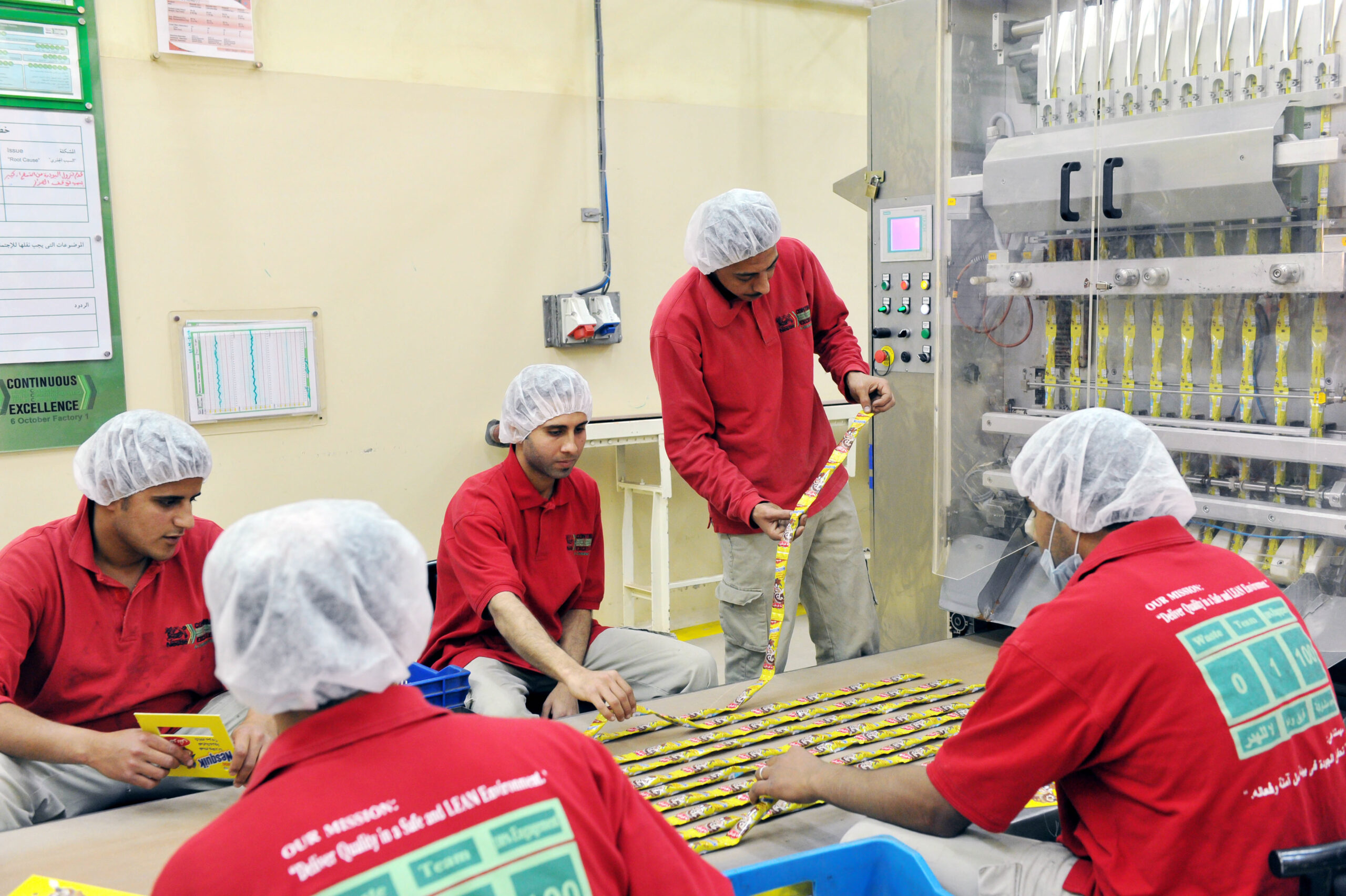
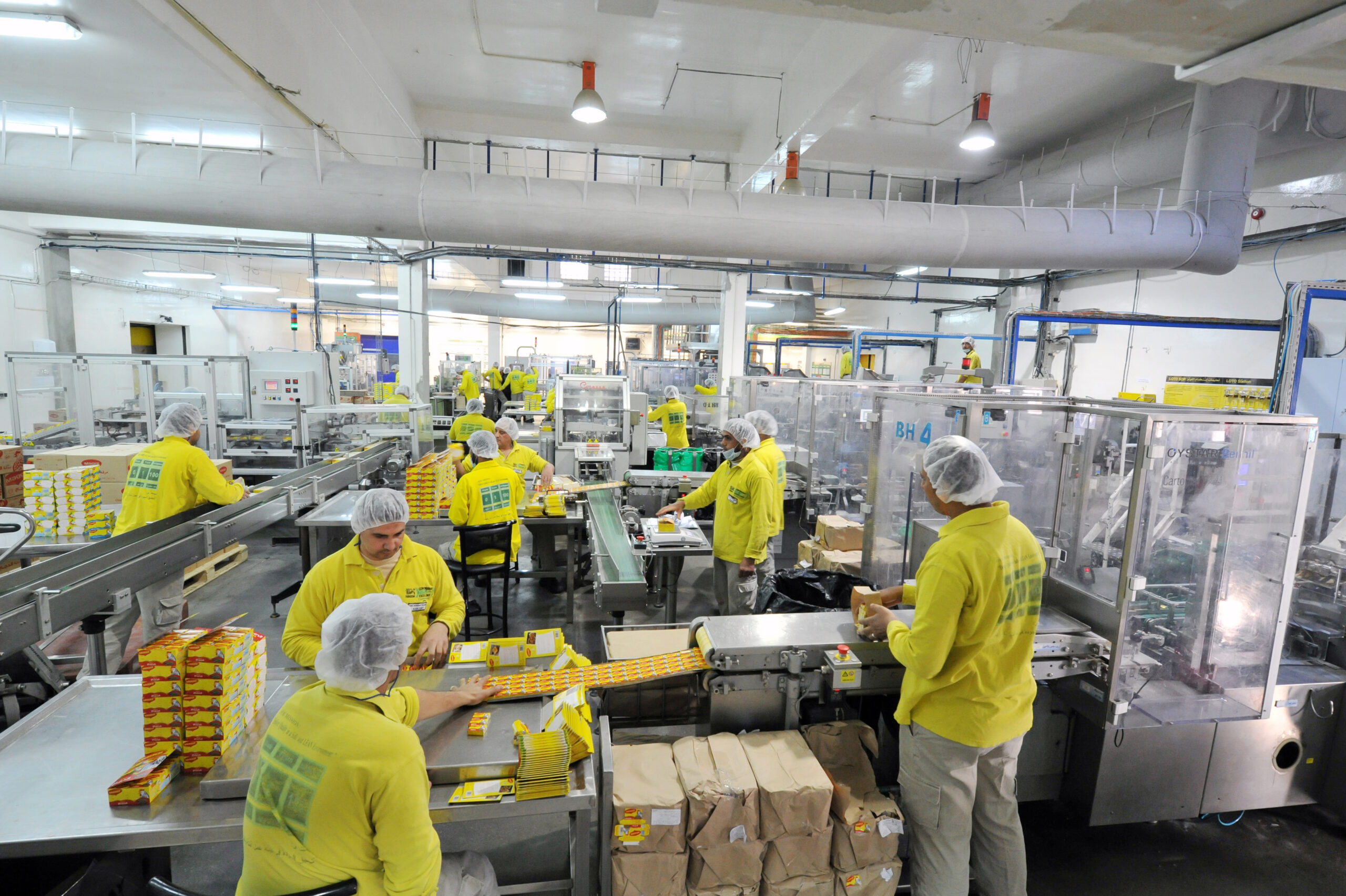
Food industry: There are 7 000 food processing and manufacturing companies in Egypt. The segment generated EUR 19 243 million in sales but is quite fragmented. Larger companies account for EUR 6 934 million of these sales. Egypt imported some EUR 3 466 million worth of food ingredients in 2017.