Serbia: Solid banks support growth

The sector is well-capitalized, liquid and harmonized with EU legislation

Financial sector reforms have been pursued vigorously. Banks are on a sound footing and continue to support growth. The banking sector comprises over 90% of the total assets in the financial sector. Over the last several years significant restructuring has been undertaken to improve the stability of the sector. There are currently 30 licensed commercial banks in Serbia, and further consolidation is expected to reduce this number to around 20 over the next few years. At the moment, 21 banks are under majority foreign ownership, and most are authorized for international banking operations. Banks from Italy, Austria, Greece, and France hold a dominant share in total banking sector balance sheet assets reaching almost three quarters. The banks orientate their business towards traditional banking activities with deposits being the primary source of bank funding. Overall the potential for organic growth is quite limited.

Serbia’s banking sector assets total nearly EUR 27 590 million. The top ten banks account for 77,4% of total balance sheet assets in the sector, while the top 5 banks account for 55,5%. Foreign banks have no obstacles in establishing operations in Serbia, and foreigners can freely open non-resident accounts. The sector employs nearly 24 000 employees. Based on reference values of liquidity indicators, Serbia’s banking sector has been characterized by considerable excess liquidity for a long time now, while capital adequacy continues to increase from an already high level.

Total capital in the sector amounts to EUR 5 552 million and growing, while share capital remains stable at EUR 3 359 million. The sector has nearly EUR 17 435 in total loans and EUR 21 174 million in deposits. The banking sectors earnings are low for its size, but quickly increasing, with earnings before tax reaching over EUR 448 million. A positive economic environment boosted profitability to levels not seen since 2008.

The sector is well harmonized with EU legislation, and to strengthen this further the NBS adopted new regulations in line with the requirements of Basel III standards which came into effect in 2017. The end 2017 deadline was not met, and efforts need to continue in 2018. Overall introduction of Basel III standards has enhanced financial stability.

Serbia’s banking sector has received positive reviews from the IMF. According to the IMF, the sector is well-capitalized, liquid and Serbian authorities are making significant progress in implementing reforms. NBS’ efforts of implementing the policies of Basel III framework are strongly supported by IMF. Serbian banks are already working on the upgrade of their credit system and implementation of the SEPA rules in payment systems.

The most significant challenge for the banking sector has been the high rate of non-performing loans (NPLs). The NPL rates for Legal Entities reached peaks of 30% and averaged nearly 22% in 2015. NBS and the government adopted a plan which the IMF assessed in 2016 made significant progress. The total number of NPLs continue falling both in nominal terms and relative to total loans. In early 2018, the NPL rate dropped to below 10%, but there is still a way to go there, and more reduction of bad loans will continue to be made. According to Professor Veroljub Dugalić, Secretary General of the Association of Serbian Banks this opens up the possibility to approve more loans in the near future.

Commercial banks are slowly easing their credit standards, which is contributing to increased credit activity. Cash loans to households have recently grown rapidly to match housing loans and should be managed carefully. More than two-thirds of all lending is denominated in EUR because it carries less risk than RSD and lower rates.

Although the banking sector is highly liquid, Serbian companies are unable to find working capital which remains an issue for the Serbian economy. In contrast, there are no obstacles for foreign investors on the domestic market to obtain credit. Professor Dugalić, stresses there is a direct link between corporate loans, resulting investment and the economy which needs to be addressed. He emphasizes improving commercial borrowing is key for business expansion and Serbia’s economic prosperity.

Historically after the global financial crisis in 2008, four state-owned banks in Serbia went bankrupt. The state compensated the banks’ depositors with nearly EUR 1 000 million.  State-controlled banks have had financial difficulties after the crisis. They have honored all withdrawal requests during and after the crisis, and now the situation has been stabilized, and banks have regained consumer trust. Personal remittances are an important trust indicator. They are on the rise and reach nearly EUR 3 000 million.

In early 2018 there were nearly 6 million credit/debit cards issued in Serbia, which for a population of 7 million people showcases a positive penetration rate.

The Ministry of Finance’s administrative capacity to regulate the securities market remains weak.

Overall, it remains also weak in the NBS, Deposit Insurance Agency and Ministry of Labour. The National Bank of Serbia’s (NBS) main goal is to achieve sustainable prices and stability of the exchange rate, as well as controlling the inflation. It also manages foreign exchange transactions, formulates monetary policy, manages cash circulation, and supervises banks and other financial institutions. NBS is independent of the government but reports to the Parliament, and the current governor is Jorgovanka Tabakovic.

Foreign Exchange: Serbia allows free flow of capital and investments, and residents may maintain both foreign currency and dinar denominated bank accounts without restrictions. Investors can make or receive payments in foreign currency on these accounts. In December 2014, the government updated the Foreign Exchange Law to allow Serbian citizens to make transactions through internet payment systems such as PayPal.

Portfolio Investment: According to the National Bank of Serbia (NBS), Serbia recorded net outflow of EUR 1 000 million in portfolio investment in 2016. The Serbian government finances its budget deficit with regular issues of bonds, including dinar-denominated T-bills, dinar-denominated, short-term, and euro indexed government bonds. The value of government debt securities issued on the Serbian market reached EUR 8 800 million in early 2017, with 63% in Serbian dinar (RSD) and 37% in euro. Including international market, it reached nearly EUR 14 000 million in total.

Serbia’s international credit ratings have improved over the last few years and have a stable outlook. In March 2017, Moody’s upgraded the Government of Serbia’s long-term issuer ratings to Ba3, from B1. Standard & Poor’s outlook for Serbia was briefly raised from stable to positive, while keeping its rating at BB- before being upgraded to BB, with a stable outlook at the end of 2017. In 2016, Fitch raised Serbia’s credit rating from B+ to BB- and to BB in 2017. The improved ratings remain below investment grade.

Capital Markets: Serbia does not have well-developed equity and bond markets. Belgrade Stock Exchange (Belex) has 990 companies listed, but less than 10% of them have their shares traded regularly, which is defined as more than once a week. Total turnover in 2016 doubled from the year before, and it reached EUR 400 million, which is a positive sign, but still far from the volume of trade before the global economic crisis in 2008. The Belgrade Stock Exchange is ramping up 2018 with a series of strategies focused on increasing trading. This includes EU supported “Serbia: IPO GO!” aimed at having the first IPO in the exchange in over 70 years.

Insurance: The insurance market in Serbia is comprised of 21 insurance companies, 15 of which are in their majority foreign-owned. The balance sheet total of insurance and reinsurance undertakings in Serbia continues to increase reaching EUR 1 955 million. Total premiums in 2017 reached EUR 594 million, an increase of 6.3% from 2016. Non-life insurance policies made up a 77.5% share while life insurance premiums the remaining 22.5%. Insurance regulations have already been adopted creating the legislative ground for convergence of the Serbian insurance sector to that of the EU. This ensures protection equivalent to that in the EU.
More Articles

  • Become a Sliabh Liag Distillers Seanchaí

    Become a Sliabh Liag Distillers Seanchaí

    Seanchaí – Custodian of an oral tradition In a way, we are all seanchaí (phonetically pronounced: “shan-a-key”)  – story tellers, legend keepers and curators to our own story’s lives. Sliabh Liag Distillers’ invites you to become a Seanchaí and own one of 600 exclusive casks. Choose from Casks of smoky Donegal Single Malt or Pot…

  • Ireland’s Medtech Ecosystem

    Ireland’s Medtech Ecosystem

    Cook Medical is one of many key players within Ireland’s innovative medtech cluster. The company’s award-winning Limerick facility handles the R&D behind many successful medical technology products Since 1996, US-based medical technology company, Cook Medical, has operated a facility in Limerick. This facility was initially limited to basic manufacturing, labeling, and distribution work for its…

  • Sustainability: Meeting the Needs of the Present without Compromising the Future

    Sustainability: Meeting the Needs of the Present without Compromising the Future

    The Irish food industry is one of the most scientifically advanced and sustainable globally  The small island of Ireland has rich, fertile soil and privileged weather for farming. Agriculture has historically been Ireland’s largest indigenous industry, and today it continues the tradition. While the island has a population of 5 million people, it consistently exports…

  • Irish Academia: A Collaborative Approach to Innovation

    Irish Academia: A Collaborative Approach to Innovation

    Ireland’s world-class higher education sector, in collaboration with industry and research focused institutions, bolsters Ireland’s research and development (R&D) ecosystem and fosters innovation across the country Ireland is an innovation powerhouse. The country has become a science and technology global leader driven by a higher education sector prioritizing research and development (R&D).  The small yet…

  • The Inclusive University with Innovation & Entrepreneurship in its DNA

    The Inclusive University with Innovation & Entrepreneurship in its DNA

    Munster Technological University (MTU) was created on January 1st, 2021. MTU, which consists of six campuses across Cork and Kerry with a student body of more than 18,000, is a center of excellence in education, research and engagement for career-focused learners seeking enterprise and community-ready qualifications and experiences Ireland is one of the most diverse…

  • University College Dublin: Shaping The Future Through Research and Innovation

    University College Dublin: Shaping The Future Through Research and Innovation

    University College Dublin (UCD), Ireland’s global university and a leading European research-intensive university, was established over 160-years ago Internationally focused and forward-looking, UCD recently launched ‘Shaping the Future’, a new research and innovation strategy. This strategy sets out its ambitious plans to build on its success to date and grow the excellence and impact that…

  • Ireland’s Global Leader on the Edge of the Atlantic

    Ireland’s Global Leader on the Edge of the Atlantic

    In the south-west of Ireland, a university is driving the growth of a region that has become increasingly attractive for international study and foreign direct investment Cork is Ireland’s second-largest city, located in the southwest of Ireland in what is considered one of the most beautiful regions of the country. This is a spectacular part…

  • TU Dublin’s New Campus Transforms Downtown

    TU Dublin’s New Campus Transforms Downtown

    Ireland’s First Technological University Breaks National Records With Infrastructure Development Project Though it was officially established on January 1, 2019, Technological University Dublin (TU Dublin) is not a newcomer to Ireland’s educational landscape. Its history goes back to the Dublin School of Technology, a pioneering post-secondary institution established more than 130 years ago. Recently, TU…

  • Ireland: the Second-Largest Funds Domicile in Europe

    Ireland: the Second-Largest Funds Domicile in Europe

    With an increase in allocation to ESG products, Ireland is becoming a leader in sustainable finance The European Commission’s Green Deal is striving to make Europe the world’s first climate neutral continent by 2050. To make this ambition a reality, the European Commission’s Action Plan on Sustainable Finance is redirecting EUR one trillion of capital…

  • Irish Consulting: Helping Navigate Complex Geopolitical Shifts

    Irish Consulting: Helping Navigate Complex Geopolitical Shifts

    Managing Partner of EY Ireland answers questions about the future of the industry Similar to other sectors in Ireland, the Irish professional services industry has rapidly expanded in recent years in parallel with increasing FDI and ever growing business activity. Ireland has long been a strategic gateway for global operations, and in particular as a…

  • For Many Irish Companies, Flexible Workspaces are the Perfect Fit

    For Many Irish Companies, Flexible Workspaces are the Perfect Fit

    Workspace providers bounce back from COVID-19 pandemic With the lifting of one of the longest COVID-19 lockdowns in the world, decision-makers in Ireland look toward the future of their company function. Flexible workspaces have come center-stage, particularly in Dublin, as the popular alternative to the traditional private office. Companies big and small have found that…

  • International Financial Services Remains a Key Sector

    International Financial Services Remains a Key Sector

    Despite Challenges, the Sector Remains Strong Finance is big business in Ireland, and as of late, international financial services (IFS) in particular play a crucial role in the Irish economy. 11 of the world’s 15 largest insurance businesses have a presence in Ireland, with Irish insurance companies serving 25 million customers across 110 countries. Additionally,…

  • Ireland’s Commitment to the EU Underpins its Desirability as a European Base

    Ireland’s Commitment to the EU Underpins its Desirability as a European Base

    Grant Thornton Irish desks across the USA help facilitate the internationalization process The Republic of Ireland’s commitment to the European Union, ease of business, and reliable tax structure have been core pillars in the country’s ability to attract global financial services firms. Therefore, it is not a surprise Ireland has been the destination of choice…

  • Ireland as a Global Hub for Finance

    Ireland as a Global Hub for Finance

    The country’s financial services sector is one of the EU’s most important hubs Ireland is a financial powerhouse, and the fourth largest provider of wholesale financial services in the European Union. The country’s international financial services (IFS) sector encompasses more than 430 financial services companies serving every major economy globally. Home to 20 of the…

  • Ireland: the Jurisdiction of Choice for American Companies in Europe

    Ireland: the Jurisdiction of Choice for American Companies in Europe

    A conversation with Alan Connell, Managing Partner of Eversheds Sutherland Ireland Before the financial crash in 2008, Ireland was one of the biggest European success stories. Nicknamed the ‘Celtic Tiger,’ the island nation had low unemployment, low inflation, modest public debt, and solid growth.  Alan Connell, Managing Partner of Eversheds Sutherland in Ireland, the country’s…

  • Cubic Telecom: Delivering Connected Software Solutions to the World

    Cubic Telecom: Delivering Connected Software Solutions to the World

    Innovative Irish companies, like Cubic Telecom, are playing a major role in the digital transformation of some of the world’s most important industries Ireland has emerged as a technology hub for innovation, with many of Silicon Valley’s most valuable companies setting up their European base there. Beyond attracting top industry players with its supportive business…

  • Realizing the Potential of Ireland’s IFS

    Realizing the Potential of Ireland’s IFS

    Technology-driven innovation and forward-thinking financial institutions are driving the success of Ireland’s international financial services sector To ensure Ireland’s international financial services industry (IFS) continues to thrive as a top-tier global location of choice for IFS, the Irish government created a strategy, Ireland for Finance. The strategy is based on four key pillars. First, by…

  • Cost-Effective Energy Efficiency

    Cost-Effective Energy Efficiency

    West Cork-Based Infrared Heating Business Upholds Nation’s History of Applied Innovation As the world grapples with climate change, there has been a renewed focus on sustainability, and corporations continue to seek solutions to achieve their new ESG targets. As one of the most energy-intensive economic sectors, industry is increasingly the focus of scrutiny. Solutions to…

  • County Monaghan

    County Monaghan

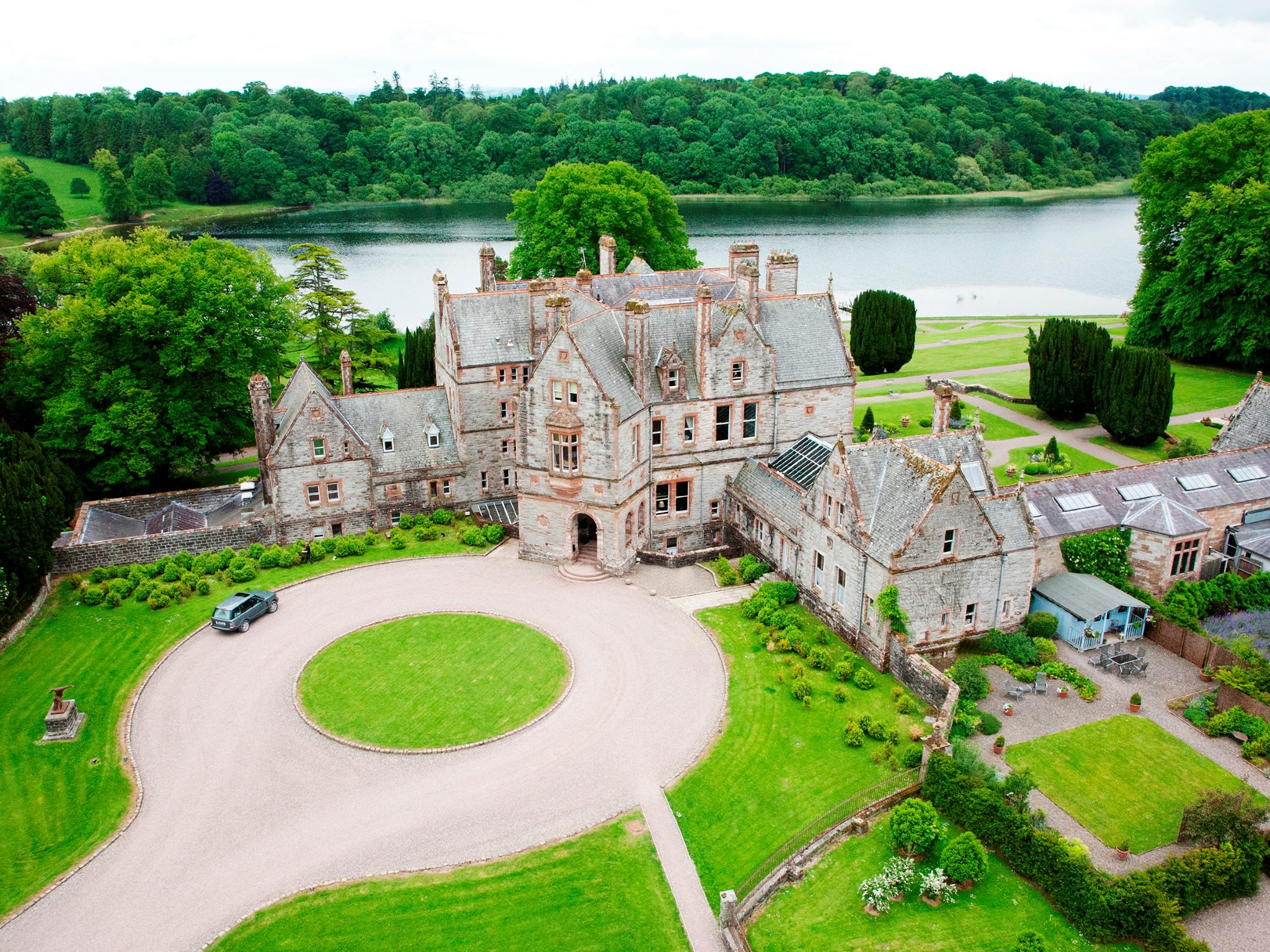
    The drumlin-dotted landscape and rolling hills that inspired the poems of Patrick Kavanagh seeks FDI Nestled within County Monaghan lies Castle Leslie Estate, one of Ireland’s finest luxury five-star castle hotels. Despite being home to such a gorgeous estate, the county is often an overlooked gem. Nevertheless, County Monaghan is famous for its drumlin landscape…

  • Dublin’s Silicon Docks

    Dublin’s Silicon Docks

    Europe’s “Silicon Valley” has embraced a high concentration of tech startups and mega multinationals Dublin continues to attract tech multinationals into the country, allowing for the corporations to penetrate European markets efficiently. Over the years, the IDA has successfully attracted a record breaking amount of Foreign Direct Investment (FDI). The Information Communications Technology (ICT) sector alone employs 37,000…

  • Irish Hospitality: Exporting Aparthotel Expertise

    Irish Hospitality: Exporting Aparthotel Expertise

    As cities grapple with the challenges of providing quality accommodation, Tom Walsh, Co-Founder and CEO of Staycity Group, explains how Staycity’s unique offering contributes much-needed quality options to cities while providing visitors with a perfect blend of home and hotel. Staycity started with one apartment in Dublin in 2004 and now operates serviced apartments in…

  • Enterprise Territory Optimization

    Enterprise Territory Optimization

    An Irish cloud-based solution offers a unique value-added proposition In recent years, Ireland has become a global leader in software development, and is now home to many international cloud service companies. While these solutions are in the cloud, they have real-world implications that improve efficiency across various economic sectors.  eSpatial is one of these Irish…

  • Smart Wastewater Solutions

    Smart Wastewater Solutions

    Smart solutions are efficient, adaptable, and target the problem directly with appropriate use of resources, without needing to be oversized or lavish.  When Center Parcs built its EUR 230 million, 500 lodge forest park resort within Ireland’s Hidden Heartlands in Longford, they turned to Butler Manufacturing Services (BMS) as an innovative local solutions provider based…

  • Liechtenstein: A Global Business Success Story

    Liechtenstein: A Global Business Success Story

    A principality nestled between Switzerland and Austria fosters a prosperous, highly industrialized economy Liechtenstein has the second-highest gross domestic product (GDP) per capita globally, the second-lowest unemployment rate, and is the world’s least indebted nation. Although small in size, the sovereign nation of Liechtenstein is well-integrated globally. It is a member of several multilateral organizations,…