The Future of Finance

Impact investing, blockchain, fintech, and cryptocurrencies

The Swiss financial services sector continues to evolve as a new wave of financial institutions and trends are transforming the field. In addition to the adaptation of traditional Swiss financial services now ensuring transparency at the forefront, there has been a surge in socially responsible investing, blockchain technology, fintech, and cryptocurrencies, all of which are revolutionizing the field.

Although the absolute contribution of financial services in Switzerland has fallen over the last ten years in relation to the country’s GDP, the financial and banking sectors remain key elements of the Swiss economy. Switzerland has sustained its position as a world leader in wealth and asset management, and the sector plays a vital role in contributing to Switzerland’s international top competitiveness ranking, serving as a catalyst for both economic and sustainable development.

Investing for a better world

For centuries, socially conscious investors avoided investing in “sin industries,” but in the 1960s there was a shift to not only actively avoiding, but rather investing towards positive initiatives, such as civil rights and equality. Over the decades, there has been phenomenal growth in impact investing, including a 270 percent increase in ESG (environmental, social and governance) assets since 2012.

Impact investments in particular have rapidly grown and continue to attract investors opting for both solid financial returns and the promise for positive change with their investments going towards measurable impact for society and the environment. The Global Impact Investing Network estimates the current market to be worth USD 715 billion. These targeted investments have a massive impact on the globe, helping to tackle some of the world’s foremost challenges, such as climate change and poverty. The International Finance Corporation, a member of the World Bank Group, estimates this field has the potential to grow to USD 26 trillion. The Swiss Sustainable Finance Association stated that impact investing is worth nearly CHF 55 billion in Switzerland, which is quite small relative to the CHF 1.16 trillion Swiss market for sustainable finance, but likely to increase moving forward. 

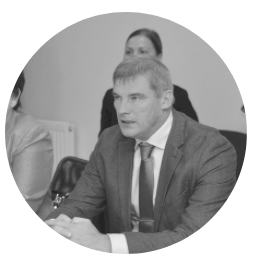
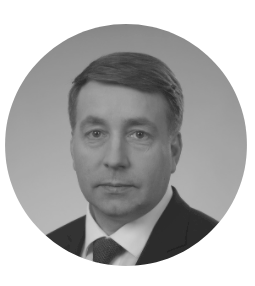
“Switzerland remains the world’s largest financial center for cross-border private wealth management, and continues to evolve as trends are changing.”

Patrick Odier, Managing Partner of Lombard Odier Group

According to Patrick Odier, Managing Partner of Lombard Odier Group, one of the biggest players in the Swiss banking sector, “The Swiss live by several golden rules. One of them is not to spend more than you earn. This has ensured the nation developed a solid financial base to grow. Switzerland remains the world’s largest financial center for cross-border private wealth management, and continues to evolve as trends are changing. The power of investing and traditional charitable giving are strategically combined to achieve the highest impact possible. The lines between philanthropy and investing for impact are becoming increasingly blurred.”

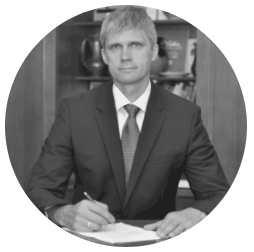
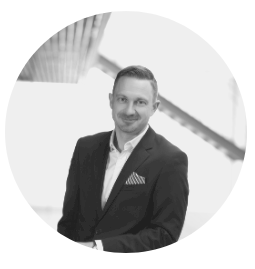
Renaud de Planta, Senior Partner of Pictet Group, a Swiss multinational private bank and financial services company founded in Switzerland, and now one of the leading European independent wealth and asset managers, said, “The next generation of Swiss financial services will build on Switzerland’s existing strengths of financial solidity and services mindset. A rising number of young investors seek socially responsible investments, and they should trust Swiss providers who have a track record in creating new asset classes and pioneering complex products. The new generation of Swiss providers are building new products with sustainable and responsible investment strategies in fields including micro-financing and clean water.”

Demystifying blockchain, fintech and cryptocurrencies

Institutional and personal investors are seeking to diversify their portfolios not only through impact investing, but also revamp their portfolios and join the growing trend for blockchain technologies, fintech and cryptocurrencies. Switzerland is well-known as a vital hub for innovation in the financial services sector. Switzerland’s fintech sector is flourishing as transformative developments are on the rise from the emerging digitalization of banking and finance. The crypto and blockchain industries are Switzerland’s most developed fintech segments, and continue to develop new models, enhance efficiency, and in some categories, reposition traditional banking all together.

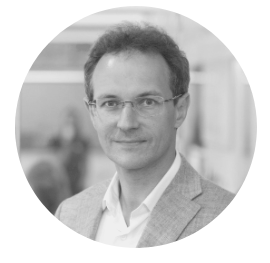
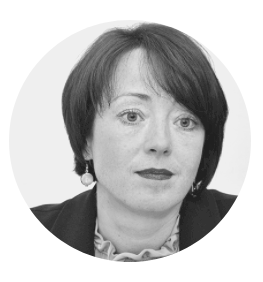
Päivi Rekonen, Chair of the Board of Directors, SEBA Bank

The Canton of Zug, nicknamed “Crypto Valley,” is a hotbed for cryptocurrencies and blockchain technologies. Zug has ambitions to become the global capital of cryptocurrencies and fintech, and establish itself as the world’s leading blockchain ecosystem. The Swiss fintech sector has several hundred companies, and a significant proportion of them are working within the field of Distributed Ledger Technology.

“Switzerland has positioned itself as a thought leader in the fields of digital assets and digital currencies.”

Päivi Rekonen, Chair of the Board of Directors, SEBA Bank

Päivi Rekonen, Chair of the Board of Directors of SEBA Bank stated, “Switzerland has positioned itself as a thought leader in the fields of digital assets and digital currencies. Switzerland’s regulatory framework is crypto friendly, and we have an excellent ecosystem for blockchain technologies to thrive, grow and take shape. Swiss companies utilize technology as an enabler for business transformation. In order to achieve transformation, it requires a certain skill set, competency, attitude, and strength. Switzerland has an exceptional talent pool well equipped with the skills necessary to innovative.”

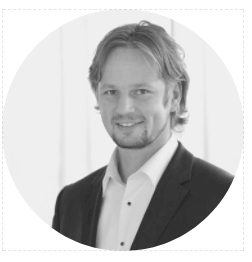
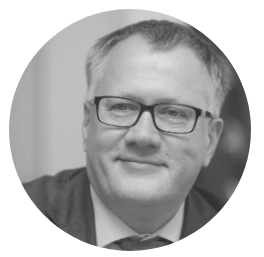
Guido Bühler, CEO of SEBA Bank added, “A lot of innovation is driven out of Switzerland. On the digital currency side, this segment has been growing year-on-year by 350 percent. With regards to digital assets, Swiss Parliament approved new regulations for Blockchain and Distributed Ledger Technology, with the goal for the new legal framework to increase Switzerland’s reputation as a leading, innovative and sustainable location for fintech and blockchain companies. This will go into effect on February 1, 2021, and become fully implemented by August, 2021.”

Guido Bühler, CEO, SEBA Bank

SEBA Bank is a trailblazer in the field, and bridges the gap between old and new, merging the worlds of traditional banking with crypto banking. The entity is setting new standards for transparency, performance and safety. As a fully licensed and regulated Swiss bank, it provides secure and user-friendly methods for managing traditional assets and digital assets. It allows clients to secure, trade and manage cryptocurrencies, digital assets and conventional securities under the same roof. Their services include custody storage, trading and liquidity management, asset and wealth management, transaction banking, and tokenization. The company is redefining finance, and ensuring Switzerland maintains its footing as an innovative powerhouse. 

“Investors want to have someone they trust taking care of their assets. As a fully regulated bank, SEBA Bank is reliable and trustworthy. If there is a token issued by SEBA Bank, you know that this token is representing a real asset, such as real estate or gold, and the execution of that token is guaranteed,” stated Rekonen.

Bühler stated, “We are the first bank with such a comprehensive service range combining traditional, digital and crypto assets worldwide. SEBA Crypto Asset Select Index (SEBAX®), is our next generation index. It addresses common pitfalls of traditional market-weighted indices and improves diversification significantly by representing between five to eight main cryptocurrencies at once and balances them. Our index has beaten all of the main benchmarks. It was introduced on July 4, 2019, and we are incredibly proud of its performance thus far. Compared to competitors, SEBAX® has a fifty percent lower cost ratio. It is a smart and reliable gateway into the crypto market.” 

He continued, “In Switzerland, there is currently not a specific digital asset exchange, and this is something lagging. However, SEBA Bank’s tokenization platform can make liquidity available from its services and products until there is an exchange in Switzerland. We will launch the Swiss Franc Stablecoin, which is linked one-to-one to the Swiss franc. Currently, if you hold Swiss franc in a bank, you have to pay negative interest rates. SEBA Bank will offer an alternative. We will pay approximately half a percent in interest for our holders. We will be launching several new innovative tokens next year, watch this space! People across the world will soon start to realize that blockchain technologies allow for a new toolset, creating value for investors and those seeking liquidity.”

“Swiss Parliament approved new regulations for Blockchain and Distributed Ledger Technology, with the goal for the new legal framework to increase Switzerland’s reputation as a leading, innovative and sustainable location for fintech and blockchain companies.”

Guido Bühler, CEO, SEBA Bank

SEBA Bank has hit a frontier, and is closing the gap between the digital asset world and traditional banking. With growth plans, Rekonen and Bühler envision SEBA Bank becoming a global leader in integrated digital banking, and offering people across the world access to their financial instruments to improve daily lives, acting as an amplifier of wealth and knowledge. 

Rekonen mentioned, “At SEBA Bank, we have innovative ideas in the pipeline, and are gathering partners to further develop these initiatives, but it is also important to make sure the market is ready for these new ideas. As of now, the mass market isn’t quite there yet. However, we are working to demystify this and help society at large understand this new trend through SEBAversity, an integral part of SEBA Bank whose mission is to educate, increase awareness and understanding of the digital economy. With Switzerland’s historic financial services industry and innovative mindset, and the growth of digital assets and currencies, SEBA Bank is playing an important role in the middle of these two worlds.”

Bühler added, “We are funneling macroeconomic and social trends into products, with the end goal to make the world a better place.” SEBA Bank is well poised to capture more growth and enable individuals, companies and institutional clients to invest safely, keep, trade and borrow against digital and traditional assets.
More Articles

  • Viewpoint: Zorana Mihajlović,  Deputy Prime Minister of Serbia, and the Minister of Construction, Transport, and Infrastructure

    Viewpoint: Zorana Mihajlović, Deputy Prime Minister of Serbia, and the Minister of Construction, Transport, and Infrastructure

    Serbia’s central position on the Balkans has been used as a bridge between West and East for generations.  This strategic position was the cause of many difficulties throughout history. Empires were always interested in controlling the crossroads going through Serbia. Nowadays, we consider this geographical position an advantage. We are doing our best to organize…

  • Interview: Zoran Babic, Director, Corridors of Serbia

    Interview: Zoran Babic, Director, Corridors of Serbia

    What will be the socio-economic impact of Corridor X? The Eastern part of Serbia is stricken by de-population due to lack of employment options. Corridor X will positively affect the employment rate in remote regions with high unemployment. The construction sector has provided new opportunities, and is actively creating a business environment which can attract…

  • Interview: Aigars Rostovski, President, Latvian Chamber of Commerce and Industry (LCCI)

    Interview: Aigars Rostovski, President, Latvian Chamber of Commerce and Industry (LCCI)

    Historically what have been Latvia’s most important economic drivers? Traditionally our biggest sector has been wood and timber produced from by our forests. They cover more than half of Latvia.  Forests are referred to as Latvia’s “Green Gold.” A second historically strong sector is manufacturing, in Soviet times Latvia was an industrial hub. A third…

  • Interview: Martin Gauss, CEO, Air Baltic

    Interview: Martin Gauss, CEO, Air Baltic

    How important is the development of Latvia’s aviation sector for the economy? If you look at the connectivity of the Baltic States, Riga at the moment is the key capital. Latvia being in Northern Europe has reachability issues. Connectivity with Europe by road and rail systems do not fully meet the needs of the region…

  • Interview: Ilona Lice, CEO, Riga International Airport (RIX)

    Interview: Ilona Lice, CEO, Riga International Airport (RIX)

    How do you assess the growth of the aviation sector? The Baltic economy will continue to be characterized by its steady and sustainable progress. The aviation sector accounts for roughly 2.5% of GDP, and cautious, and conservative estimates forecast a growth of 3%. During the past five years, we have invested EUR 154.2 million in the…

  • Interview: Toms Didrihsons, CEO, Orkla Confectionery & Snacks Latvia

    Interview: Toms Didrihsons, CEO, Orkla Confectionery & Snacks Latvia

    How is the post-recession recovery affecting the retail sector? Looking back seven or eight years we can see the general EU recession affected smaller countries in the Baltics quite heavily. The retail sector experienced a drop of 20-30%, which was a big hit. In the recovery process, you would expect some growth over the next…

  • Latvia: An essential global strategic transit hub

    Latvia: An essential global strategic transit hub

    The success of Latvia’s transport sector lies on a series of favorable circumstances. Latvia’s geographic location with access to both Russian and EU markets and its excellent infrastructure are the pillars of this success. Being located on the external border of the European Union, Latvia has quality infrastructure connecting the country to the Russian Federation,…

  • Interview: Ringolds Arnitis, Parliamentary Secretary,  Ministry of Agriculture

    Interview: Ringolds Arnitis, Parliamentary Secretary, Ministry of Agriculture

    How do you assess the agricultural sector? Latvia offers high-quality products which are environmentally friendly. These are two important reasons why international business’ choose Latvian products. Nearly 20% of Latvia’s export income is derived from the nation’s forests and another 20% from its agricultural products. EU financial resources have created new market possibilities. Since 2004,…

  • Interview: Aleksandrs Bartasevics, Mayor and Chairman of Rezekne City Council

    Interview: Aleksandrs Bartasevics, Mayor and Chairman of Rezekne City Council

    What are some of the benefits associated with investing in the regions? Investors should remember to evaluate other cities outside Riga. Latvia’s regions offer investors many advantages as opposed to the capital. The regions have fewer obstacles. One example is requesting permits and documentation for construction which takes several weeks longer in Riga than in…

  • Interview: Nikita Sergienko, CEO, Bite Latvia

    Interview: Nikita Sergienko, CEO, Bite Latvia

    How do you assess Latvia’s ICT sector? Latvia has one of the best networks worldwide and probably the best in the European Union. Taking advantage of this, and the qualified labor, many multinationals moved their back offices, call centers, IT centers and even head offices to Lithuania and Latvia.  Western Union, Swedbank, and even Barclays…

  • Interview: Reinis Rubenis, CEO, Swedbank Latvia

    Interview: Reinis Rubenis, CEO, Swedbank Latvia

    What challenges is the Latvian financial sector facing? One challenge for the Latvian banking sector is the number of banks. There are far too many banks in Latvia for such a small economy. Over the next five years, we will definitely see further consolidations taking place. This consolidation is necessary. A positive aspect of the…

  • Interview: Janis Lucaus, CEO, BTA

    Interview: Janis Lucaus, CEO, BTA

    How do you assess the insurance sector? Even though the sector caters to a small market in terms of population, it is highly competitive and evolving. A key factor to take into consideration is the number of competitors and a clear increase of international insurance players within the market. Competition has been beneficial for the…

  • Interview: Anda Caksa, Latvian Minister for Health

    Interview: Anda Caksa, Latvian Minister for Health

    How do you evaluate Latvia’s healthcare system? Over the pasttwo decades, life expectancy has increased by ten years. If we compare this to our neighbors, it is quite an achievement. However, in order to understand Latvia’s healthcare system, we need to discuss the issues and challenges that it has faced. The system has patient accessibility…

  • Interview: Edgars Rinkevics, Latvian Minister of Foreign Affairs

    Interview: Edgars Rinkevics, Latvian Minister of Foreign Affairs

    What are Latvia’s most prominent accomplishments? Latvia is an integral part of Europe and in May 2019 will celebrate 15 years as a part of the European Union. We are part of the eurozone, Schengen, and the OECD. Latvia operates according to similar legislation, rules, and principles as The Netherlands, Germany or Ireland. Therefore, Latvia…

  • Latvia: New electricity tariffs benefit consumers

    Latvia: New electricity tariffs benefit consumers

    Latvia is a net energy importer. Reforms continue in the electricity and gas sectors with the goal of opening competition in the domestic market. The government has made the full liberalization of the gas market a priority in 2017. Significant investments in gas and electricity infrastructure have been recorded to continue synchronization with the electricity grids…

  • Latvia: ICT sector surpassing 4% of GDP

    The turnover of the ICT sector is estimated at EUR 3 400 million, accounting for 4% of the total GDP. Approximately 6 200 companies operate within the sector. ICT related services, software, hardware, and telecom sub-sectors have grown significantly in recent years. The exportation of foreign-sourced computer hardware and software are a significant share of…

  • Martins Vanags, Managing Director, Skanste Development Agency, on creating Riga’s central business district

    Martins Vanags, Managing Director, Skanste Development Agency, on creating Riga’s central business district

    In the Riga City Development Strategy for up to 2030, the Skanste neighborhood has been defined as a priority territory: the central business district of the capital, a platform for European-scale events and a quality life and work environment for many thousands of Rigans. Next to the Historic Center and the “Quiet Center” of the…

  • Baiba A. Rubesa, CEO, Rail Baltica, on creating a new economic corridor

    Baiba A. Rubesa, CEO, Rail Baltica, on creating a new economic corridor

    Rail Baltica, a new railway infrastructure connecting the three Baltic States to Poland and indirectly to Finland, is often called the project of the century. This project marks a symbolic return of the Baltic States to Europe. Currently, most rail freight traffic in the Baltics originates from the CIS (Commonwealth of Independent States) countries and…

  • Latvia: An evolving global financial hub

    Latvia: An evolving global financial hub

    Local demand for global financial services is limited. The banking sector makes up 90% of assets within Latvia’s financial system. The insurance sector represents 2.4% of assets while the State-funded pension scheme around 5%. Banks dominate the financial sector of Latvia, and Scandinavian banks have the dominant share of the domestic market. Latvia’s financial sector…

  • Interview: Uldis Augulis, Latvian Minister for Transport

    Interview: Uldis Augulis, Latvian Minister for Transport

    What opportunities exist to foment further transit? Latvia is situated in a very privileged geographical position. Within the Baltic States, Latvia is the focal point connecting the West to the East. Our warm-water ports currently account for the biggest cargo freight transportation amongst the Baltic countries. Transit, logistics, and distribution of goods through Latvian ports…

  • Interview: Svens Dinsdorfs, CEO, Elko Group

    Interview: Svens Dinsdorfs, CEO, Elko Group

    What is your outlook for Latvia’s Economy? Latvia’s financial crisis had a big psychological impact on society in terms of spending. Since then, Latvia has experienced a slow but gradual increase in internal consumption which has aided the countries turnaround. The confidence of the population is continuously increasing which is directly boosting internal demand. This…

  • Interview: Arvils Aseradens, Latvian Deputy Prime Minister and Minister for Economics

    Interview: Arvils Aseradens, Latvian Deputy Prime Minister and Minister for Economics

    How do you assess Latvia’s economic growth?  Four key points are behind Latvia’s economic growth; European Funds, external situation, accumulation of private savings and rising income levels. Income levels have increased 5% in the past three years. This has been a very active base for private consumption. In addition, the private sector has large amounts…

  • Interview: Marta Jaksona, Executive Director, Foreign Investors’ Council in Latvia (FICIL)

    Interview: Marta Jaksona, Executive Director, Foreign Investors’ Council in Latvia (FICIL)

    How do you assess current foreign direct investments in Latvia? I would like to see higher levels of investment. Foreign direct investments in Latvia increased sharply after Latvia’s accession to the EU in 2004. After the crisis, the investment slowed. However, we saw this in the entire EU. The fight for investments is obviously increasing.…

  • Country Profile: Latvia

    Country Profile: Latvia

    The Republic of Latvia is a small country in Northern Europe and one of the three Baltic States. Latvia is a small open economy, and its exports account for the majority of its GDP. Due to the strategic geographical position of Latvia, the transport and transit sector is highly developed. Latvia became a success story…