Egypt is the third-largest dry natural gas producer on the continent and the largest non-OPEC oil producer in Africa. In addition, the Suez Canal and Suez-Mediterranean Pipeline (SUMED) are strategic high-security global transit routes for oil shipped from the GCC to Europe and the United States.
Egypt is the most populous country in North Africa, and its rapid population growth stresses the nations ability to fulfill domestic power needs. Egypt has therefore started multiple mega infrastructure projects to diversify its energy resources and further develop niche segments. While oil discoveries have plateaued, massive natural gas fields were discovered in recent years, and some have already started operating. Renewable resources are increasingly on the agenda with many solar and wind plants being built.
Egypt’s Ministry of Petroleum controls the sector through five state-owned enterprises: Egyptian Mineral Resources Authority (EMRA) which assesses mineral resources through geological mapping, Egyptian Petrochemicals Holding Company (ECHEM) develops the petrochemical sector, Egyptian Natural Gas Holding Company (EGAS)oversees the development of natural gas and organizes international exploration bids and licenses, Ganoub El-Wadi Holding Company (Ganope), and Egyptian General Petroleum Corporation (EGPC) both manage upstream oil activities and issue upstream licenses.
Petroleum: Egypt’s oil consumption outpaces oil production, and a core challenge remains to satisfy increasing local oil demand amid falling production. Total crude oil consumption averaged 802,000 b/d in 2017 and is expected to continue proliferating. The energy sector is critical for the Egyptian economy. It is a source of foreign currency, with foreign direct investments (FDI) in oil and gas reaching EUR 3 510 million in 2017. Oil and gas exports represented EUR 5 703 million in 2017 and increased rapidly.
Estimates of Egypt’s crude oil reserves declined from 4.5 billion barrels in 2010 to about 3.5 billion barrels in 2016 as a result of maturing oil fields and a lack of new discoveries. Egypt’s large scale exploration activities have resulted in natural gas findings rather than oil.
Oil and gas are vital industries for Egypt’s economic development. In 2016, hydrocarbon production represented approximately 16% of GDP and 30% of the foreign direct investment. By the end of 2017, Egypt’s proven hydrocarbon reserves reached 62 trillion cubic feet of natural gas and 3.3 billion barrels of oil.
International oil companies (IOCs) play a significant role in Egypt’s upstream oil sector. BP, Eni, Royal Dutch Shell, and Apache are the major oil and natural gas companies holding shares in producing assets in partnership with EGPC in Egypt. The downstream sector is wholly state-controlled.
British Petroleum invested EUR 30 716 million in Egypt between 2013 and 2018. BP outputs 40% of the country’s oil production and 10% of the crude oil & gas condensate. During the 2017-2018 fiscal year, Egyptian Khalda Petroleum Company and US Apache Corporation drilled 56 active-producing wells.
Oil production in Egypt comes from four main areas: The Western Desert, the Gulf of Suez, the Eastern Desert and Sinai. In 2018, 57% of the country’s crude oil production came from the Western Desert area. Since the 1990s, Egypt has been trying to increasingly attract international investments in the oil sector. The Ministry of Petroleum manages the oil sector, enhanced by five companies working as governmental agencies. The Egyptian General Petroleum Corporation (EGPC) is the leading body and works on concession agreements. Between November 2013 and December 2017, the sector signed 83 oil and gas exploration deals with international oil companies worth more than EUR 13 603 million. This was in addition to the drilling of 319 wells worth nearly EUR 877 million, and nine blocks within the Western Desert and Gulf of Suez.
3D seismic studies to create deeper and more precise pictures of Egypt’s reserves are ongoing. They will improve the chance of success of existing exploration projects and identify more drilling opportunities. These technologies are significantly improving the development of areas in the Western Desert.
Tarek El Molla Minister of Petroleum states “The Petroleum Sector is working on implementing its ambitious work program to upgrade and raise the efficiency of the Egyptian refineries, which include the establishment of new refining projects as well as the development of existing refining units with investments of about $ 8 billion in Cairo, Suez, Alexandria and Assiut in order to increase efficiency & the local refining capacity. This will achieve Egypt’s vital objectives, such as; securing the petroleum products supply and keeping pace with the increasing domestic demand along with reducing the quantities of major petroleum products imports such as gasoline, diesel and LPG, to ease the pressure on foreign currency and as well as the improvement of the Balance of Payment . However, The Refineries development is considered one of the main axes of Egypt’s plan to transform into a Regional Hub for crude oil refining and petroleum products trade.
The existing plants have already been supported by advanced production units that were put online over the last few months such as the high-octane gasoline production unit at ANRPC, Alexandria and the production unit of LPG and naphtha in Assiut plant. Another unit for the production of high-octane gasoline is being constructed, in addition to the first phase of Midor refinery in Alexandria.
Furthermore, several new projects will be completed simultaneously, the most important of which; the Egyptian Refinery in Mostord, the largest project to be carried out with total investments of $3.7 billion, the Hydrogen Cracking of Diesel Complex in Assiut with investments of $1.8 billion, along with the second phase of the Midor expansion project with total investments of EUR 1 997 million. In addition, we are implementing several other projects, at present, related to the activities of trading, transportation and marketing of petroleum products, with the ambition of upgrading the petroleum products trading and storage infrastructures, which are one of the most significant elements of the project to transform Egypt into a Regional Hub for crude oil and petroleum products trade. There is the offshore terminal at SUMED for petroleum products trade and storage at Ain Sokhna, whereas the operation of the first two phases was completed. In addition, there is a project, underway, at Sunker Port for the reception, trade, and storage of petroleum products, along with the expansion of Hamra Petroleum Port at the Mediterranean Sea to receive larger tankers with a capacity of one million barrels.
During the year, we have completed and operated several crucial projects in the field of infrastructure, the most important of which; is the storage and trading of petroleum products, in Badr city and LPG storage and trading units in Sohag.”
According to the Minister of Petroleum of Egypt “In light of the intensifying exploration activities, along with the available facilities and infrastructure in the region, these discoveries will have significant economic impact, especially with low production cost and high quality of the produced crude oil. All these factors encourage International companies to direct their investments towards the Western Desert, which is full of promising prospects.”
Refining: Although Egypt has the largest nominal refinery capacity in Africa of 840 000 barrels per day, it for years has operated well below this capacity. In 2017 it processed only 508 000 barrels per day.
Egyptian refineries are old and have been underutilized for years. Their improvement is key to the development of the energy hub strategy. They mostly process domestically produced crude oil, and refined products are sold to local markets. Existing refineries cannot produce high-end products such as diesel, LPG, or gasoline.
Their current set up does not meet European Union market standards for vehicle fuels, and the refineries upgrading would greatly benefit future exports. Lacking the capacity to produce higher-end petroleum products, Egypt relies on imports to make up for the shortfall. Efforts to expand refining capacity have been repeatedly delayed.
A 60,000 b/d expansion of the MIDOR refinery has been delayed until 2020. The Middle East Oil Refinery in Alexandria is being expanded with a budget of EUR 17.5 million. It furthermore received a EUR 1 053 million loan from Crédit Agricole and other investment banks to expand the upgrade. MIDOR’s expansion should increase diesel production by 75%, high octane gasoline by 50%, butane by 144% and jet fuel by 90%.
American Bechtel Corporation was commissioned to upgrade the Assiut refinery at the cost of EUR 1 316 million, which is a huge step forward for gasoline production in Upper Egypt. This will ensure Upper Egypt can produce its own gasoline rather than transporting it from refineries in the North.
A new EUR 3 247 million refinery commissioned by the Egyptian Refining Company (ERC) is being built at Mostorod refining complex to serve Alexandria and Greater Cairo. The new refinery will produce international-standard fuel products for export.
Developing these refineries is part of Egypt’s strategy to create opportunities and establish itself as a regional energy hub. In 2017, even giant Saudi Aramco considered using Egypt’s refineries to refine its crude oil through the SUMED pipeline for future export into Europe via Sidi Kreir in the Alexandria Governorate.
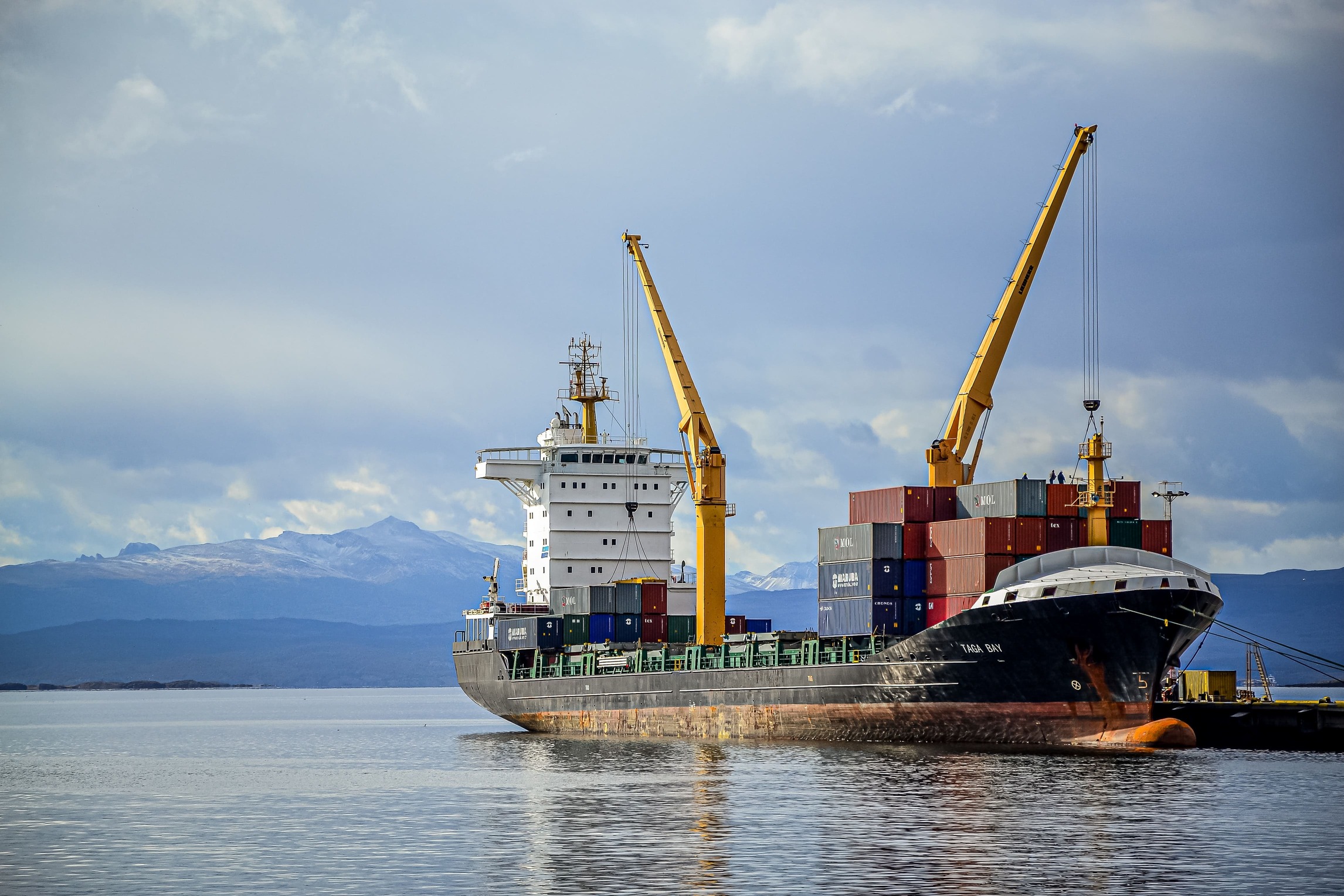
Trade: The Suez Canal and the 320-kilometer Suez-Mediterranean (SUMED) Pipeline are crucial for global crude oil and LNG trade. Alternate routes are costlier and require up to 15 additional days diverting around the southern tip of Africa.
The more important northbound oil flow trade originates in the GCC and is destined for Europe. The smaller southern oil flow is destined for Asian markets and originates in Russia, Turkey, Netherlands, Algeria, and Libya.
The Arab Gas Pipeline: Egypt used it to export as it connects to Israel, Jordan, Syria, and Lebanon. Several sabotage attempts and an increase in national gas consumption led to a stop of its 0.5 Bcf/d transit. Its reopening is a vital component to build the energy hub. A reverse of flow will allow it to use the same pipeline to import instead of export.
When Egypt’s domestic consumption outgrew its production in 2013 exports were halted to Israel. This caused a EUR 1 544 million fine which delayed the option of importing natural gas to Egypt. Prolonged political tensions pushed Israel, Greece, and Cyprus to plan the world’s largest undersea pipeline to link Israeli gas fields directly to Europe. Although the resolution will see Israel utilizing Egypt’s already existing infrastructure, it delayed its operation.
Liquefied Natural Gas (LNG): Egypt has two LNG export facilities with a combined capacity of 586 Bcf per year. The facilities are mostly idle. In 2016, Egypt exported approximately 26 Bcf of LNG. The injection of liquefied natural gas (LNG) from the Zohr field will see these facilities increase their capacity through 2020.
Modernization Program: In 2017 Egypt announced plans to improve the petroleum industry through the five year Oil and Gas Sector Modernization Program. The program has an investment budget of EUR 33 349 million and set a six-goal framework to boost oil and gas reserves and production. The strategic plan will seek to secure local demand for natural gas while building Egypt’s role as a regional energy hub.
The first pillar is to boost Oil & Gas supply and production through the intensification of exploration activities. New blocks are being offered by EGPC, EGAS & GANOPE. 76 New Upstream Exploration agreements were signed with commitments reaching EUR 13 424 million minimum commitment.
To accelerate gas development projects investments of EUR 23 954 million were placed into three major gas development projects: Zohr, North Alex and Noras. These three projects should have peak production rates of 5.1 billion cubic feet per day and increased natural gas production by 50%.
The second pillar is to secure local demand for natural gas & petroleum products through the increase of refining capacity and maximizing economic returns to meet local market needs. Refining capacity was increased by 41 million tons, and there are nine projects worth EUR 7 107 million optimizing refining capabilities.
The plan also is implementing the development of transportation, distribution and storage infrastructure. Crude oil, petroleum product and natural gas pipelines extending 1 483 kilometers are being implemented at the cost of EUR 529 million.
The third pillar is the expansion of gas connections to households which were nearly eight million in 2017. Approximately 715 000 homes are connected per year.
The fourth pillar is the development of the petrochemical industry sector through two main complexes. The MOPCO expansion with investments of EUR 1 719 million to increase annual production to two million tons and the EUR 1 689 million ETHYDCO plant producing 480 000 tons.
The fifth pillar saw structural reform allowing the private sector to enter and compete in wholesale downstream market segments.
The sixth pillar plans to capitalize on Egypt’s competitive advantages. The Suez Canal & SUMED, the existing Oil & Gas infrastructure (LNG Facilities, Pipelines), its established international maritime trade, closeness to massive resource-rich countries and major energy consumers and the Suez and Alexandria world-class refining centers.
Before the end of 2018, Egypt was able to secure domestic natural gas needs and end liquefied natural gas imports. In 2019 Egypt will once again become a net exporter.
Egypt as a regional gas hub: With its reserves and existing export infrastructure Egypt is the only country able to create a regional gas hub. Egypt can easily import Israeli and Cypriot gas to liquefy in its two facilities in the north coast before export. As European demand for gas increases and European production decreases, the European Union should continuously support Egypt’s goal of becoming a reliable regional gas hub.
Natural Gas: Natural gas reserve estimates in Egypt were 65.2 trillion cubic feet (Tcf) in 2016. Total natural gas reserves are expected to significantly increase led by recent natural gas discoveries and make Egypt hold the fourth largest reserves in Africa.
To satisfy growing domestic demand, Egypt has had to divert its natural gas supply away from exports to the domestic market and to rely on liquefied natural gas (LNG) imports to address the shortfall in consumption.
Egypt’s Natural gas consumption is increasing at a high rate turning Egypt from being a gas exporter to a gas importer. Egypt’s liquefied natural gas exports dropped from 15 billion cubic meters in 2005 to zero in 2014. Egypt began importing gas from Israel in the middle of 2015.
The recent natural gas discoveries reversed this trend and made Egypt a crucial player in the Eastern Mediterranean. They have generated significant interest among business investors. Zohr and other recent gas discoveries net gas imports are expected to allow Egypt to meet its Natural gas domestic demand for many years. Developing its export infrastructure in Idku and Damietta will strengthen this export role.
The Egyptian government fast-tracked the development of the Zohr, Atoll and the West Nile Delta (WND) projects. These fields are expected to make substantial additions to overall supply.
Zohr is labeled as the largest offshore natural gas field in the Mediterranean. Zohr gas field has reserves of 30 Tcf and is expected have a peak plateau production of 2.7 Bcf/d in 2019.
Zohr field was discovered by Italian company Eni in 2015 and is considered one of the largest gas fields in the Mediterranean, almost twice the size of the nearby Leviathan gas field. The estimated area of the field is 100 square kilometers, and total gas estimates are 850 billion cubic meters. This will double Egypt’s reserves of gas. Production of gas has been growing since Zohr started operations in 2017 with a total capacity of 350 million cubic feet daily. The giant Zohr will grow natural gas production reaching productions of 2 700 million cubic feet per day by the end of 2019. Eni has won many concessions in Egypt in recent years and is making new discoveries.
Atoll field natural gas field has reserves of 1.5 Tcf and is producing 0.35 Bcf/d of natural gas and 10,000 b/d of condensate.
Egypt is also collaborating with BP to develop West Nile Delta (WND) projects. WND project will produce close to 1.5 Bcf/d in 2019. Fayoum and Giza have an estimated gas production potential of 400 million cubic feet per day in 2019, and over the next, year an increase to 700 million cubic feet is expected. In addition to other locations, BP recently began the production phase of the Raven field.
Egypt also has promising projects on the East Nile area, like the Atoll gas field which was discovered by BP in 2015. The field is located 80 kilometers north of Damietta and is estimated to have approximately 1.5 trillion cubic feet of natural gas and 31 million metric barrels of condensate. The first production phase started in 2018 at the cost of EUR 829 million while the development of the full field will cost EUR 2 632 million. At the end of 2018, the field’s first production phase reached 350 million cubic feet through its three wells.
West El-Brulus field is estimated to produce 100 million cubic feet of gas a day and 1 400 barrels of condensates, along with investments of EUR 437 million. South Seth and North Tort fields will produce 100 million cubic feet of gas per day. Other natural gas projects to be developed in the following years include Merit and Aten fields, Salamat field, and Al Amal field.
61% of local natural gas consumption is for electricity, while industry represents 23%, petroleum 11% and residential/CNG only 5%. The natural gas market has over 19 000 commercial customers including 2 400 factories, 56 power stations, 8 million households, and 230 000 CNG vehicles.
Energy Consumption: Egypt is the largest oil and natural gas consumer in Africa. Egypt currently consumes 22% of petroleum and 37% of dry natural gas consumption in Africa. Energy subsidies have not encouraged efficiency. Even with subsidy reduction, population growth is expected to lead increased consumption. The goal is to remove them by 2022 entirely.
Electricity: In 2016 Egypt had a total installed capacity of 38.86 gigawatts (GW). Egypt is battling electricity blackouts caused by natural gas shortages and inadequate generation and transmission capacity. Shortages become acute, particularly in the summer months. New projects are under development to increase capacity diversifying the energy matrix being fueled by coal, solar, and wind amongst others.
Egypt’s grid is connected to transmission grids in Jordan, Syria, Iraq, Turkey, and Libya. Plans for a new 3 GW electricity cable worth EUR 1 404 million to connect with Saudi Arabia signed are ongoing.
Nine public generation companies generate a total capacity of 43 GW, while three private generation companies working under a build-own-operate-transfer (BOOT) program generate 2 GW capacity and several Isolated Power Plants sell power directly to end users. The Egyptian Transmission Company has been the sole entity responsible for all transmission activities in Egypt holding a full monopoly.
In 2015, a new electricity law allowed the privatization of electricity production, transmission, and distribution. This could bring in much needed FDI from the private sector.
Renewable energy: Egypt has traditionally relied on oil as the main source of fuel and power. With the production decline in the 90s, natural gas rose to be the second major source. Egypt is highly reliant on petrochemicals for its energy needs with 88% coming from oil and gas, and the remainder from renewable power sources including hydro, wind and solar.
Egypt has various ideal areas that can be capitalized for large-scale renewable energy projects. High levels of the solar radiation in Aswan and high wind speeds near Hurghada and Zaafarana on the Red Sea make renewable projects in Egypt attractive segments for investment. Developing renewable energy projects has become a necessity to diversify the energy sector and decrease reliance on fossil fuels while attracting foreign direct investment.
In 2008, Egypt presented a new strategy for renewable energy which aims at developing the sector and increase its overall market share to reach 20% of national energy use. Ambitious targets of developing 4.3 GW of wind and solar in power generation capacity were set.
Wind energy: The Suez Gulf area is Egypt’s ideal area for generating wind energy as it has an average wind speed of 10.5 meters per second. The Nile Valley area also offers abundant wind.
Egypt’s first wind farm was built in Hurghada in 1993 with a total capacity of 5.2 MW. Since 2001, Egyptian NREA signed deals with German KFW, Danish DANIDA, Japanese JICA, and Spanish companies and built many large-scale wind farms which reached a capacity of 753 MW. Total wind power generation in Zafarana is 547 MW, Gebel El-Zeit 200 MW, and the Hurghada wind farms 5MW.
Remarkably, Siemens Gamesa is deeply engaged in Egypt’s wind energy market, between 2005-2009, the company has installed four wind farms in Zaafarana having 478 G52 turbines with 850KW power capacity for each.
Gabal El Zayt project is planned to be one of the biggest wind farms in Africa. Egypt’s biggest wind energy project is located in Ras Ghareb on the Red Sea. It was inaugurated in 2018 at the cost of EUR 324 million and built on a 35 square kilometer area.
Solar Energy: Egypt’s unique topography, climate and high levels of solar radiation make it an ideal destination for solar energy electricity generation and to develop thermal heating applications. Egypt has between 2 900 and 3 200 hours of sunshine annually, and a total radiation intensity between 2 900 and 3 200 kWh/square meter per year. Nonetheless, Egypt only has 30 MW of solar power generation capacity.
As Egypt tries to enhance its renewable energy matrix mix, many projects have been presented with several already working. In 2018, Egypt inaugurated its biggest solar plant, Ben Park at Aswan. It is located 650 kilometers south of Cairo. Once completed its 32 units will make it the biggest solar plant in the world with a capacity of 1.8 GW. Benban park was developed by German company Ib Vogt GmbH and Egyptian company Infinity Solar. Chinese company TBEA Sunoasis started to engage in the project in the later phases.
In 2017, Scatec Solar and other companies announced six solar plants in Benban Park totaling 400 MW at a total investment of EUR 394 million by the United Nation’s Green Climate Fund and other European and Arab investors. The Benban Solar Park is financed by a number of global funding agencies and banks, including the Asian Infrastructure Investment Bank and the Industrial and Commercial Bank of China. Saudi Acwa Power is set to build three solar PV plants with a total capacity of 120 MW at Benban.
Two other large-scale photovoltaic plants were presented by the NREA in Hurghada and Kom Ombo, with a capacity of 20 MW and 26 MW respectively. The first plant is financed by Japanese JICA and the latter by French AFD. These should come online in mid-2019.
TAQA Arabia inaugurated a 50MW solar power plant in Aswan’s Benban complex worth EUR 66 million. Commercial operations will be ramping up early in 2019. It is part of the Egyptian government’s feed‐in tariff program.
These investments in solar power will not resolve Egypt’s energy concerns but will diversify its energy matrix and mitigate pollution.
Hydroelectric energy: Hydroelectricity was Egypt’s major energy resource in the 1970s when it used to generate more than half of the country’s domestic energy needs via the massive national Aswan Dam. It produces 13 545 GWh annually. However, as a result of the increase in the share of other energy resources, hydropower represented 7.2% of Egypt’s total electricity generated in 2015. Hydropower is Egypt’s third-largest energy source after natural gas and oil. Egypt has an installed capacity of 2.8 GW.
In the last few years, the government announced new plans to upgrade many hydropower facilities along the Nile river. By the end of 2018, Egypt announced plans to build a large hydropower plant at a capacity of 2 400 MW at Ataqa Mountain in Suez.
Ethiopia’s plans to finish a 6 GW EUR 4 211 million Grand Ethiopian Renaissance Dam (GERD) in 2022 could affect Egypt’s Aswan High Dam. Most of the Nile River’s hydropower potential has already been exploited.
Nuclear energy: Egypt has nuclear research programs and operates two research nuclear reactors.
Currently, only South Africa has a commercial nuclear power plant in Africa. In 2015, Egypt and Russia signed an intergovernmental agreement to collaborate in the construction and operation in El Dabaa, west of Alexandria near New Alamein City. It will be Egypt’s first nuclear plant with four 1.2 GW units. The first reactors will start by 2020. At the cost of EUR 25 231 million, the plant will be finished by 2026. El Dabaa nuclear plant will produce 4.8 GW which is enough to deliver electricity to more than four million homes across in Egypt. These plans have been repeatedly delayed, and it is unlikely to be operational in the near term.
Petrochemicals: This local demand for plastics is filled by imports. It has become a priority to increase domestic production.
The EUR 1 754 million Misr Fertilizers Production Company (MOPCO) expansion tripled its total annual production capacity.
The Egyptian Ethylene and Derivatives Company (ETHYDCO) opened a new EUR 1 667 million poly-ethylene complex.
Egyptian Petrochemicals Holding Company’s (ECHEM) EUR 2 632 million petro-refinery is being built inside the Suez Canal Economic Zone.
In addition, at least five additional projects are under construction with minimum investments EUR 1 140 million each.
Outlook: Egypt has several competitive advantages seeking to become the regional energy hub including its strategic location, proximity to massive gas reserves in the Mediterranean Sea, and extensive infrastructure.
However, these are not enough to create the energy hub.
Egypt must continue to modernize, invest and create policies that support this energy hub. Becoming a center for trade and exports requires a regulatory environment that is business-friendly and can compete in the region. Most countries in the region will compete with Egypt to become the energy hub of the region. Although Egypt is ahead and possesses strong advantages in this regard if the execution falls behind its regional competitors will quickly overtake Egypt.
A second level for improving the energy hub strategy would be selling the national oil infrastructure and bringing in mid players. The midstream has always been seen as a security concern needing to be controlled. The government is sitting on potential capital that could be monetized. On the oil side, some of that money could be invested in looking for more oil which would continue to exceed demand and increase exports.